01 Skin Science
Are Skin Types Genetic?
Genetics set the baseline for how much oil your skin makes and how strong its barrier is, but they do not have the final word. Climate, hormones, age, and habits all get a vote too.
Quick answerSkin type has a real genetic component, mainly through inherited sebaceous gland activity and barrier strength, but it is not fixed by genetics alone. Hormones, climate, age, and skincare habits all shape how your skin actually behaves.
Genetics decide your skin's baseline tendencies, while everything else — weather, hormones, products, sleep, stress — decides how close to that baseline you actually sit on any given day.
Skin snapshot
Genetic roleStrong influence
Environmental roleAlso significant
Fixed for life?No
EvidenceGood
How much of skin type is genetic?
Genetics set real tendencies for skin type, but environment and hormones meaningfully shape the final result.
Works best for
Understanding your skin's baseline tendenciesSetting realistic skincare expectationsNot ideal for
Predicting skin type with total certaintyIgnoring environmental or hormonal changesGenetics and skin type snapshot
Genetics myths vs reality
Myth: Oily skin genetics never change.
Reality: Oil production commonly decreases with age regardless of genetics.
Myth: You can't influence genetically sensitive skin.
Reality: Consistent, gentle skincare can meaningfully reduce reactivity over time.
What genes actually influence
Sebaceous glands
Gland size and oil output are shaped by inherited variation.
Barrier proteins
Genes affecting lipids and proteins influence moisture retention and sensitivity.
Inflammatory response
Genetic variation can affect how reactive skin is to triggers like heat or new products.
What the evidence suggests
Family history is an established factor in acne and eczema risk.
Both conditions closely relate to oil production and barrier function.
Short version
Story in brief
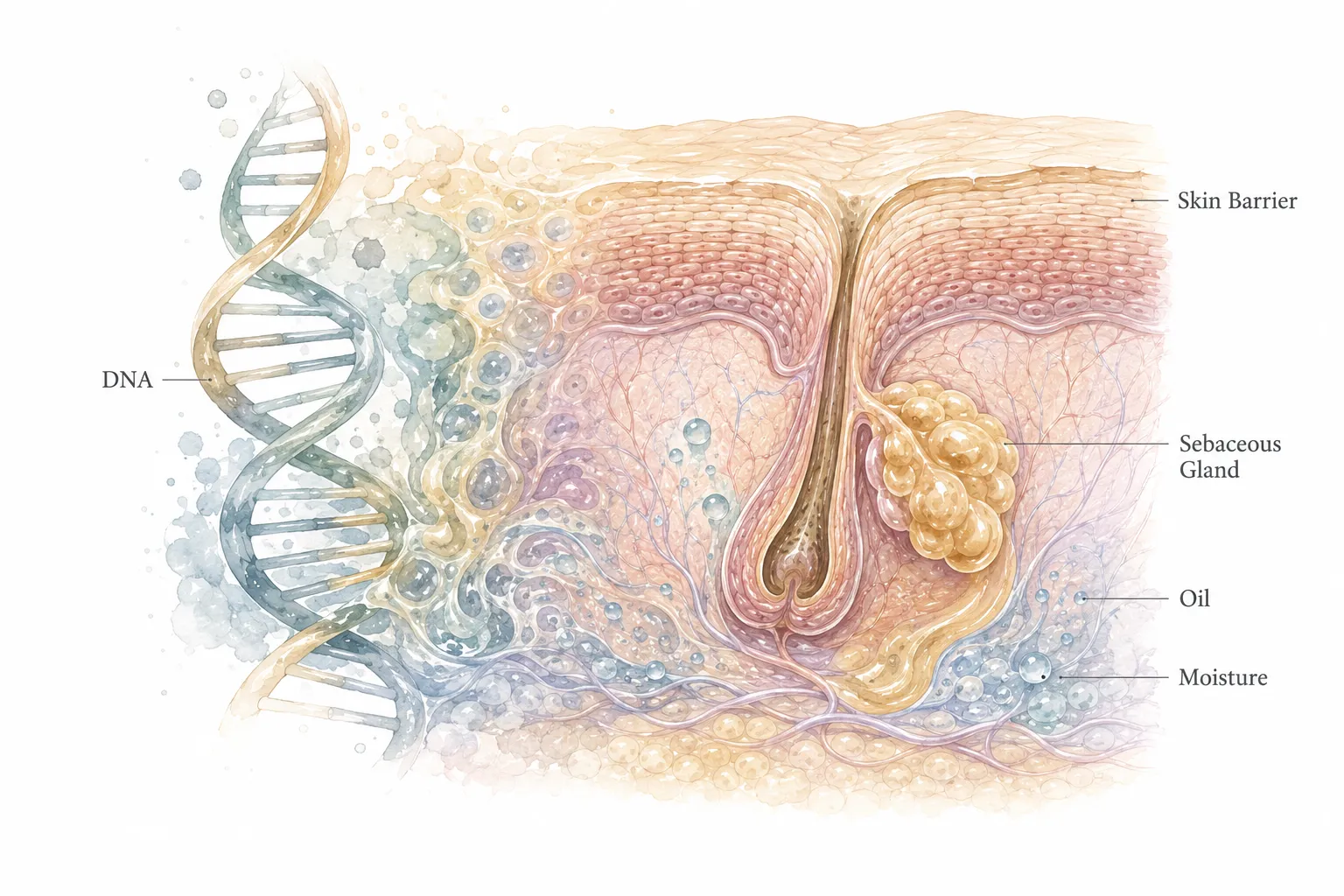
Sebaceous gland size and activity, which largely determine oiliness, are influenced by inherited genes, which is why oily or dry skin often runs in families.
Skin barrier strength, involved in dryness and sensitivity, also has a genetic component, including variations linked to conditions like eczema.
But genetics only set the tendency. A genetically oil-prone person can look drier in a cold, dry climate, and a genetically dry-skinned person can look shinier in a humid one. Skin type is a conversation between genes and environment, not a genetic monologue.
Mental model
Visual explanation
How to read it
The diagram should show two connected influences meeting at "skin type": genetics on one side (sebaceous gland activity, barrier genes, family history) and environment on the other (climate, hormones, age, skincare habits), with an arrow showing they combine rather than compete.
Useful context
Skin facts
Genes
Sebaceous gland size and oil output are influenced by inherited genetic variation, which is why oiliness often runs in families.
Barrier
Some genetic variations affect how well the skin barrier retains moisture, contributing to dryness or sensitivity.
Hormones
Puberty, pregnancy, and menopause can shift oil production regardless of genetic baseline.
Environment
Climate and humidity can make the same genetic skin type look and behave differently depending on where you live.
Why genetics matter for skin type
The biological basis for inherited skin tendencies.
Genetics influence the size and activity of sebaceous glands, which largely determine how oily or dry skin tends to be. They also affect the proteins and lipids that make up the skin barrier, which influence sensitivity and moisture retention.
What else shapes skin type
- Hormonal changes during puberty, pregnancy, or menopause
- Climate and humidity levels
- Age-related changes in oil production and barrier function
- Skincare habits, including over-cleansing or under-moisturizing
- Certain medications and health conditions
How strong is the genetic link?
Evidence: good- Family history is a recognized factor in conditions like acne and eczema, both closely tied to skin type.
- Sebaceous gland activity has documented genetic variation across individuals.
- Environmental and hormonal factors are also well established as modifiers of genetic baseline.
Common myths about genetics and skin type
Myth
If your parents had oily skin, yours will always be oily too.
Reality
Genetics set a tendency, but your actual skin type can shift with age, climate, and habits.
Myth
Skin type genetics cannot be influenced by skincare.
Reality
While you cannot change your genes, consistent skincare can meaningfully change how your skin behaves.
Guardrails
Common mistakes
The small misreads that usually make skincare advice harder to use.
Mistake
Assuming genetics determine skin type completely
Better move
Treat genetics as a starting point, not a final answer — environment and habits matter too.
Mistake
Ignoring family history of skin conditions
Better move
A family history of acne, eczema, or rosacea can be a useful clue when building a routine.
Mistake
Expecting skin type to never change
Better move
Even genetically oily or dry skin can shift meaningfully with age and environment.
Action plan
What to do next
A clean order of operations you can follow without overbuilding the routine.
- 1
Consider your family history
Note any patterns in acne, dryness, or sensitivity among close relatives.
- 2
Account for your current environment
Adjust your routine for climate and season rather than assuming your genetic baseline never shifts.
- 3
Reassess as you age
Oil production naturally changes with age, so revisit your assumptions every few years.
Remember this
Key takeaways
- 1
Genetics strongly influence sebaceous gland activity and barrier strength, both key to skin type.
- 2
Family history can be a useful clue, particularly for oiliness, dryness, and sensitivity.
- 3
Hormones, climate, age, and habits all modify the genetic baseline.
- 4
Skin type is not fixed by genetics alone and can shift over a lifetime.
- 5
Understanding the genetic role helps set realistic expectations rather than assigning blame.
FAQ
Short answers to common practical questions.
Can I inherit oily skin from my parents?
Yes. Sebaceous gland activity has a genetic component, so oily skin often runs in families.
Is sensitive skin genetic?
There is a genetic component, particularly through barrier-related genes, but environmental triggers play a large role too.
Can genetics change over time?
Your genes stay the same, but how they express themselves in your skin can shift with hormones, age, and environment.
Does genetics affect acne-prone skin?
Yes, family history is a recognized factor in acne, largely through inherited oil gland activity and inflammatory response.
How to use this guide
Genetic tendencies vary widely between individuals. Use this guide as general context, not a prediction.