01 Skin Type & Sun
Can All Skin Types Tan?
Almost every skin type can tan to some degree, because tanning is mostly about melanin response rather than oiliness or dryness. But how easily, how deeply, and how safely someone tans depends far more on skin tone and sun sensitivity than on skin type.
Quick answerYes, most skin types can tan, because tanning is primarily controlled by melanin production, which relates to skin tone rather than oiliness or dryness. Sensitive skin may tan less predictably and burn more easily, but skin type alone does not prevent tanning.
Skin type and skin tone are different systems. Skin type describes oil and hydration behavior; skin tone and its associated melanin response is what actually governs tanning and burning.

Skin snapshot
Main factorSkin tone / melanin
Sensitive skinCan tan, burns easily
Sunscreen neededYes, for all types
EvidenceStrong
Can all skin types tan?
Nearly all skin types can tan, but skin tone, not skin type, is what really decides how easily and how safely.
Works best for
Oily, dry, combination, and normal skinUnderstanding tanning as a melanin responseNot ideal for
Predicting tanning ability from skin type aloneSkipping sun protection based on tanning easeTanning snapshot
Tanning by skin type
oily
Tans normally, based on skin tone.
dry
Tans normally, may look less even.
combination
Tans normally across the face.
sensitive
Can tan, but burns more easily first.
normal
Tans normally, based on skin tone.
Tanning myths vs reality
Myth: Oily skin tans deeper than dry skin.
Reality: Skin tone, not oil level, determines tanning depth.
Myth: A base tan protects against burning.
Reality: A tan offers only minor, short-lived protection.
What to watch for
Ease into sun exposure gradually and use sunscreen, especially for sensitive skin.
Remember that tanning itself reflects damage, regardless of how safe it may feel.
Short version
Story in brief
Tanning happens when UV exposure triggers melanocytes to produce more melanin, which darkens the skin as a protective response. This process works across oily, dry, combination, and normal skin fairly similarly.
Sensitive skin is the main exception worth flagging, not because it cannot tan, but because it is more prone to burning before a tan develops, which can mask or interrupt the tanning process.
The much bigger factor is skin tone, often described using the Fitzpatrick scale, which ranges from skin that burns easily and rarely tans to skin that tans deeply and rarely burns.
Mental model
Visual explanation
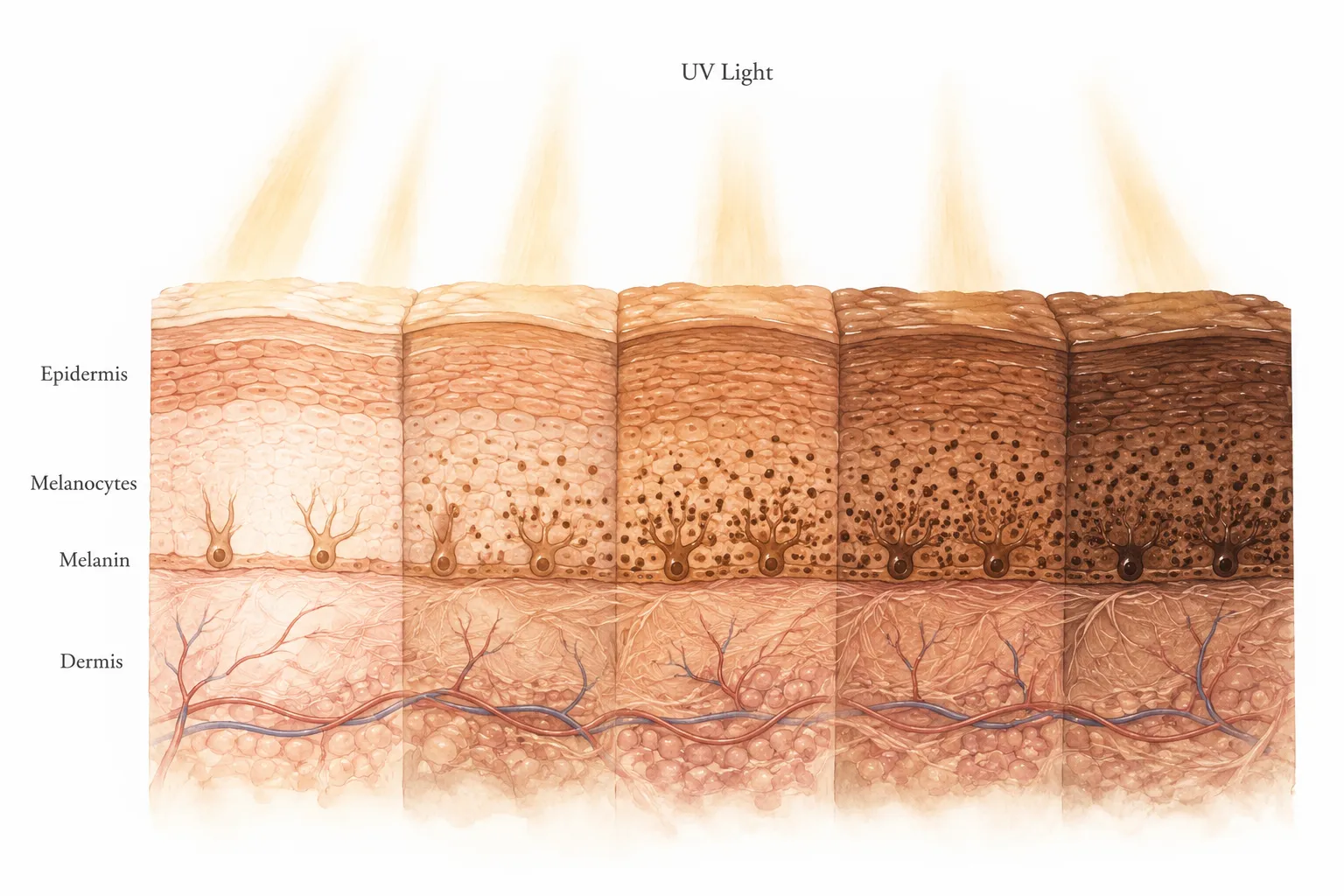
How to read it
The diagram should show two separate axes: skin type (oily, dry, combination, sensitive, normal) running one direction, and skin tone or Fitzpatrick type running the other, with a note showing that tanning ability tracks mainly with the second axis.
Useful context
Skin facts
Melanin
Tanning is the skin's melanin response to UV exposure, largely independent of oil or hydration levels.
Sensitive Skin
Sensitive skin can burn more quickly, which may interrupt or mask the tanning process rather than prevent it outright.
Fitzpatrick Scale
The Fitzpatrick scale classifies skin by how easily it burns versus tans, and is a stronger predictor of tanning than skin type.
Protection
All skin types, including those that tan easily, remain at risk of UV damage and need sun protection.
What actually controls tanning?
Tanning is controlled mainly by melanin production in response to UV exposure, a process linked to skin tone rather than to whether skin is classified as oily, dry, combination, sensitive, or normal.
Which skin types can tan?
Oily, dry, combination, and normal skin types can all tan, generally in line with their underlying skin tone. Sensitive skin can tan too, but is more prone to burning first, which can complicate the process.
- Oily skin — tans normally, based on skin tone
- Dry skin — tans normally, though dryness can make a tan look less even
- Combination skin — tans normally across the face
- Sensitive skin — can tan, but burns more easily
- Normal skin — tans normally, based on skin tone
Why "can tan" does not mean "should tan without protection"
Tanning itself is a sign of UV damage, since melanin production is the skin's defensive response to that damage. Skin types that tan easily are not immune to long-term sun damage or skin cancer risk.
Common myths about skin type and tanning
Myth
Oily skin tans better than dry skin.
Reality
Oil level has little to do with tanning ability; skin tone is the deciding factor.
Myth
Sensitive skin cannot tan at all.
Reality
Sensitive skin can tan, but it burns more easily, which can interrupt the process.
Myth
A tan means your skin is protected going forward.
Reality
A tan offers only minimal, temporary protection and is itself evidence of UV damage.
Guardrails
Common mistakes
The small misreads that usually make skincare advice harder to use.
Mistake
Assuming skin type predicts tanning ability
Better move
Look at skin tone and Fitzpatrick type instead, which are far stronger predictors.
Mistake
Skipping sunscreen because skin "tans easily"
Better move
All skin types and tones benefit from daily sun protection, regardless of tanning tendency.
Mistake
Treating sensitive skin's burn as a sign it cannot tan
Better move
Sensitive skin can tan, but needs more careful, gradual sun exposure to avoid burning first.
Action plan
What to do next
A clean order of operations you can follow without overbuilding the routine.
- 1
Know your Fitzpatrick type
Understanding how your skin tone responds to sun helps set realistic tanning expectations.
- 2
Use sunscreen regardless of skin type
Daily SPF protects against damage even if your skin tans easily.
- 3
Ease sensitive skin into sun exposure
Shorter, more gradual exposure reduces the risk of burning before tanning.
Remember this
Key takeaways
- 1
Most skin types can tan, because tanning depends mainly on melanin response, not oiliness or dryness.
- 2
Sensitive skin can tan too, but is more prone to burning first.
- 3
Skin tone, not skin type, is the strongest predictor of tanning ability.
- 4
A tan is a sign of UV damage, not a marker of protection.
- 5
Sunscreen is recommended for all skin types, including those that tan easily.
FAQ
Short answers to common practical questions.
Does oily skin tan more than dry skin?
Not meaningfully. Tanning is driven by melanin response, which relates to skin tone rather than oil level.
Can sensitive skin tan without burning?
It is possible with gradual, well-protected sun exposure, though sensitive skin generally has a lower threshold before burning.
Is tanning safe for any skin type?
Tanning itself reflects UV damage, so it is not considered a safe process for any skin type, even those that tan easily.
What determines how easily someone tans?
Mainly skin tone and melanin response, often described using the Fitzpatrick scale, rather than skin type categories like oily or dry.
How to use this guide
Sun response varies by individual. Use sunscreen and monitor your skin regardless of how easily it tans.