01 Skin Type & Ingredients
Can All Skin Types Use Vitamin C Serum?
Most skin types can use vitamin C serum, since it is generally well tolerated and does not exfoliate or thin the skin. The main caveats are around formula stability, concentration, and how sensitive or reactive your skin happens to be.
Quick answerYes, most skin types, including oily, dry, combination, and normal, can use vitamin C serum. Sensitive skin can usually tolerate it too, especially at lower concentrations or in gentler derivative forms, though a patch test is wise.
Vitamin C's tolerability has less to do with your skin type and more to do with the form and concentration of the ingredient, along with how the rest of the formula is put together.

Skin snapshot
ToleranceGenerally high
Best concentration~10% to start
Sensitive skinUse derivative form
Best timeMorning
Can everyone use vitamin C serum?
Vitamin C serum is suitable for nearly all skin types, provided the concentration and formula are matched to your skin's tolerance.
Works best for
Oily, combination, and normal skinDry skin when paired with hydrationSensitive skin with gentler derivativesNot ideal for
Actively irritated or broken skinFirst-time users of very high concentrationsVitamin C snapshot
Vitamin C by skin type
oily
Tolerates well, including higher strengths.
dry
Best paired with hydrating ingredients.
combination
Generally well tolerated across the face.
sensitive
Use gentler derivatives or lower strength.
normal
Tolerates most standard formulas.
What to watch for
Consider a lower concentration or gentler derivative.
Patch test first and introduce gradually.
What the evidence suggests
Vitamin C is generally well tolerated across skin types compared with exfoliating actives.
Its non-exfoliating mechanism reduces the likelihood of irritation.
Short version
Story in brief
Vitamin C serums are generally well tolerated because the ingredient itself does not exfoliate or strip the skin barrier the way acids or retinoids can.
Oily and combination skin often tolerate it easily, dry skin usually benefits from pairing it with hydrating ingredients, and sensitive skin does best with lower concentrations or gentler derivatives like sodium ascorbyl phosphate.
The bigger variable is usually the formula, not the skin type: older, unstable, high-percentage L-ascorbic acid formulas are more likely to sting than newer, buffered, or derivative-based versions.
Mental model
Visual explanation
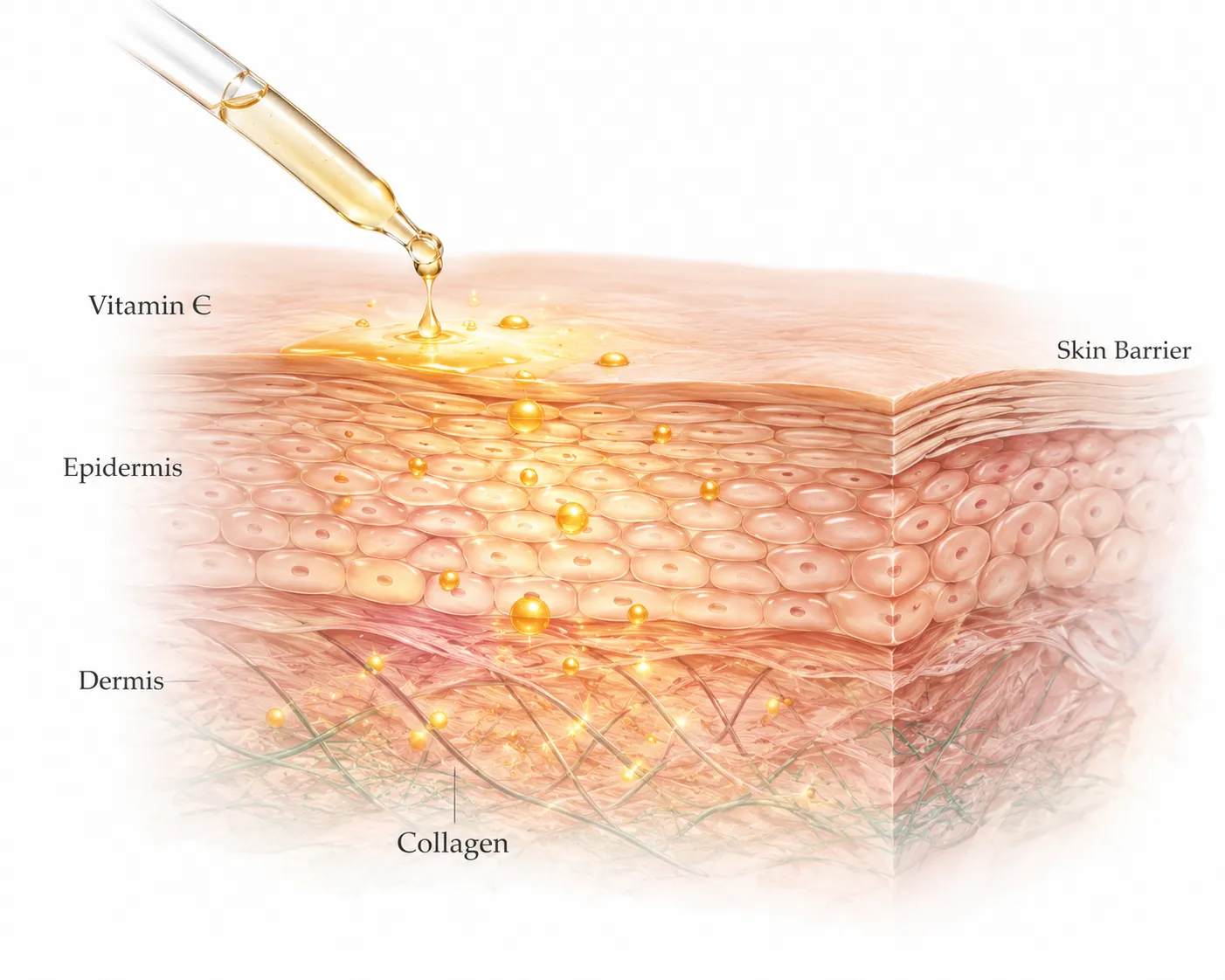
How to read it
The diagram should show a simple spectrum from "most tolerant" to "needs more caution," with oily, combination, and normal skin on one end, dry skin needing hydration support in the middle, and sensitive skin on the cautious end, needing lower concentrations or gentler derivatives.
Useful context
Skin facts
Tolerance
Vitamin C does not exfoliate the skin, which is part of why most skin types tolerate it comparatively well.
Derivatives
Gentler derivatives like sodium ascorbyl phosphate are often recommended for sensitive skin over pure L-ascorbic acid.
Concentration
Lower concentrations, generally under 10 to 15 percent, tend to be better tolerated by reactive skin.
Stability
Oxidized, discolored vitamin C serums are more likely to irritate skin, regardless of skin type.
What is vitamin C serum?
Vitamin C serums use forms of ascorbic acid or its derivatives to support antioxidant protection, collagen-related processes, and a more even-looking skin tone.
Which skin types tolerate vitamin C well?
Most skin types can use vitamin C serum without major issues, though the right form and concentration can make a noticeable difference in comfort.
- Oily skin — usually tolerates it easily, including higher concentrations
- Combination skin — generally well tolerated across the face
- Dry skin — benefits from pairing with hydrating ingredients like hyaluronic acid
- Sensitive skin — often better with lower concentrations or gentler derivatives
- Normal skin — typically tolerates most formulas without issue
When to be more cautious
Some situations call for extra care with vitamin C, regardless of general skin type.
- Actively irritated, broken, or inflamed skin
- Very high concentrations (above 20 percent) for first-time users
- Unstable, discolored, or expired formulas
- Combining with multiple other strong actives at once
What pairs well with vitamin C?
Vitamin E
Works with: Vitamin C
A classic pairing that can boost antioxidant stability.
Sunscreen
Works with: Vitamin C
Vitamin C works best as a morning antioxidant layer under daily sunscreen.
Niacinamide
Works with: Modern formulas
Most modern formulas pair fine; sensitive skin may prefer separating them.
Common myths about vitamin C and skin type
Myth
Sensitive skin should never use vitamin C.
Reality
Sensitive skin can often use gentler derivatives or lower concentrations without issue.
Myth
A higher percentage always works better.
Reality
More is not always better, and higher concentrations increase the chance of irritation.
Guardrails
Common mistakes
The small misreads that usually make skincare advice harder to use.
Mistake
Starting with a very high concentration
Better move
Begin around 10 percent or with a gentler derivative, especially for sensitive skin.
Mistake
Using an oxidized, discolored serum
Better move
Replace vitamin C serums that have turned dark orange or brown, as they are more likely to irritate.
Mistake
Skipping a patch test
Better move
Test on a small area first, particularly for reactive or sensitive skin.
Action plan
What to do next
A clean order of operations you can follow without overbuilding the routine.
- 1
Choose a formula suited to your skin
Sensitive skin may prefer a derivative form; oily or normal skin can typically handle L-ascorbic acid.
- 2
Start with a lower concentration
Around 10 percent is a reasonable starting point for most people.
- 3
Apply in the morning under sunscreen
This pairing supports its antioxidant role throughout the day.
Remember this
Key takeaways
- 1
Most skin types, including oily, dry, combination, and normal, can use vitamin C serum.
- 2
Sensitive skin can usually tolerate it too, especially with lower concentrations or gentler derivatives.
- 3
Formula stability and concentration matter more than skin type for tolerability.
- 4
Vitamin C works best paired with sunscreen in a morning routine.
- 5
A patch test is a sensible precaution, especially for reactive skin.
FAQ
Short answers to common practical questions.
Can sensitive skin use vitamin C serum?
Yes, usually with a gentler derivative or lower concentration, though a patch test is recommended first.
Is vitamin C bad for oily skin?
No, oily skin generally tolerates vitamin C well and can often use higher concentrations comfortably.
Can dry skin use vitamin C serum?
Yes, especially when paired with hydrating ingredients like hyaluronic acid to offset any dryness.
Does vitamin C cause purging?
No, vitamin C is not an exfoliant, so it does not typically cause purging the way acids or retinoids can.
How to use this guide
Skincare reactions vary. Patch test new products and stop if burning or swelling occurs.