01 Skin Type Guide
Can You Change Skin Types?
Yes, skin type can and often does change, sometimes because of age or hormones, and sometimes because of climate or habits. It is less a fixed identity and more a running average that shifts as the inputs shift.
Quick answerYes, skin type can change over time. Aging, hormonal shifts, climate, and skincare habits are the most common reasons someone's skin moves from oily to more balanced, or from normal to noticeably drier, over months or years.
Skin type is a description of current behavior shaped by genetics, not a fixed genetic sentence. Because the inputs that shape it — hormones, climate, age, habits — change over a lifetime, skin type usually changes along with them.
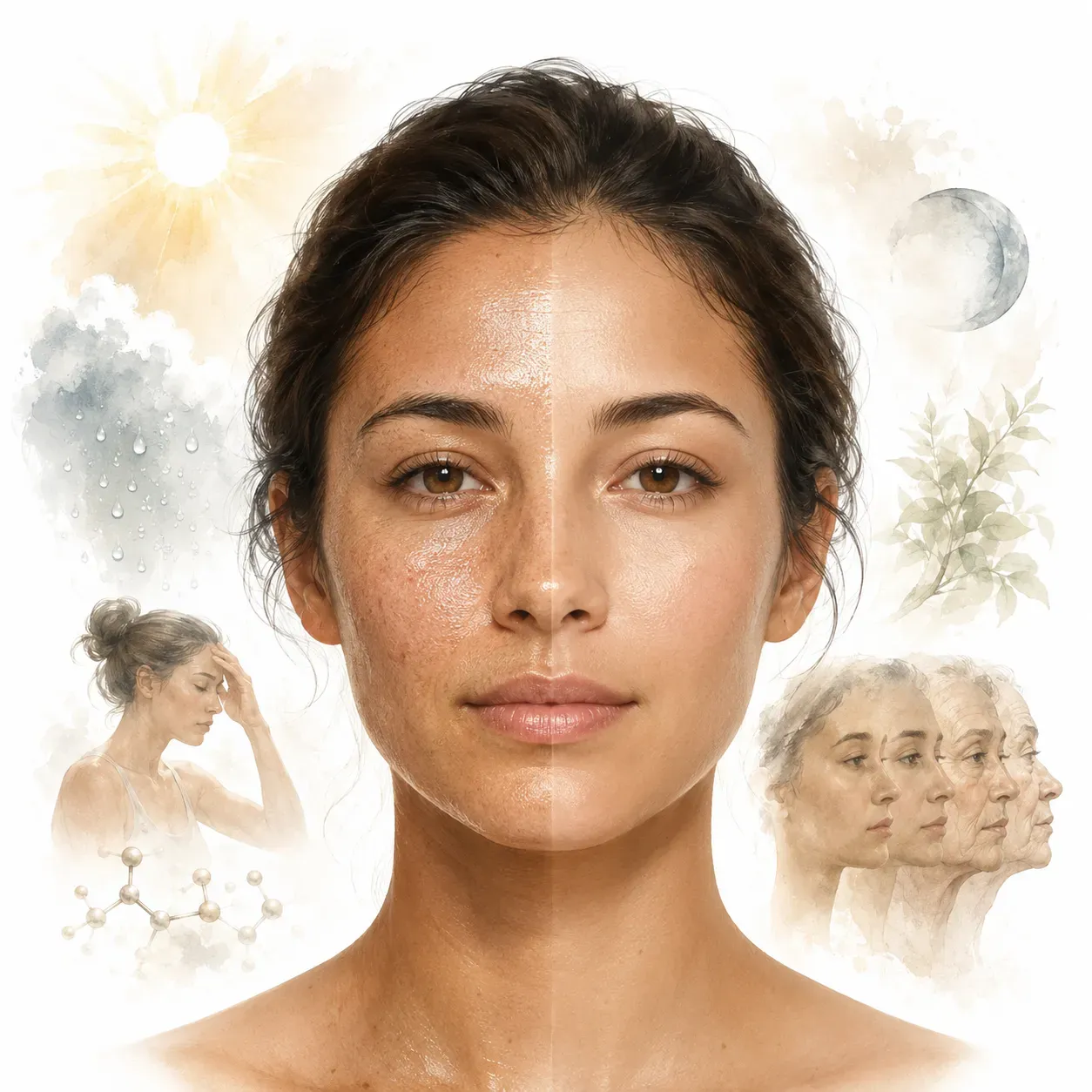
Skin snapshot
Can change?Yes
Main driversAge, hormones, climate
SpeedGradual, over months
Reversible?Often
Can skin type really change?
Skin type is far more flexible than it is usually presented, shifting with age, hormones, climate, and habits.
Works best for
Understanding gradual, natural skin changesAdjusting routines as skin evolvesNot ideal for
Expecting overnight changes in skin typeSkin type change snapshot
A rough timeline of change
- TeensOil production rises
Hormonal changes often lead to oilier, more acne-prone skin.
- 20s–30sOiliness may plateau or ease
Skin often settles into a more stable pattern.
- 40s–50sOil production declines
Skin commonly becomes more combination or dry.
- 60s+Dryness often increases
Reduced oil and slower cell turnover can make skin feel drier.
Change myths vs reality
Myth: Skin type is fixed after adulthood.
Reality: It commonly shifts with age, hormones, and environment.
Myth: Only genetics determine skin type long-term.
Reality: Environment and habits meaningfully shape it too, at any age.
What the evidence suggests
Sebum production shows a well-documented age-related decline.
This is one of the clearest examples of skin type shifting over time.
Short version
Story in brief
Oil production generally peaks during the hormonally active years of adolescence and early adulthood, then gradually declines with age, which is why oily skin in your twenties can shift toward combination or normal by your forties or fifties.
Climate has a more immediate effect: moving to a more humid environment can make dry skin look more balanced, while a dry climate or harsh winter can push normal skin toward dryness.
Skincare habits play a role too. Over-cleansing or using harsh products can push skin toward compensatory oiliness or persistent dryness, and adjusting the routine can shift skin type back the other way.
Mental model
Visual explanation
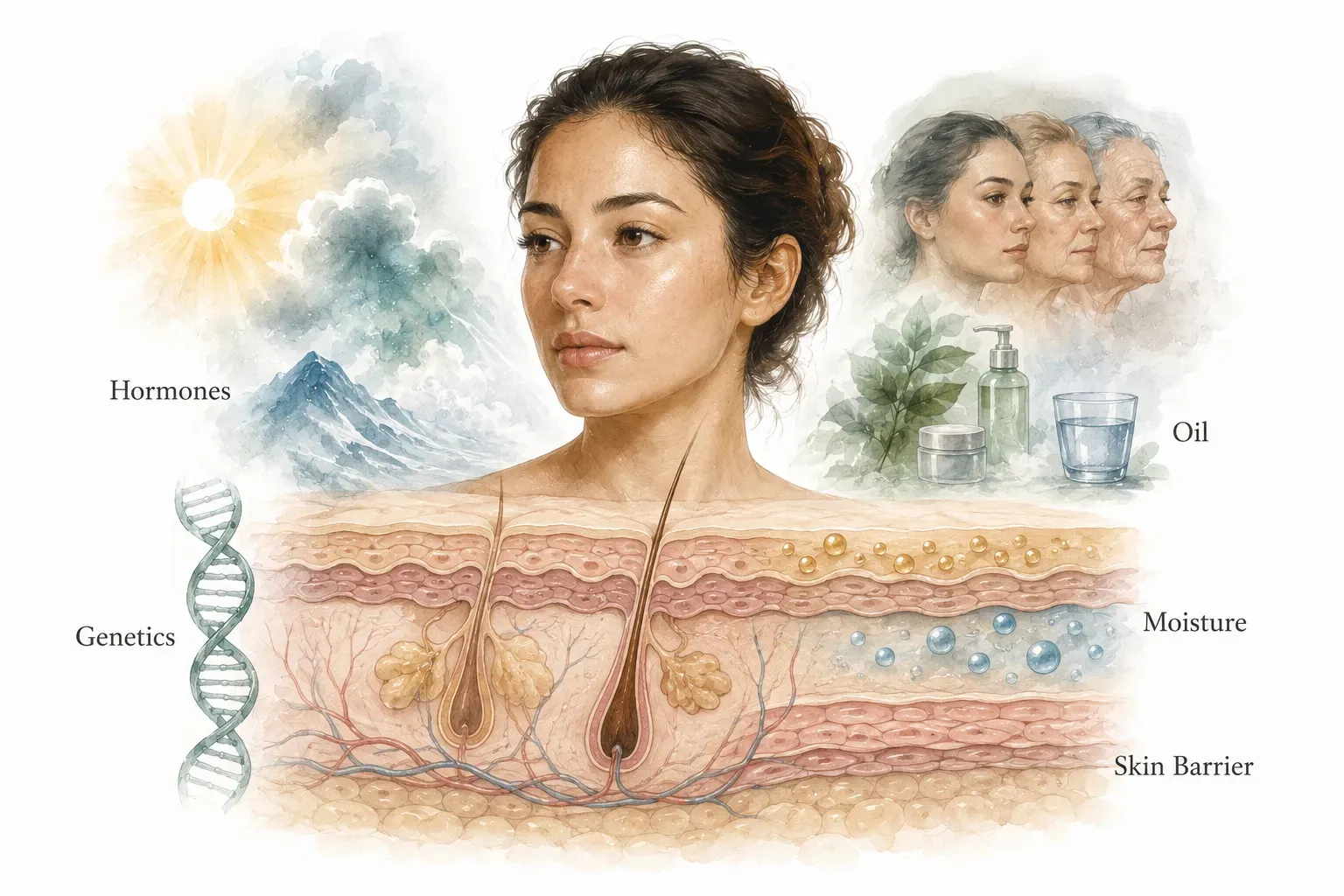
How to read it
The diagram should show a timeline with four life-stage markers — teens, twenties/thirties, forties/fifties, sixties and beyond — each labeled with the typical shift in oil production and skin type tendency, alongside a side note on climate and habits as ongoing modifiers.
Useful context
Skin facts
Age
Sebum production commonly declines with age, meaning oily skin often becomes more balanced or dry over decades.
Hormones
Puberty, pregnancy, and menopause are all associated with noticeable, sometimes temporary, shifts in skin type.
Climate
Humidity and temperature changes can shift how oily or dry skin appears within just a few weeks.
Habits
Over-cleansing or using harsh products can push skin toward compensatory oiliness, which often improves once the routine is adjusted.
Why skin type is not permanent
The biological and environmental reasons skin type shifts.
Skin type reflects a combination of genetics and current conditions. Because hormones, climate, and habits all change throughout life, the behavior that defines your skin type changes along with them.
What causes skin type to change
- Aging and the natural decline in oil production
- Hormonal changes such as puberty, pregnancy, or menopause
- Seasonal or geographic changes in climate and humidity
- Shifts in skincare habits, including over-cleansing or new products
- Certain medications or underlying health conditions
How well documented is this?
Evidence: good- Age-related decline in sebum production is well documented in dermatological research.
- Hormonal influence on skin type is widely recognized, particularly around puberty and menopause.
- Climate-driven changes in skin behavior are commonly observed and consistent with how the skin barrier responds to humidity.
Common myths about changing skin types
Myth
Your skin type is set for life once you reach adulthood.
Reality
It commonly shifts with age, hormones, and environment well into later life.
Myth
A change in skin type means something is wrong.
Reality
Gradual shifts are a normal part of aging and changing conditions, not necessarily a problem.
Guardrails
Common mistakes
The small misreads that usually make skincare advice harder to use.
Mistake
Sticking with the same routine for decades
Better move
Reassess your routine every few years, or after major life changes like pregnancy or menopause.
Mistake
Assuming a temporary dry patch means a permanent skin type change
Better move
Give it a season before concluding your skin type has genuinely shifted.
Mistake
Over-cleansing in response to perceived oiliness
Better move
Harsh cleansing can trigger compensatory oil production, worsening the very issue you're trying to fix.
Action plan
What to do next
A clean order of operations you can follow without overbuilding the routine.
- 1
Reassess your skin every season
Note any noticeable shifts in oiliness, dryness, or sensitivity as the weather changes.
- 2
Adjust products gradually
Swap one product at a time so you can tell what is actually helping.
- 3
Pay attention around hormonal milestones
Puberty, pregnancy, and menopause are common points where skin type shifts noticeably.
Remember this
Key takeaways
- 1
Skin type can and often does change over a lifetime.
- 2
Aging typically brings a gradual decline in oil production.
- 3
Hormonal changes and climate can shift skin type more quickly than aging alone.
- 4
Skincare habits, including over-cleansing, can also push skin type in a new direction.
- 5
Reassessing your routine periodically helps it keep pace with your changing skin.
FAQ
Short answers to common practical questions.
Does skin type change with age?
Yes, oil production generally declines with age, so oily skin often becomes more combination or normal over time.
Can pregnancy change your skin type?
Yes, hormonal shifts during pregnancy commonly affect oil production and can temporarily or permanently change skin type.
Can moving to a new climate change your skin type?
Yes, humidity and temperature differences can noticeably shift how oily or dry your skin appears within weeks.
Can skincare products change your skin type?
Yes, harsh or unsuitable products can push skin toward compensatory oiliness or dryness, and adjusting the routine can shift it back.
How to use this guide
Skin changes vary by individual. Sudden changes are worth discussing with a professional.