Evidence
What the evidence shows
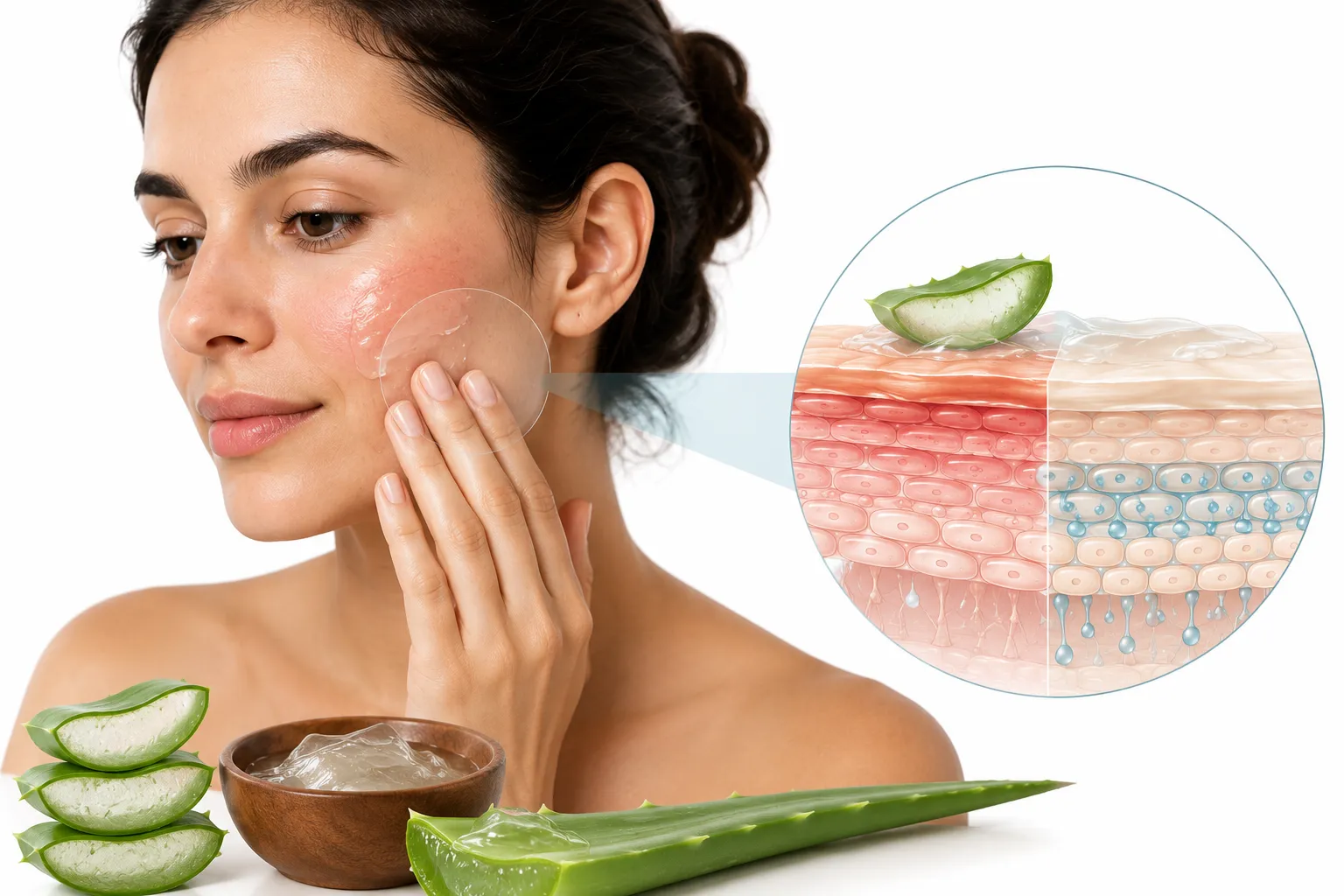
Aloe vera's main contribution to barrier repair is reducing inflammation, which is often a component of barrier damage. By calming the skin, it creates a more favorable environment for healing.
Use this section to decide
Does this advice apply to me?
Find the concern or goal closest to yours, then use the fit signal to decide how much weight to give this guide.If your goal is
Direct RoleUse caution- Fit signal
- Limited evidence
Minimal - soothing and hydration
If your goal is
Indirect RoleUsually relevant- Fit signal
- Often useful
Calms inflammation for healing
If your goal is
Needs WithUsually relevant- Fit signal
- Often useful
Lipid-replenishing ingredients
If your goal is
Evidence LevelUse caution- Fit signal
- Limited evidence
Mixed for repair
Research notes already in this guide
- Aloe vera has good evidence for its anti-inflammatory and soothing effects.
- The evidence for direct barrier repair is limited - it's more of a supportive ingredient.
- It's most effective when used alongside lipid-replenishing ingredients.
Practical use
How to use it
Choose pure aloe vera gel
Look for 99%+ pure aloe vera with minimal additives.
Apply as a soothing layer
Use it after cleansing and before moisturizer.
Follow with lipid-replenishing products
Apply ceramide-rich moisturizer on top for complete barrier repair.
Safety
Side effects and cautions
- Using aloe vera alone for barrier repair
It's a supportive ingredient, not a complete solution. Use it alongside ceramides.
- Using aloe vera with added ingredients
Choose pure aloe vera (99%+) to avoid irritation from added ingredients.
- Expecting barrier repair from aloe vera alone
Aloe vera soothes and hydrates, but it doesn't rebuild the lipid layer.
Fit
Who should be careful
- Complete barrier repair on its own
- Lipid replacement
Helpful context
What else is worth knowing
How aloe vera supports barrier health
Anti-inflammatory action
Aloe vera contains compounds that reduce inflammatory markers in the skin.
Hydration provision
It's about 98% water, providing immediate hydration.
Healing support
Polysaccharides in aloe vera support skin regeneration.
What experts say about aloe vera for barrier repair
Dr. Shereene IdrissAloe vera is great for soothing, but it doesn't actively rebuild the barrier. Use it with ceramides.
Dr. Mona GoharaPure aloe vera can be helpful for barrier repair, but it's not a complete solution on its own.
Worth noting
Small details that can change the answer
- Anti-Inflammatory. Aloe vera contains compounds like acemannan that reduce inflammation.
- Hydration. Aloe vera is about 98% water, providing immediate hydration to the skin.
- Polysaccharides. Aloe vera contains polysaccharides that support skin healing.
- Lipid Content. Aloe vera doesn't contain significant lipids, so it doesn't directly rebuild the barrier.
Aloe vera supports barrier repair through its anti-inflammatory and hydrating properties.
It doesn't directly rebuild the lipid layer - you need ceramides and fatty acids for that.
It's excellent for soothing irritated, inflamed skin during barrier damage.
Choose pure aloe vera (99%+) to avoid irritating additives.
It works best as part of a comprehensive barrier repair routine.
Definition
What aloe vera does for the skin barrier
Understanding the indirect role.
Aloe vera supports barrier repair through its anti-inflammatory and hydrating properties. It calms irritation and provides moisture, creating favorable conditions for healing. However, it doesn't directly rebuild the lipid layer.
Benefits
How aloe vera supports barrier repair
Here's how aloe vera specifically helps the barrier.
- Reduces inflammation - calms the skin during barrier damage
- Provides hydration - the skin needs moisture for repair
- Supports healing - polysaccharides in aloe vera support skin regeneration
- Soothes irritation - reduces the discomfort of barrier damage
- Creates favorable conditions - makes it easier for other products to work
How to use aloe vera for barrier support
Here are some tips for incorporating aloe vera into a barrier repair routine.
- Use pure aloe vera gel (99%+) for the best results
- Apply it as a soothing layer after cleansing
- Layer it under a lipid-replenishing moisturizer
- Use it as a soothing treatment for irritated skin
- Consider using it alongside niacinamide for comprehensive barrier support
When aloe vera might not be enough
Aloe vera is helpful, but it's not a complete solution for barrier repair.
- If you're using aloe vera alone for barrier repair - you need lipids too
- If you have a severe barrier compromise - aloe vera won't rebuild the barrier on its own
- If you're allergic to aloe vera (rare but possible) - avoid it
Questions
Frequently asked questions
Does aloe vera repair the skin barrier?
Indirectly - it soothes inflammation and provides hydration, but it doesn't directly rebuild the barrier's lipid structure.
Can I use aloe vera alone for barrier repair?
No - you also need lipid-replenishing ingredients like ceramides.
Is aloe vera safe on a damaged barrier?
Yes, it's soothing and gentle on damaged skin.
What's the best way to use aloe vera for barrier support?
Apply pure aloe vera as a soothing layer, then follow with a lipid-replenishing moisturizer.
References
Sources
The notes below are drawn from the evidence already cited in this guide. They are not a complete bibliography.
- Aloe vera has good evidence for its anti-inflammatory and soothing effects.
- The evidence for direct barrier repair is limited - it's more of a supportive ingredient.
- It's most effective when used alongside lipid-replenishing ingredients.