Evidence
What the evidence shows
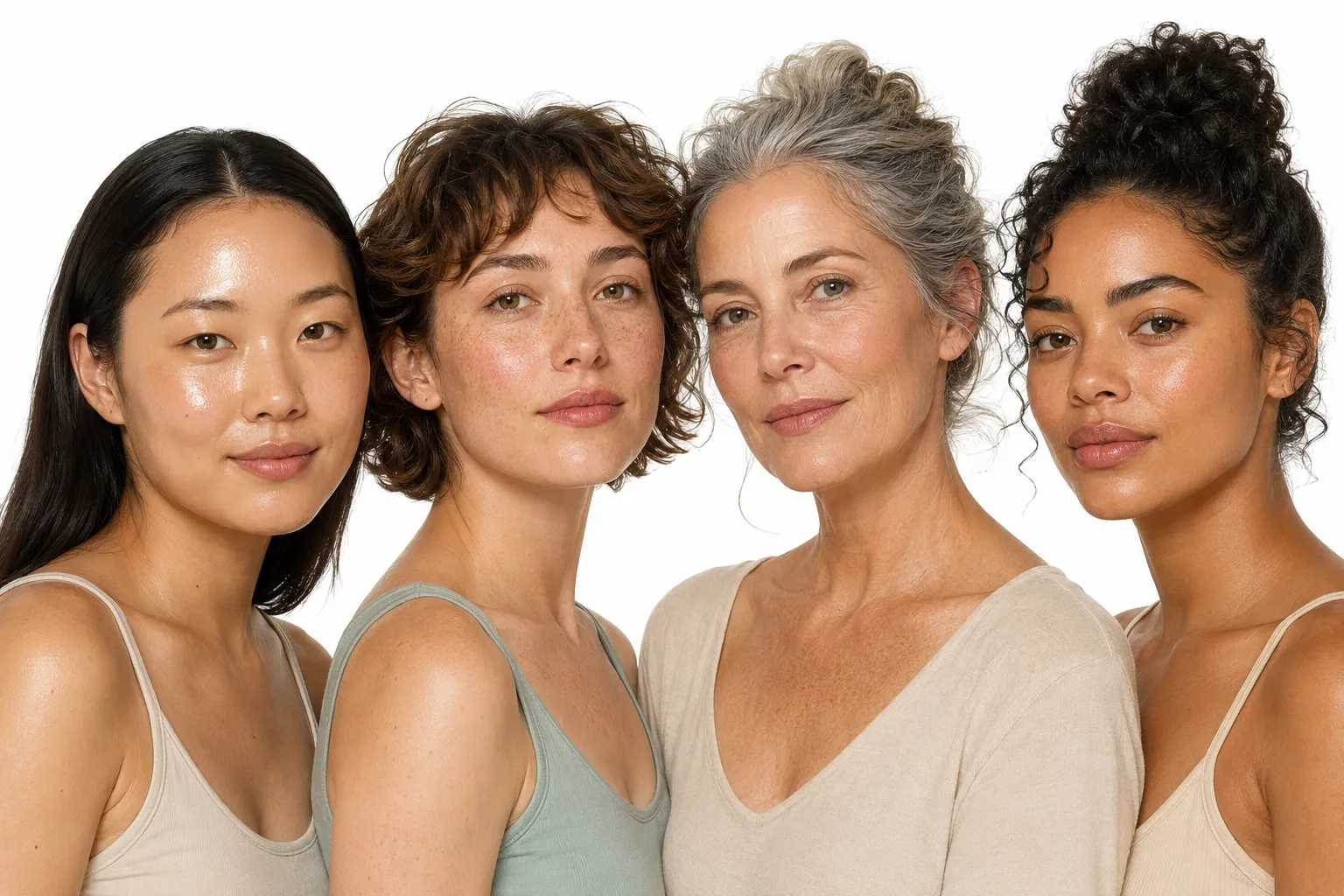
Skin type is not a fixed identity - it can change with climate, age, and lifestyle. But at any given moment, your skin type leaves a visible fingerprint that's distinct from other types.
Use this section to decide
Does this advice apply to me?
Find the concern or goal closest to yours, then use the fit signal to decide how much weight to give this guide.If your goal is
Shine levelPersonal response varies- Fit signal
- Less predictable
Oily: high, Dry: low
If your goal is
Pore visibilityDepends- Fit signal
- Possible fit
Oily: prominent, Dry: refined
If your goal is
Texture evennessUse caution- Fit signal
- Limited evidence
Normal: even, Dry: uneven
Expected results
Results and timeframe
Oily skin looks shiny with visible, enlarged pores.
Skin type can change over time and with seasons.
Practical use
How to use it
Observe your skin without makeup
Look at your bare skin in natural light after washing.
Assess your T-zone separately from cheeks
Look for differences in shine, pore size, and texture.
Choose products based on what you see
Match your skincare to your actual skin type, not the one you wish you had.
Safety
Side effects and cautions
- Assuming skin type never changes
Skin type can shift with age, climate, and seasons.
- Using the wrong products based on a mis-identification
Take the time to accurately identify your skin type.
- Treating combination skin as either oily or dry
Combination skin needs a dual approach.
Fit
Who should be careful
- Relying solely on how skin feels
Helpful context
What else is worth knowing
Perfect for skin detectives
If you're trying to figure out your skin type, this is for you.
Worth noting
Small details that can change the answer
- Oily Pores. Oily skin tends to have more visible pores because of the larger sebaceous glands.
- Dry Flakes. Dry skin often shows visible flaking or scaling, especially after cleansing.
- Combination Pattern. Combination skin is the most common skin type, with a distinct oil-dry pattern.
- Normal Sheen. Normal skin has a healthy, subtle sheen without looking greasy or dull.
Dry skin looks dull, rough, and may show flaking.
Combination skin is shiny in the T-zone and drier on the cheeks.
Normal skin looks balanced and even with refined pores.
Definition
Oily skin - the shiny look
Oily skin has a distinctive appearance: it looks shiny, especially in the T-zone, with a slick surface that reflects light. Pores appear larger and more visible, often with a pitted texture. The skin may look thicker and more resilient than other types. It's often described as looking "wet" or "glassy."
Definition
Dry skin - the dull look
Dry skin looks matte, sometimes bordering on dull. The surface may appear rough or uneven, with visible flaking or scaling. Skin may look thinner, with more visible fine lines. It can have a slightly grey or sallow appearance, especially in winter.
Definition
Combination skin - the split look
Combination skin shows the characteristics of both oily and dry skin. The T-zone (forehead, nose, chin) looks shiny, with visible pores and potentially some congestion. The cheeks and eye area look drier, sometimes dull, and may show tightness or flaking.
Definition
Normal skin - the balanced look
Normal skin appears even and balanced. It has a natural, healthy sheen but isn't greasy or dull. Pores are refined and visible but not prominent. It looks comfortable and hydrated without obvious problems in any area.
Questions
Frequently asked questions
Can you have more than one skin type?
Yes - combination skin combines oily and dry areas.
Does skin type affect aging?
Yes - oily skin tends to show fine lines later, while dry skin may age more visibly.
Can skincare change my skin type?
Skincare can't fundamentally change your genetics, but it can help balance your skin.
Should I treat my skin the same in all seasons?
No - skin types can shift with climate, so adjust your routine seasonally.