Evidence
What the evidence shows
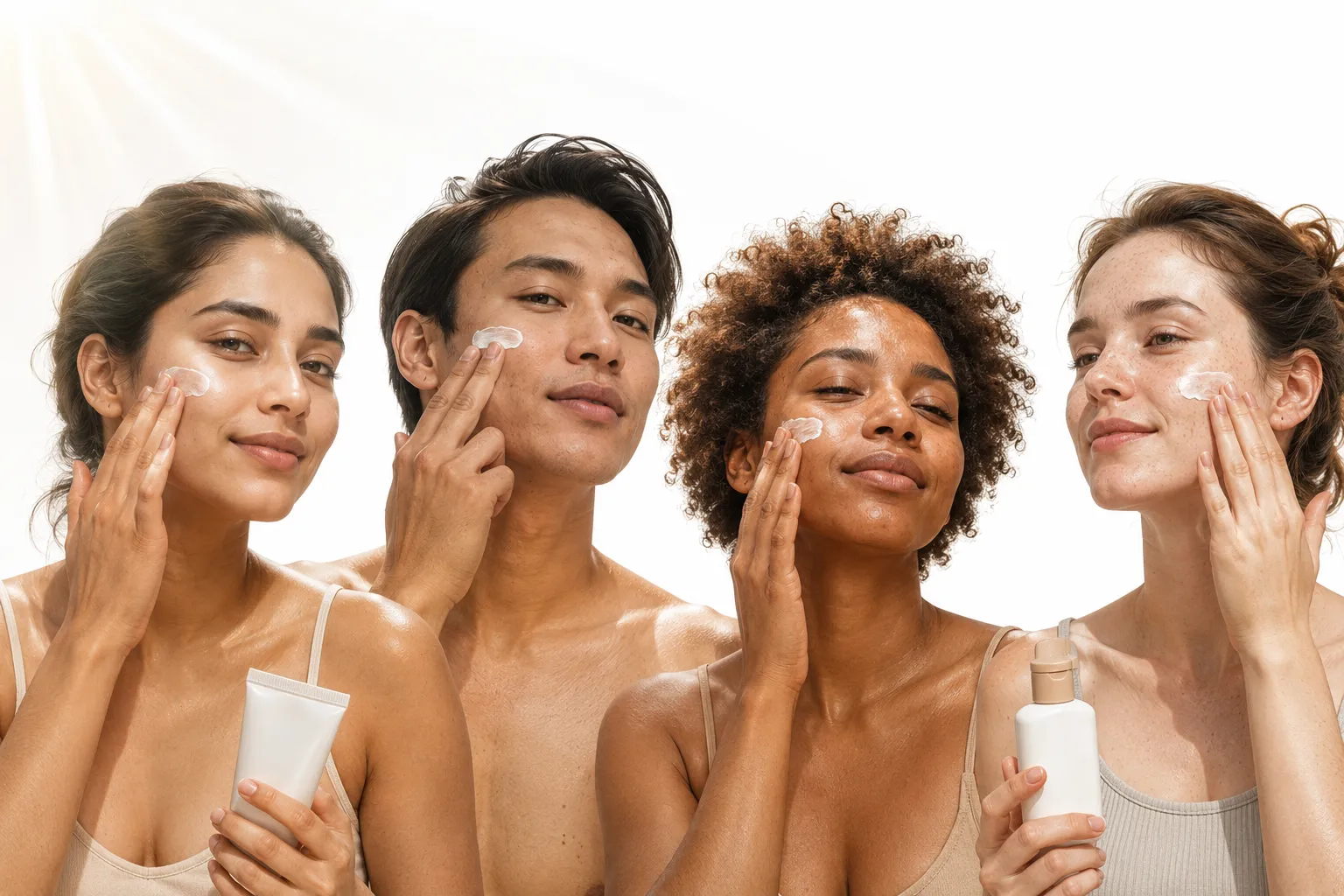
Melanin is not a substitute for sunscreen - it provides some protection, but not enough. The risk of skin cancer and photoaging exists for all skin types.
Use this section to decide
Does this advice apply to me?
Find the concern or goal closest to yours, then use the fit signal to decide how much weight to give this guide.If your goal is
AnswerUsually relevant- Fit signal
- Often useful
Yes - all skin
If your goal is
SPFUsually relevant- Fit signal
- Often useful
30 minimum
If your goal is
FrequencyUsually relevant- Fit signal
- Often useful
Daily
If your goal is
MelaninUse caution- Fit signal
- Limited evidence
Not enough protection
Research notes already in this guide
- Research confirms that sunscreen reduces skin cancer risk in all populations.
- Studies show that daily sunscreen use prevents photoaging in all skin types.
- Melanin provides SPF 2-13 in darker skin - not enough for full protection.
- Sunscreen is recommended by dermatologists for everyone.
Expected results
Results and timeframe
UV damage occurs in all skin types, though it may be less visible in darker skin.
Practical use
How to use it
Choose a sunscreen you'll actually wear
Find a formula that works for your skin type and preferences.
Apply every day
Make SPF 30+ a daily habit, regardless of the weather.
Apply enough
Use a generous amount - about a nickel-sized dollop for your face.
Reapply as needed
If you're outside, reapply every 2 hours.
Safety
Side effects and cautions
- Skipping sunscreen because you have darker skin
Melanin provides some protection but not enough - all skin needs sunscreen.
- Only using sunscreen on sunny days
UV radiation penetrates clouds - use sunscreen daily.
- Using moisturizer with SPF as your only protection
You may not apply enough for full protection - use a dedicated sunscreen.
Fit
Who should be careful
- Those who believe the myth about melanin protection
Worth noting
Small details that can change the answer
- Melanin Protection. Melanin provides up to SPF 13 in the darkest skin - not enough.
- UV Damage. All skin types experience UV damage.
- Skin Cancer. Skin cancer can occur in all skin types.
- Photoaging. All skin types experience photoaging without protection.
All skin types need sunscreen - melanin doesn't provide enough protection.
Skin cancer and photoaging affect all skin types.
Use SPF 30+ daily, regardless of skin type or weather.
Sunscreen is the most important step in any skincare routine.
Definition
Why all skin needs sunscreen
Sunscreen is essential for all skin types for several reasons.
- Prevents UV damage that leads to skin cancer
- Reduces photoaging (wrinkles, sunspots)
- Prevents hyperpigmentation
- Protects the skin barrier
- Maintains even skin tone
Science
How UV radiation affects skin
UV radiation damages skin cells by causing mutations in DNA. This damage accumulates over time and can lead to skin cancer, premature aging, and pigmentation changes. This process occurs in all skin types - melanin provides partial protection but isn't enough to prevent damage.
- UVA
- UV radiation that causes aging and penetrates deeper into the skin.
- UVB
- UV radiation that causes burning and skin cancer risk.
Risks
Risks of skipping sunscreen in all skin types
The risks of not using sunscreen are real for every skin type.
- Increased risk of all types of skin cancer
- Premature aging (wrinkles, sagging)
- Hyperpigmentation and uneven skin tone
- Sunspots and dark patches
- Damage to the skin barrier
Questions
Frequently asked questions
Do people with darker skin need sunscreen?
Yes - while they have more melanin protection, it's not enough to prevent UV damage.
Can I skip sunscreen on cloudy days?
No - UV radiation penetrates clouds and still causes damage.
What SPF is enough for all skin types?
SPF 30 is recommended for daily use in all skin types.
Is physical or chemical sunscreen better?
Both work - choose what works for your skin type and preferences.
References
Sources
The notes below are drawn from the evidence already cited in this guide. They are not a complete bibliography.
- Research confirms that sunscreen reduces skin cancer risk in all populations.
- Studies show that daily sunscreen use prevents photoaging in all skin types.
- Melanin provides SPF 2-13 in darker skin - not enough for full protection.
- Sunscreen is recommended by dermatologists for everyone.