Evidence
What the evidence shows
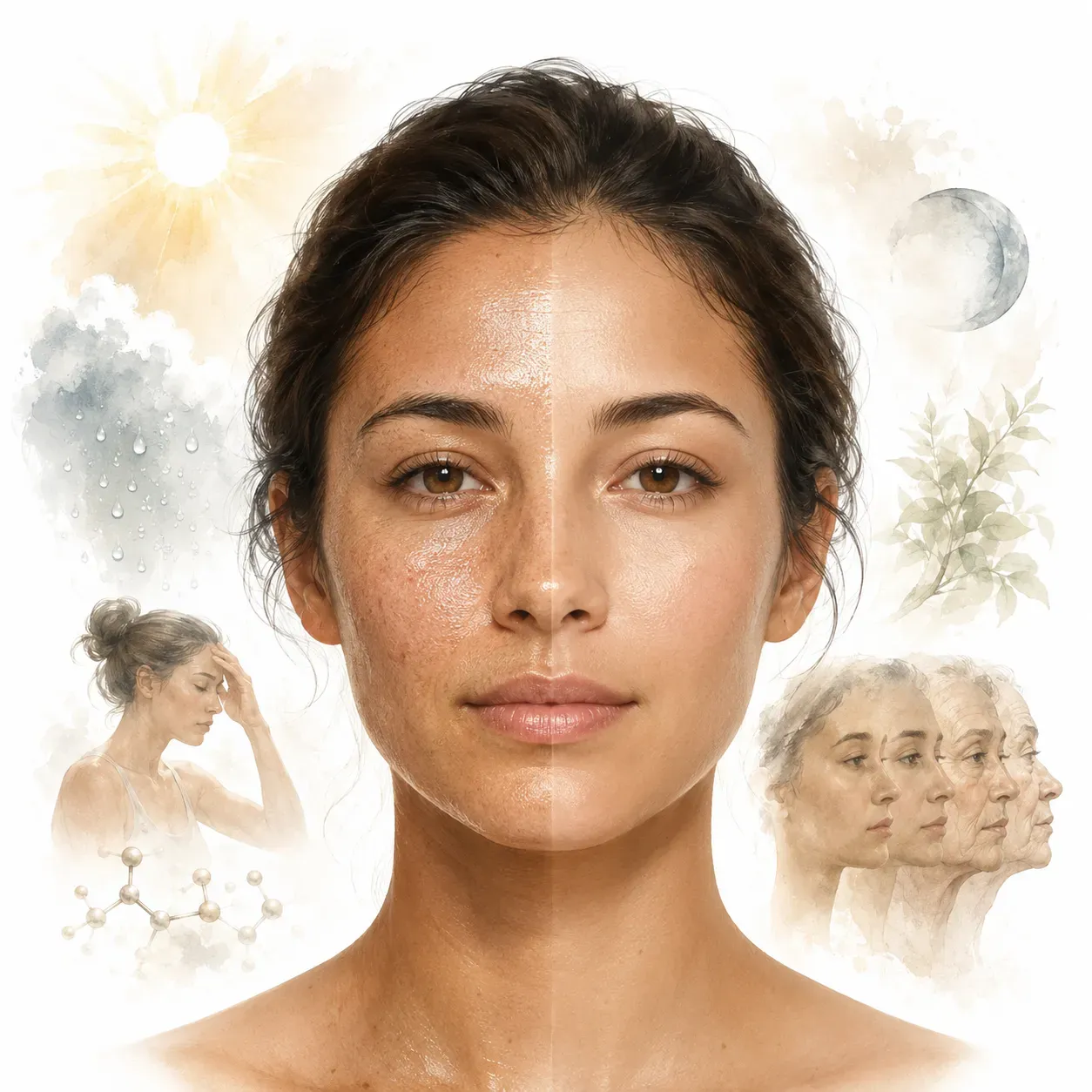
Your skin type is not fixed for life. It's a dynamic characteristic that shifts with hormonal changes, aging, and environmental factors. You can also modify it significantly with the right skincare approach.
Use this section to decide
Does this advice apply to me?
Find the concern or goal closest to yours, then use the fit signal to decide how much weight to give this guide.If your goal is
Can it change?Usually relevant- Fit signal
- Often useful
Yes (naturally and with skincare)
If your goal is
Key driversUse caution- Fit signal
- Limited evidence
Hormones, age, environment
If your goal is
What you can't changeDepends- Fit signal
- Possible fit
Genetic predisposition
If your goal is
What you can changeUsually relevant- Fit signal
- Often useful
Oiliness, hydration, sensitivity (to a degree)
Explanation
How it works
Puberty (ages 10-16)
Hormonal changes increase sebum production, often causing oilier skin.
Adulthood (ages 20-40)
Skin type typically stabilizes but can be affected by stress, birth control, and pregnancy.
Menopause (ages 45-60)
Declining hormones often lead to drier, thinner skin.
Aging (60+)
Continued decline in oil production and cell turnover leads to drier, more fragile skin.
Expected results
Results and timeframe
Skin type is largely determined by genetics but can change naturally over time.
Practical use
How to use it
Assess your current skin state honestly
Don't rely on what your skin was like in the past.
Choose products for your current skin type
Use ingredients that address your current needs, not your past needs.
Re-evaluate periodically
Skin type changes over time; adjust your routine accordingly.
Safety
Side effects and cautions
- Using the same products for decades despite skin changes
Re-evaluate your skincare needs every few years.
- Trying to force your skin into a different category
Work with your skin's current state, not what you wish it was.
- Ignoring hormonal and age-related shifts
Be aware that your skin type will naturally change over time.
Fit
Who should be careful
- Expecting a complete transformation to a different skin type
Worth noting
Small details that can change the answer
- Genetic Factor. Skin type is approximately 60-70% determined by genetics.
- Hormonal Influence. Hormonal changes (puberty, pregnancy, menopause) can significantly change skin type.
- Age-Related Change. Skin tends to become drier and less resilient with age.
- Manageable Factors. Oiliness, hydration, and sensitivity can all be modified with the right skincare.
Hormonal shifts (puberty, pregnancy, menopause) significantly affect skin type.
Aging generally leads to drier, less resilient skin.
You can influence how your skin behaves with the right skincare.
Re-evaluate your skin and skincare needs periodically.
Science
The biology of skin type determination
Skin type is determined by the activity of your sebaceous glands, which are distributed throughout the skin. These glands are stimulated by hormones, particularly androgens. Genetics determines the number and distribution of these glands, as well as their sensitivity to hormonal signals. This is why some people have more oil in their T-zone and others are dry everywhere.
- Sebaceous Gland
- A gland in the skin that produces sebum, the skin's natural oil.
- Androgen
- A male sex hormone (present in both sexes) that stimulates sebaceous gland activity.
Benefits
Factors you can control
While you can't change your genetic predisposition, you can influence how your skin behaves.
- Skincare products can regulate oil production, increase hydration, and reduce sensitivity
- Diet affects inflammation and overall skin health
- Stress management reduces cortisol-mediated effects on skin
- Sun protection prevents aging-related changes to skin type
- Adequate sleep supports skin repair and function
Risks
What you can't change
It's important to have realistic expectations about what's possible.
- Your genetic predisposition to oiliness or dryness
- The number and distribution of your sebaceous glands
- Your skin's natural hormone sensitivity
- The fundamental structure of your skin
Skin Type Suitability
How skin type shifts affect your skincare needs
Can become less oily with age; may need different products.
Often becomes drier with age; barrier support becomes more important.
May shift toward drier or oilier as hormones change.
Can become more or less sensitive with age and skincare.
Questions
Frequently asked questions
Can you go from oily to dry skin?
Yes, this often happens with age or hormonal changes, particularly during menopause.
Can you change skin type with skincare?
You can't change your genetic predisposition, but you can significantly influence how your skin behaves.
Can your skin type change after pregnancy?
Yes, hormonal shifts during and after pregnancy can change your skin type.
Is it possible to become sensitive skin over time?
Yes, sensitivity can develop or worsen due to barrier damage, aging, or environmental factors.