Evidence
What the evidence shows
Oily skin is one of the most studied skin types with strong evidence for management.
Biological basis
Well establishedHormonal drivers
Extensively studiedManagement strategies
Strong evidence
Use this section to decide
Does this advice apply to me?
Find the concern or goal closest to yours, then use the fit signal to decide how much weight to give this guide.If your goal is
Primary featureUsually relevant- Fit signal
- Often useful
Excess sebum production
If your goal is
Feels likeUse caution- Fit signal
- Limited evidence
Greasy, shiny
If your goal is
Key ingredientUsually relevant- Fit signal
- Often useful
Salicylic acid
If your goal is
UpsideUsually relevant- Fit signal
- Often useful
Ages slower
Research notes already in this guide
- The biology of sebaceous glands and sebum production is extensively studied.
- The hormonal drivers of oily skin are well-established in dermatological research.
- Treatment approaches have strong evidence bases, from topical retinoids to oral medications.
- The influence of genetics, ethnicity, and age on sebum production is well-documented.
Practical use
How to use it
Use a gentle, non-stripping cleanser
A sulfate-free, gentle cleanser removes excess oil without triggering overproduction.
Apply lightweight, oil-free moisturizer
Hydration is essential. Choose a gel or water-based formula that won't block pores.
Treat with oil-controlling ingredients
Incorporate salicylic acid, niacinamide, or retinol to manage oil and prevent breakouts.
Safety
Side effects and cautions
- Over-cleansing to remove oil
Stripping the skin of oil signals it to produce even more. Use a gentle cleanser once or twice daily.
- Skipping moisturizer because your skin is oily
Oily skin still needs moisture. Use a lightweight, oil-free moisturizer to maintain barrier health.
- Using harsh, drying ingredients like alcohol-based toners
These can damage the barrier and trigger more oil production. Choose balancing, non-drying formulas.
Fit
Who should be careful
- Expecting a permanent cure
Helpful context
What else is worth knowing
Is this information for you?
Oily skin affects different people in different ways.
Worth noting
Small details that can change the answer
- Sebaceous Glands. Oily skin has larger and more active sebaceous glands that produce up to 3-4 times more sebum than normal skin.
- Hormonal Link. Androgens (male hormones present in both sexes) are the primary drivers of sebum production.
- Pore Size. The pores in oily skin are naturally larger to accommodate the increased volume of sebum being produced.
- Aging Advantage. Oily skin often ages slower than dry skin because natural oils help keep the skin plumper and more elastic.
Oily skin is characterized by overactive sebaceous glands that produce excess oil.
It's largely determined by genetics and hormones, particularly androgens.
Oily skin has advantages, including slower aging and stronger barrier function.
The key to managing oily skin is gentle cleansing, consistent moisturizing, and appropriate targeted treatments.
Avoid stripping the skin - harsh products trigger more oil production.
Definition
What exactly is oily skin?
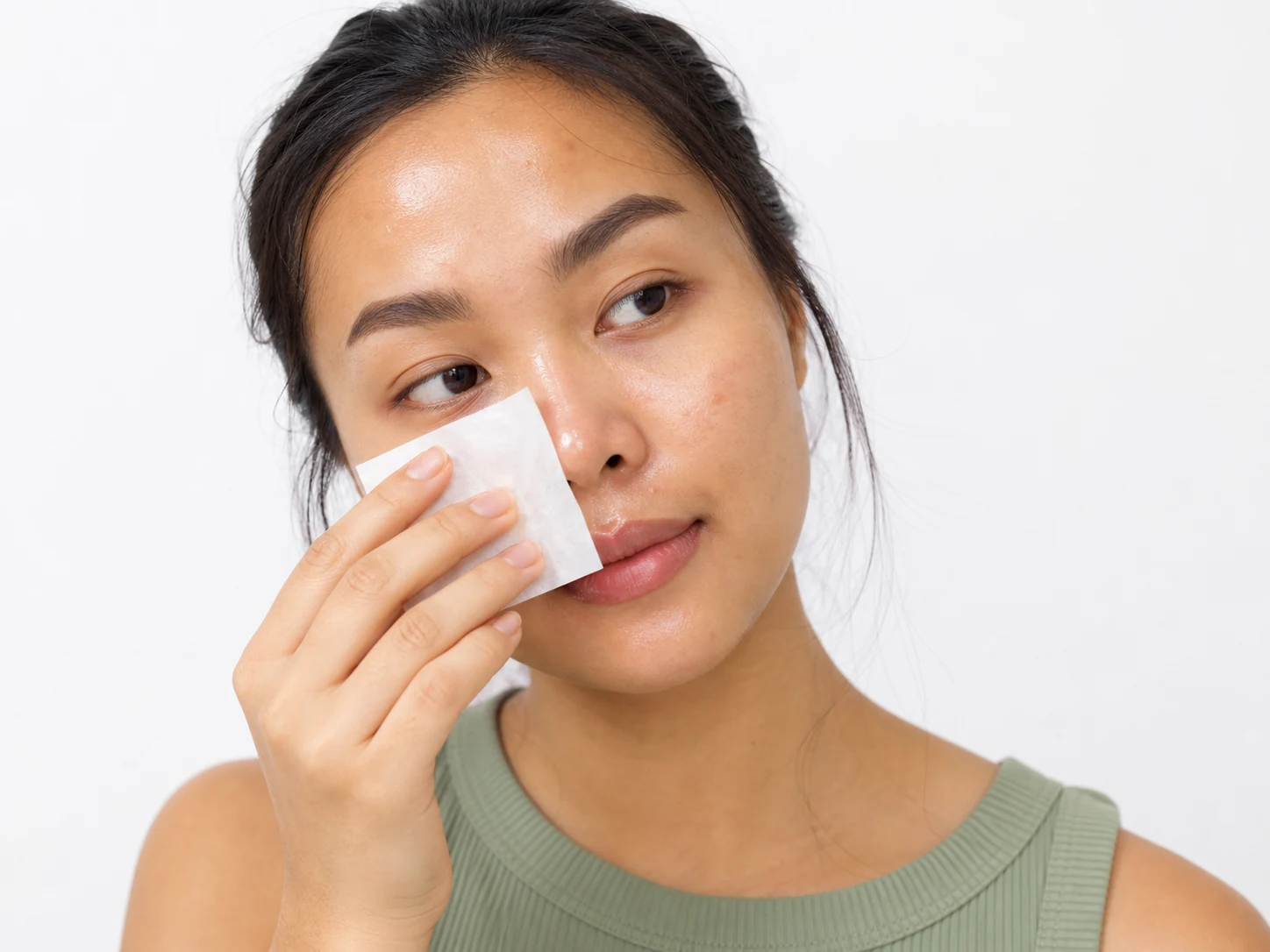
Oily skin is a skin type defined by excessive sebum production, resulting in a greasy appearance and enlarged pores. Sebum is the skin's natural oil, produced by sebaceous glands to lubricate and protect the skin, but in oily skin, the glands produce too much of it.
- Shiny or greasy appearance, particularly in the T-zone
- Enlarged, visible pores
- Prone to blackheads, whiteheads, and breakouts
- Makeup tends to slide off or not stay in place
- Thicker, more resilient skin texture
Science
The biology of oily skin
Oily skin is driven by the sebaceous glands, which are concentrated in the T-zone. These glands produce sebum in response to hormonal signals, particularly from androgens. The sebum travels up through the hair follicle to the skin's surface, where it mixes with lipids and forms a protective barrier.
- Sebaceous glands
- Oil-producing glands in the skin that are concentrated in the face, scalp, and upper torso.
- Androgens
- Hormones like testosterone that stimulate sebaceous gland activity and sebum production.
- Follicular occlusion
- The blockage of hair follicles by sebum and dead skin cells, leading to comedones (blackheads and whiteheads).
Benefits
The upsides of oily skin
Before you resign yourself to a lifetime of blotting papers, it's worth noting that oily skin has some genuine advantages.
- Slower aging: the natural oil keeps skin plumper and reduces the appearance of fine lines
- Better moisture retention: oily skin stays hydrated longer, especially in dry environments
- More resilient barrier: excess sebum provides a robust protective layer against environmental damage
- Fewer sensitivity issues: the barrier is often stronger and more resistant to irritation
Risks
The challenges of oily skin
Oily skin isn't all bad, but it does come with some well-known challenges that can be frustrating to manage.
- Breakouts: excess sebum can mix with dead skin cells and block follicles
- Enlarged pores: visible pores that many find cosmetically undesirable
- Makeup issues: foundation may slide off or break down quickly
- Scarring: breakouts can sometimes leave lasting marks or scars
Questions
Frequently asked questions
Is oily skin caused by dirty skin?
No. Oily skin is a biological characteristic, not a reflection of cleanliness. Over-cleansing actually makes it worse.
Can you cure oily skin?
Not permanently, but you can manage it effectively with the right products and routine.
Is oily skin more common in certain ethnicities?
Yes. People of African, Asian, and Mediterranean descent tend to have higher sebum production rates.
Does diet affect oily skin?
Some evidence suggests high-glycemic foods and dairy may worsen oil production in some people, but individual responses vary.
References
Sources
The notes below are drawn from the evidence already cited in this guide. They are not a complete bibliography.
- The biology of sebaceous glands and sebum production is extensively studied.
- The hormonal drivers of oily skin are well-established in dermatological research.
- Treatment approaches have strong evidence bases, from topical retinoids to oral medications.
- The influence of genetics, ethnicity, and age on sebum production is well-documented.