Evidence
What the evidence shows
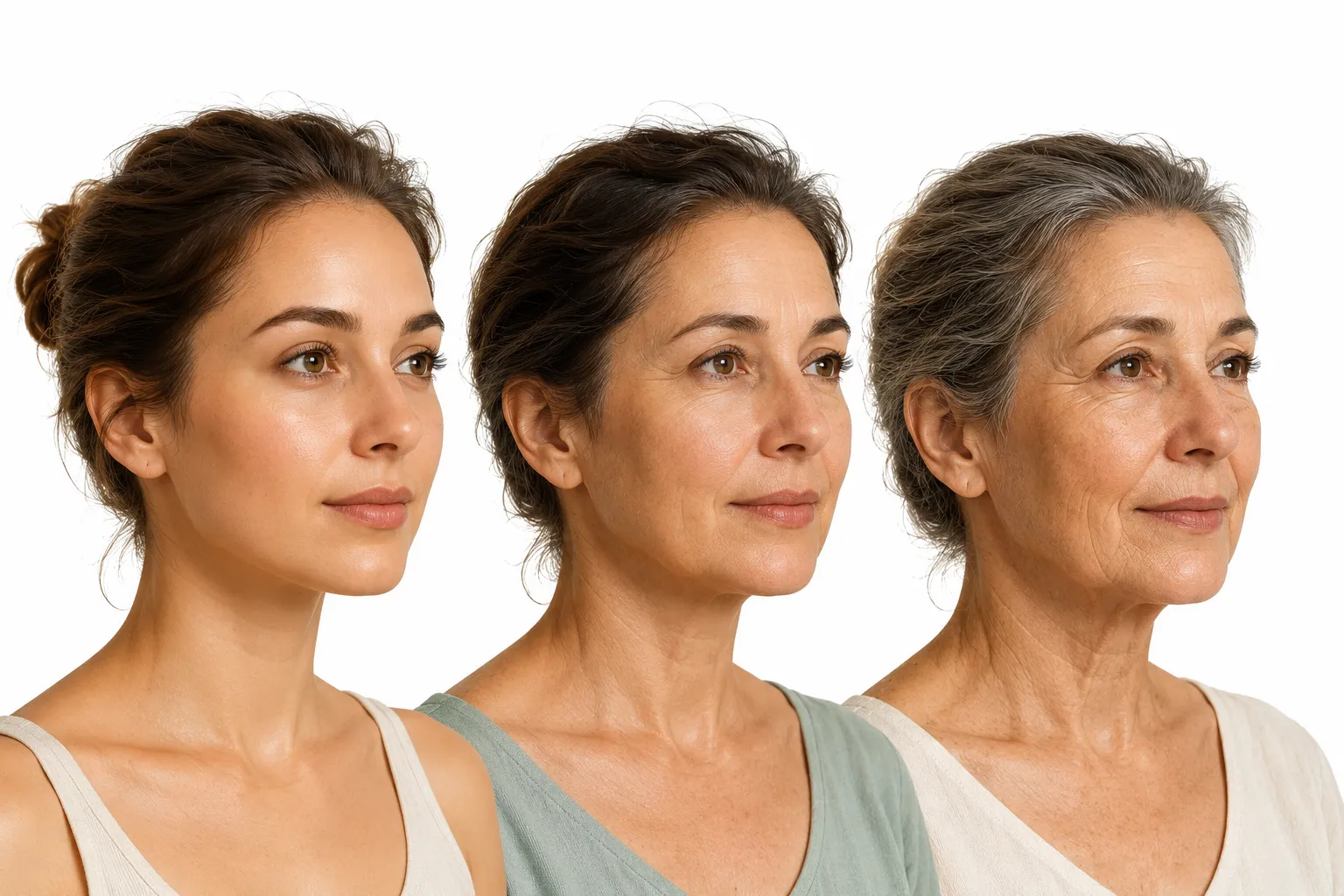
Skin type isn't a fixed label - it's a dynamic state that responds to hormonal changes, aging, and environmental factors. Regularly reassessing your skin is essential for effective skincare.
Use this section to decide
Does this advice apply to me?
Find the concern or goal closest to yours, then use the fit signal to decide how much weight to give this guide.If your goal is
Can skin type change?Usually relevant- Fit signal
- Often useful
Yes
If your goal is
Most common changeUse caution- Fit signal
- Limited evidence
Oily → drier
If your goal is
Key driverUse caution- Fit signal
- Limited evidence
Hormones, collagen loss
If your goal is
When to reassessUsually relevant- Fit signal
- Often useful
Every season and life stage
Practical use
How to use it
Regularly reassess your skin
Check in with your skin every season and after life changes (pregnancy, perimenopause).
Adjust your routine to your current skin type
Use products that address your skin's current concerns, not its old ones.
Consider age-specific ingredients
Add retinol, antioxidants, and barrier-supporting ingredients as needed.
Safety
Side effects and cautions
- Continuing to use products for your old skin type
Regularly reassess your skin and adjust your routine.
- Using the same routine year after year
Your skin's needs change with age, season, and hormones.
- Ignoring signs of change like increased dryness or sensitivity
Listen to your skin and adapt your routine accordingly.
Fit
Who should be careful
- Those who expect their skin to remain the same forever
Helpful context
What else is worth knowing
Which age-related skin change fits you?
Common skin changes by decade.
Focus on gentle cleansing, sun protection, and establishing good habits. Skin is typically oily or combination.
30sAdd antioxidants (vitamin C) and consider starting retinol. Skin may become combination or normal.
40s+Focus on barrier repair, rich moisturizers, and consistent retinol use. Skin is often drier and more sensitive.
Worth noting
Small details that can change the answer
- Sebum Decline. Sebum production can decline by up to 50% between age 20 and age 50.
- Collagen Loss. Collagen production declines by about 1% per year after age 20.
- Barrier Thinning. The skin barrier thins by about 10% per decade after age 30.
- Hormonal Impact. Estrogen decline during perimenopause can significantly affect skin hydration and barrier function.
Yes, skin type can change with age due to hormonal shifts, collagen loss, and environmental exposure.
The most common change is oily to drier skin.
Regularly reassess your skin and adapt your routine.
Add barrier-supporting ingredients as the barrier thins with age.
Sunscreen is essential at any age to prevent further changes.
Definition
What is skin type?
Skin type is a classification based on the skin's natural sebum production and barrier function. The main types are oily, dry, combination, normal, and sensitive. Skin type is influenced by genetics, hormones, age, and environment.
- Classified by sebum production and barrier function
- Main types: oily, dry, combination, normal, sensitive
- Influenced by genetics, hormones, age, environment
- Can change over a lifetime
Explanation
Why skin type changes with age
Skin type changes with age due to hormonal shifts, decreased sebum production, and loss of structural proteins. Hormones like estrogen and testosterone affect sebum production, and their levels fluctuate with age. Collagen and elastin decline, affecting elasticity and moisture retention. The barrier thins, making the skin more susceptible to dryness and sensitivity.
Benefits
How to adapt your routine to changing skin
As your skin type changes, your routine should evolve to meet its new needs.
- If your skin gets drier, switch to richer moisturizers and cream cleansers
- If your skin gets more sensitive, choose fragrance-free, gentle products
- Add barrier-supporting ingredients like ceramides and niacinamide
- Consider adding retinol to address collagen loss and fine lines
- Don't forget sunscreen - UV protection is essential at any age
Questions
Frequently asked questions
Can oily skin become dry with age?
Yes, sebum production naturally declines, and oily skin can become combination or dry.
Can dry skin become oily with age?
It's less common, but hormonal changes can occasionally cause dry skin to become more combination.
At what age does skin type change most significantly?
Significant changes often occur in the 30s and 40s due to hormonal shifts and collagen decline.
Can pregnancy change skin type?
Yes, hormonal changes during pregnancy can cause oily or dry skin shifts.