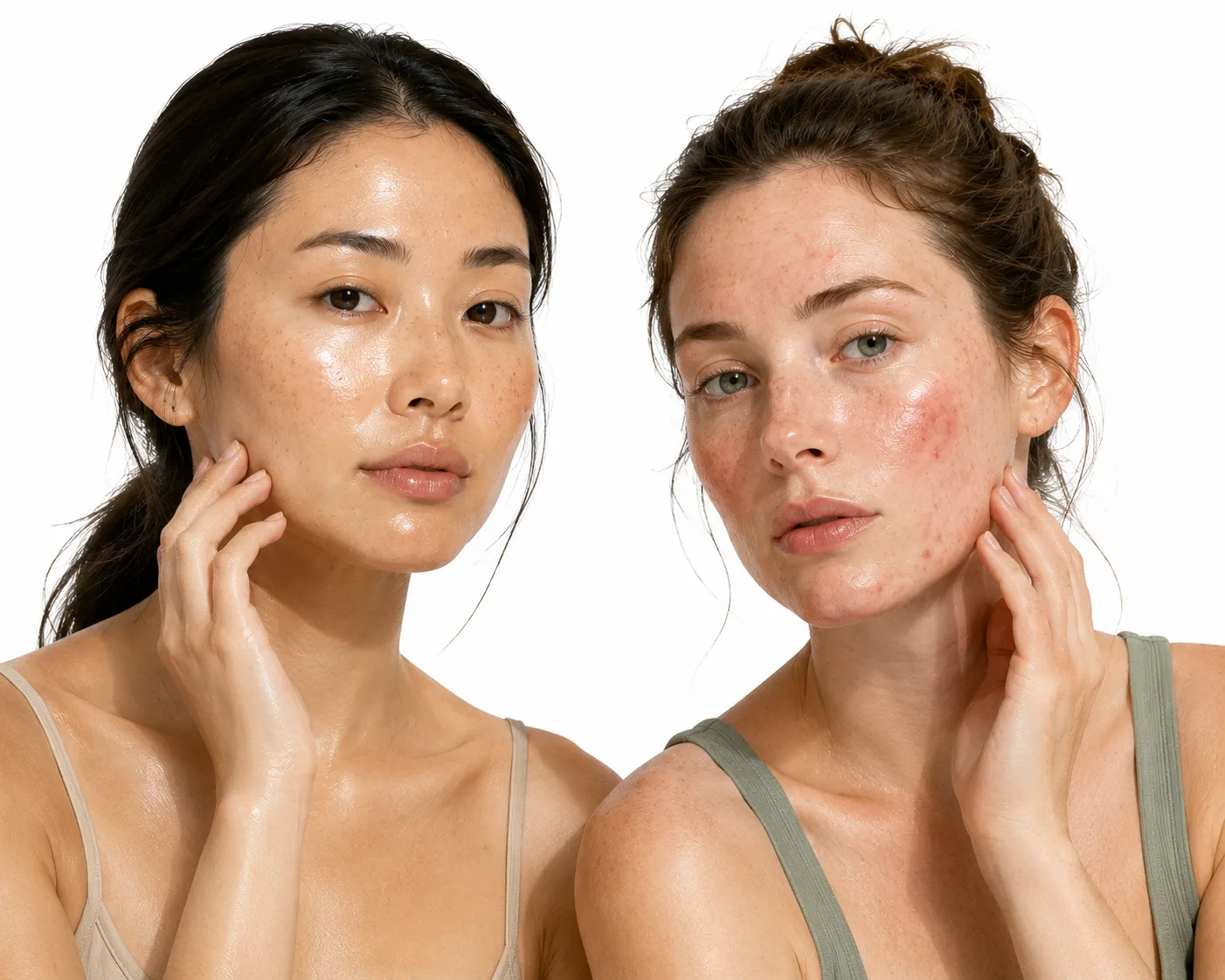
Evidence
What the evidence shows
The biggest mistake people make is treating a temporary condition as if it's a permanent type - using harsh acne products on dehydrated skin, for example, or avoiding moisturizer because they think they're naturally oily.
Has it been present for more than a year?
Likely a type - conditions typically resolve or change.Does it change with seasons or routines?
Likely a condition - types are broadly stable.Does it respond to targeted treatment?
Likely a condition - types need management, not treatment.
Use this section to decide
Does this advice apply to me?
Find the concern or goal closest to yours, then use the fit signal to decide how much weight to give this guide.If your goal is
TypeUse caution- Fit signal
- Limited evidence
Genetic, permanent
If your goal is
ConditionUse caution- Fit signal
- Limited evidence
Temporary, changeable
If your goal is
Type ExamplesUsually relevant- Fit signal
- Often useful
Oily, dry
If your goal is
Condition ExamplesUsually relevant- Fit signal
- Often useful
Acne, dehydration
Expected results
Results and timeframe
Observing your skin over time helps distinguish between type and condition.
Practical use
How to use it
Observe your skin over time
Track how your skin behaves across seasons, stress levels, and routine changes to identify your baseline type.
Identify the current condition
Assess what's happening right now - is it dryness, breakouts, sensitivity, or something else?
Adapt your routine accordingly
Choose products that address your current condition while respecting your underlying skin type.
Safety
Side effects and cautions
- Diagnosing your skin type from a single bad skin day
Observe your skin over several weeks and seasons to identify true patterns.
- Using a single routine year-round for your "skin type"
Adapt your routine to seasonal and lifestyle changes that affect your condition.
- Treating temporary conditions with harsh "type-targeting" products
Address the specific condition first, then return to your type-based routine.
Fit
Who should be careful
- People who prefer simple, one-size-fits-all routines
Worth noting
Small details that can change the answer
- Type Stability. Skin type is largely determined by genetics and remains stable over time.
- Condition Fluidity. Skin conditions can change daily, weekly, or seasonally.
- Type Influence. Your type can make you more or less susceptible to certain conditions.
- Treatment Difference. Treating a condition requires different strategies than managing a type.
Skin type is genetic and permanent; skin condition is temporary and changeable.
Your type influences your susceptibility to certain conditions.
Treating a condition requires different strategies than managing a type.
Adapt your skincare routine to your current condition, not just your type.
Definition
Defining skin type
Skin type refers to your skin's permanent, genetically determined characteristics. It's usually classified by sebum production and barrier function, resulting in categories like oily, dry, combination, normal, and sensitive. Your type remains broadly consistent throughout life.
- Oily - high sebum production, large pores
- Dry - low sebum production, small pores, tendency to flake
- Combination - oily in the T-zone, dry or normal elsewhere
- Normal - balanced sebum production
- Sensitive - easily irritated, reactive
Explanation
Defining skin condition
Skin condition refers to your skin's current state, which can change due to environmental factors, internal changes, or external interventions. Conditions are temporary states that respond to treatment and can resolve completely.
Benefits
Why the distinction matters
Understanding the difference between type and condition helps you choose the right treatments for what's actually happening with your skin.
- Prevents treating temporary problems as permanent traits
- Allows you to adapt your skincare to changing conditions
- Helps avoid products that might make a condition worse
- Encourages a more responsive, flexible approach to skincare
Myth Reality
Common confusions, clarified
Oily skin can still be dehydrated, and using a lightweight moisturizer can actually help balance oil production.
You may have combination or oily skin that's simply dehydrated from weather or skincare choices.
Acne can be a temporary condition triggered by stress, hormones, or diet, even on normal skin.
Skin can become sensitized from over-exfoliation or product use, and can recover with proper care.
Questions
Frequently asked questions
Can my skin type change completely?
Not completely - but it can shift slightly with age, especially around hormonal changes like puberty or menopause.
Is acne a skin type or a condition?
Acne is a condition, but some people's skin types predispose them to it.
How do I know if I have combination skin or a temporary condition?
Combination skin is consistently oily in the T-zone year-round; temporary conditions appear and resolve.
Can one product treat both my type and my condition?
Sometimes - but often you need a product that respects your type while addressing your specific condition.