Evidence
What the evidence shows
Skin type is a description of current behavior, not a fixed identity. It is shaped by genetics but nudged constantly by climate, hormones, age, and the products you use, which is why the same person can be "dry" in January and "combination" in July.
Use this section to decide
Does this advice apply to me?
Find the concern or goal closest to yours, then use the fit signal to decide how much weight to give this guide.If your goal is
CategoriesUse caution- Fit signal
- Limited evidence
5 main types
If your goal is
Fixed?Use caution- Fit signal
- Limited evidence
No, can shift
If your goal is
Diagnosis needed?Usually relevant- Fit signal
- Often useful
Usually not
If your goal is
Best useUsually relevant- Fit signal
- Often useful
Guiding product choice
Research notes already in this guide
- Skin typing is widely used in dermatology as a practical, not diagnostic, framework.
- Self-assessment is usually accurate enough for choosing everyday skincare.
- More precise assessment (like true clinical skin analysis) exists but is rarely necessary for typical routines.
Practical use
How to use it
Watch your skin for a full day
Note where it shines, where it feels tight, and how it reacts by evening.
Match products to the general category
Choose a cleanser and moisturizer suited to your dominant type, then adjust from there.
Reassess each season
Skin type often shifts with weather and age, so revisit your routine periodically.
Safety
Side effects and cautions
- Assuming your skin type is fixed for life
Reassess occasionally, especially after big changes in season, age, or hormones.
- Choosing products based on one trait alone
Look at the whole picture - oil, hydration, and sensitivity together - rather than just shine or tightness.
- Over-identifying with a label
Use skin type as a guide, not a rulebook. Let how your skin actually behaves have the final say.
Fit
Who should be careful
- Diagnosing a skin condition
- Predicting skin behavior with total precision
Helpful context
What else is worth knowing
The five categories at a glance
More shine, larger-looking pores, breakout-prone.
Tightness, flaking, duller-looking texture.
Oily T-zone, drier or balanced elsewhere.
Reacts easily to products or weather.
Balanced oil and hydration, few complaints.
Where people go wrong
Treating skin type as permanent
Reassess after big seasonal, hormonal, or age-related changes.
Ignoring overlap between types
Combination and sensitive skin can coexist with any other type.
Skin type myths vs reality
Myth: You must fit neatly into one category.
Reality: Most people show traits from more than one type.
Myth: Skin type is set for life.
Reality: It commonly shifts with age, climate, and hormones.
What the evidence suggests
Skin typing frameworks are widely used across dermatology and cosmetic science.
They serve as a practical tool rather than a diagnostic standard.
Worth noting
Small details that can change the answer
- Oil. Sebum production is the single biggest factor separating oily from dry skin, and it is influenced heavily by genetics and hormones.
- T-Zone. Combination skin is extremely common because the forehead, nose, and chin simply have more oil glands than the cheeks.
- Sensitivity. Sensitive skin is better understood as a trait that overlaps with other skin types than as a category on its own.
- Change. Skin type commonly shifts with age, climate, and hormonal changes, which is why a routine that worked five years ago might stop working now.
The five common skin types are oily, dry, combination, sensitive, and normal.
These categories describe tendencies, not permanent identities.
Many people show traits of more than one type at once, especially combination and sensitive.
Skin type can change with age, climate, and hormones.
Knowing your type mainly helps you choose more suitable products, not diagnose a condition.
Definition
What does "skin type" actually mean?
A working definition before the categories arrive.
Skin type is a broad description of how much oil your skin produces, how well it retains moisture, and how it tends to react to products and environment. It is used mainly as a practical shortcut for choosing skincare, not as a medical diagnosis.
Explanation
The five common categories
Most skincare guidance sorts skin into oily, dry, combination, sensitive, and normal. Each category describes tendencies rather than fixed rules, and many people notice traits from more than one category at once.
Why the categories matter
Knowing your general skin type helps narrow down which cleansers, moisturizers, and actives are more likely to suit you, so you spend less time and money on trial and error.
- Choosing a cleanser that will not strip or overload your skin
- Picking a moisturizer texture that feels comfortable
- Deciding how cautiously to introduce active ingredients
- Setting realistic expectations for how your skin behaves
Common myths about skin types
Myth
Everyone fits neatly into one category.
Reality
Many people show traits of two categories at once, and that is entirely normal.
Myth
Your skin type never changes.
Reality
Skin type can shift with age, climate, hormones, and even the products you use.
Myth
Oily skin does not need moisturizer.
Reality
Oily skin still needs hydration; skipping moisturizer can sometimes make oiliness worse.
Questions
Frequently asked questions
How do I find out my skin type?
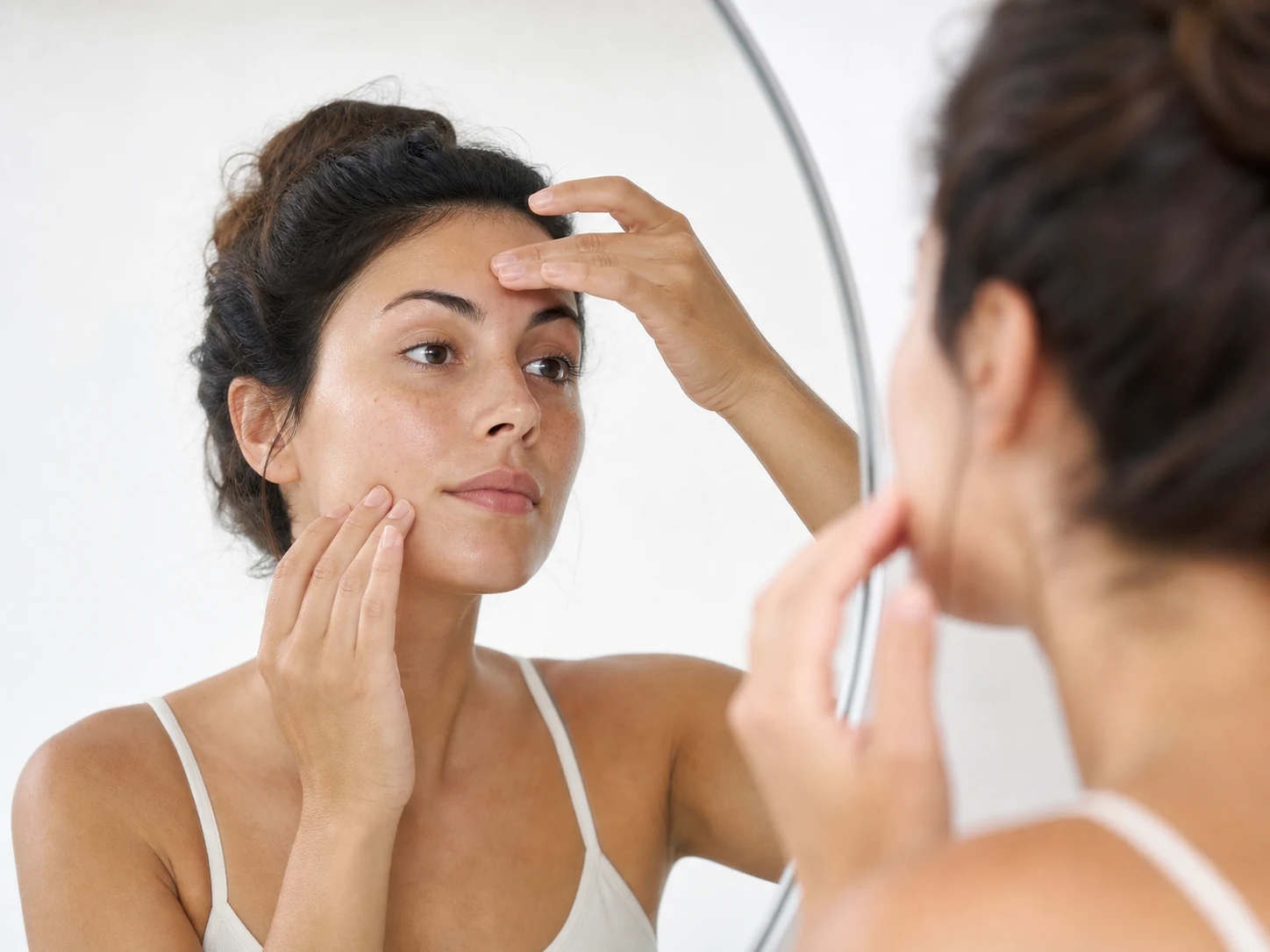
Cleanse your face and wait about an hour without applying products. Where your skin shines, feels tight, or reacts tells you most of what you need to know.
Can I have more than one skin type?
Yes. Combination skin is essentially having two types at once, and sensitivity can overlap with any of the other categories.
Does skin type change with age?
Often, yes. Oil production tends to decrease with age, so skin that was oily in your twenties may become more combination or normal later.
Is sensitive skin a separate type?
It is usually treated as its own category, but it is really a reactivity trait that can appear alongside oily, dry, combination, or normal skin.
References
Sources
The notes below are drawn from the evidence already cited in this guide. They are not a complete bibliography.
- Skin typing is widely used in dermatology as a practical, not diagnostic, framework.
- Self-assessment is usually accurate enough for choosing everyday skincare.
- More precise assessment (like true clinical skin analysis) exists but is rarely necessary for typical routines.