Evidence
What the evidence shows
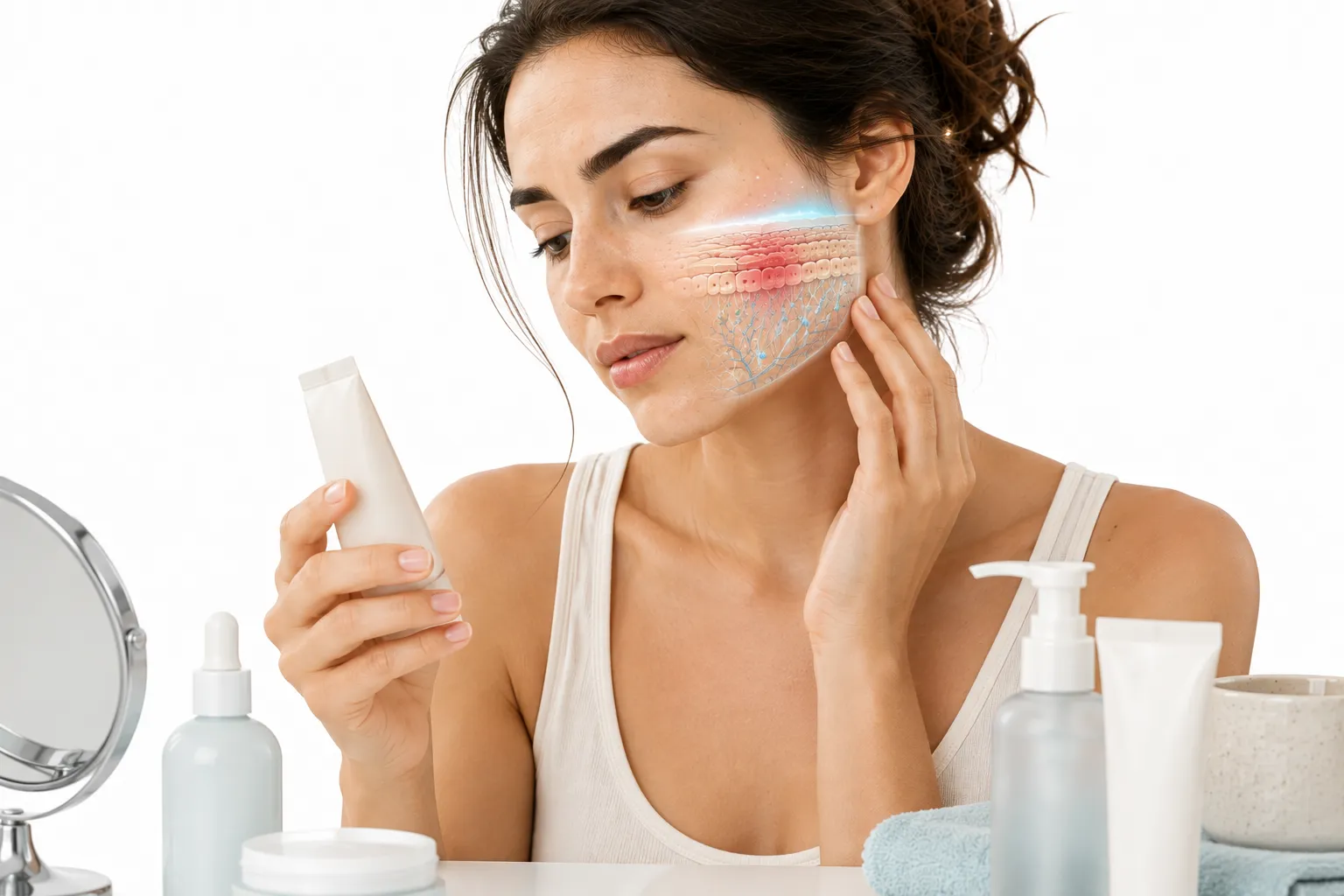
Azelaic acid's gentleness comes from its mechanism - it's a dicarboxylic acid that works more slowly and gently than other exfoliating acids, making it less likely to disrupt the barrier.
Use this section to decide
Does this advice apply to me?
Find the concern or goal closest to yours, then use the fit signal to decide how much weight to give this guide.If your goal is
Barrier Damage RiskUsually relevant- Fit signal
- Often useful
Low
If your goal is
Safe ConcentrationUsually relevant- Fit signal
- Often useful
5-10%
If your goal is
IntroductionUsually relevant- Fit signal
- Often useful
Slow and gradual
If your goal is
Best ForUsually relevant- Fit signal
- Often useful
Sensitive, acne-prone skin
Research notes already in this guide
- Studies show azelaic acid is one of the gentler acids available.
- It's recommended for sensitive skin conditions like rosacea.
- Research shows it's less likely to cause barrier disruption than other acids.
Expected results
Results and timeframe
Use it alongside barrier-supporting moisturizers for the best results.
Practical use
How to use it
Start low and slow
Begin with a 5-10% concentration and use it 1-2 times per week.
Monitor your skin
Watch for signs of irritation - redness, stinging, or burning.
Support your barrier
Use a barrier-supporting moisturizer alongside azelaic acid.
Safety
Side effects and cautions
- Starting with a high concentration (15-20%)
Start with 5-10% OTC and work your way up if needed.
- Using it daily from the start
Start with 1-2 times per week and gradually increase frequency.
- Using it on a compromised barrier
Wait until your barrier is intact before introducing any active ingredient.
Fit
Who should be careful
- High concentrations (15-20%) without proper introduction
- Use on a compromised barrier
Helpful context
What else is worth knowing
Azelaic acid safety
Compared to other acids
Calms skin while exfoliating
Start here
Use with caution
What experts say about azelaic acid and barrier safety
Dr. Shereene IdrissAzelaic acid is one of the gentlest active ingredients. It's safe for the barrier when used correctly.
Dr. Mona GoharaStart with a lower concentration of azelaic acid and work your way up to minimize irritation.
Worth noting
Small details that can change the answer
- Gentle Exfoliation. Azelaic acid works more slowly than other acids, reducing the risk of barrier disruption.
- Anti-Inflammatory. Its anti-inflammatory properties actually help calm the skin while it exfoliates.
- Barrier-Safe. Studies show it's less likely to cause barrier disruption than other acids.
- Concentration Matters. Higher concentrations (15-20%) are more likely to cause irritation.
Azelaic acid is one of the gentler active ingredients and is unlikely to damage the barrier when used correctly.
Start with a lower concentration (5-10%) and introduce it gradually.
It's less likely to disrupt the barrier than glycolic acid, salicylic acid, or benzoyl peroxide.
If you have a compromised barrier, wait until it's intact before introducing azelaic acid.
Definition
What azelaic acid does to the skin barrier
Understanding the mechanism.
Azelaic acid works by gently exfoliating the skin and reducing inflammation. It's one of the gentler acids and is less likely to disrupt the barrier than alternatives like glycolic acid or benzoyl peroxide.
Explanation
Why azelaic acid is generally barrier-safe
Azelaic acid's barrier safety comes from its gentle mechanism and anti-inflammatory properties. It exfoliates slowly, reducing the risk of barrier disruption, and its anti-inflammatory action helps soothe the skin.
When azelaic acid can damage the barrier
Here are situations where azelaic acid might cause barrier damage.
- Using too high a concentration (15-20%) without building up to it
- Introducing it too quickly - start with every other day or less
- Using it on a compromised barrier - wait until your barrier is intact
- Layering it with other strong actives without careful introduction
- Using it too frequently - daily may be too much for some
How to use azelaic acid safely
Here's how to minimize the risk of barrier damage.
- Start with a 5-10% OTC concentration
- Introduce it slowly - start with 1-2 times per week
- Apply it to clean, dry skin
- Use it with a barrier-supporting moisturizer
- Monitor your skin for signs of irritation and adjust accordingly
Questions
Frequently asked questions
Is azelaic acid safe for sensitive skin?
Yes, it's one of the few active ingredients recommended for sensitive skin.
Can azelaic acid cause barrier damage?
It can if used incorrectly, but it's much less likely to cause barrier damage than other acids.
What concentration of azelaic acid is safe for barrier health?
5-10% (OTC) is generally safe for most people. Higher concentrations (15-20%) require prescription and careful use.
Can I use azelaic acid with other active ingredients?
Yes, but introduce them one at a time and monitor for irritation.
References
Sources
The notes below are drawn from the evidence already cited in this guide. They are not a complete bibliography.
- Studies show azelaic acid is one of the gentler acids available.
- It's recommended for sensitive skin conditions like rosacea.
- Research shows it's less likely to cause barrier disruption than other acids.