Evidence
What the evidence shows
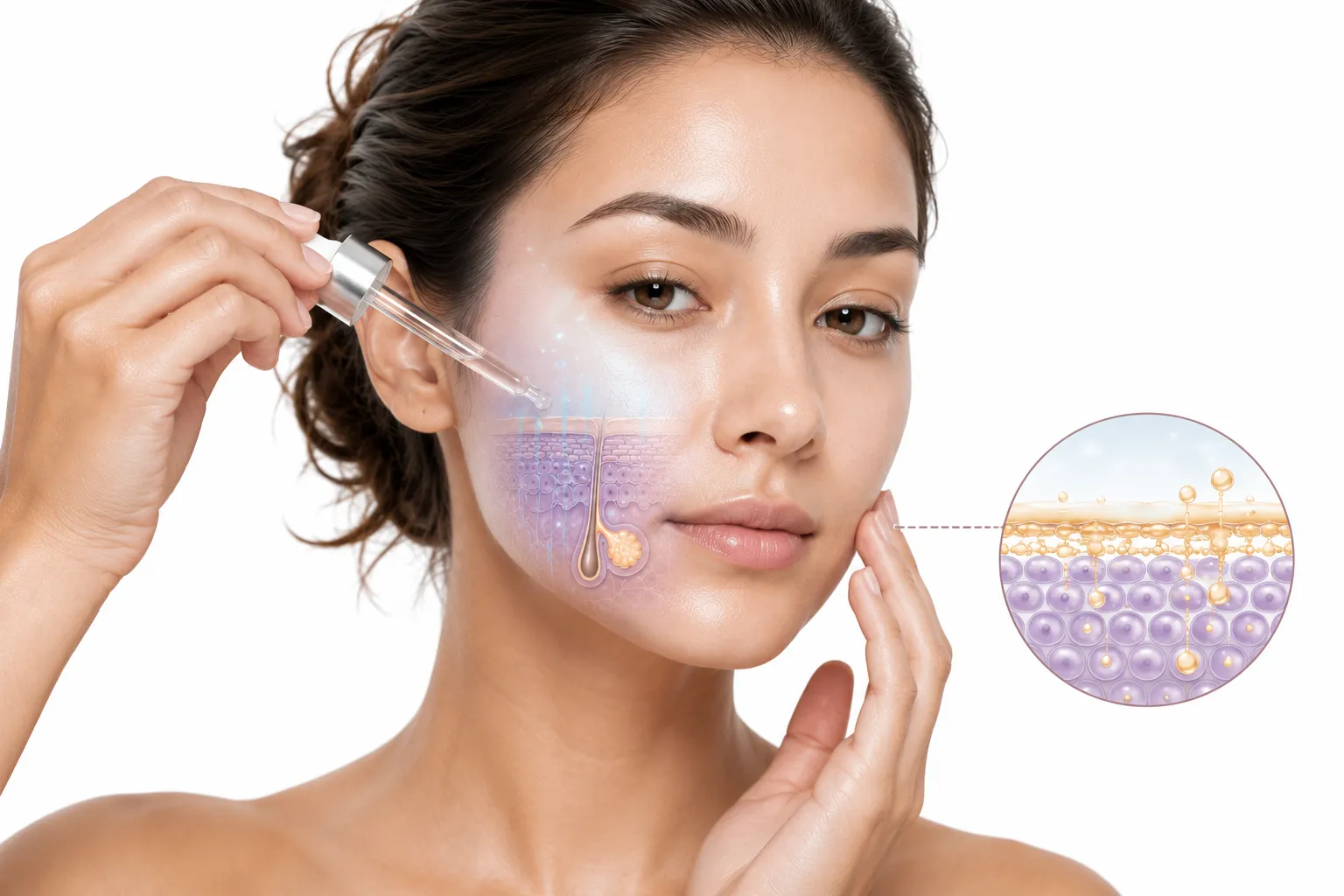
Niacinamide works for combination skin because it does different things in different zones - oil regulation where needed, barrier support where needed - all from one ingredient.
Use this section to decide
Does this advice apply to me?
Find the concern or goal closest to yours, then use the fit signal to decide how much weight to give this guide.If your goal is
Oil regulation (T-zone)Usually relevant- Fit signal
- Often useful
Excellent
If your goal is
Barrier support (cheeks)Usually relevant- Fit signal
- Often useful
Excellent
If your goal is
Anti-inflammatoryDepends- Fit signal
- Possible fit
Good calming effect
If your goal is
Pigmentation helpDepends- Fit signal
- Possible fit
Good for hyperpigmentation
Expected results
Results and timeframe
Consistent use over 4-8 weeks is needed to see results.
Practical use
How to use it
Choose a 2-5% niacinamide product
This is the sweet spot for effectiveness and tolerability.
Apply to both zones
Niacinamide works on both the T-zone and cheeks.
Be consistent
Use it daily or as directed, and give it 4-8 weeks to work.
Safety
Side effects and cautions
- Starting with too high a concentration
Start with 2-5% and increase if needed.
- Expecting overnight results
Niacinamide takes 4-8 weeks to show visible improvements.
- Not using it consistently
Consistency is essential for visible results.
Fit
Who should be careful
- Those who experience flushing - start with a lower concentration
Worth noting
Small details that can change the answer
- Oil Regulation. Niacinamide helps reduce sebum production in the T-zone.
- Barrier Support. It stimulates ceramide production for barrier function on the cheeks.
- Anti-Inflammatory. It has calming properties that benefit all zones.
- Pigmentation Help. It can help with post-inflammatory hyperpigmentation common in combination skin.
Niacinamide is ideal for combination skin - it regulates oil on the T-zone and supports barrier function on the cheeks.
The recommended concentration is 2-5% for most people.
It has anti-inflammatory properties that benefit both zones.
It's one of the most versatile and effective ingredients for combination skin.
Skin Type Suitability
Niacinamide suitability for combination skin
Excellent - helps regulate oil production
Excellent - supports barrier function
Excellent - works on both zones effectively
Well-tolerated - but patch test as with any product
Dos Donts
Dos and don'ts for niacinamide on combination skin
Do
Effective and well-tolerated
Works well on both T-zone and cheeks
Results typically take 4-8 weeks
Works best as part of a comprehensive routine
Avoid
Can cause flushing in some people
Takes time to show visible improvements
Consistency is key with niacinamide
Research Summary
Evidence for niacinamide on combination skin
Benefits the T-zone of combination skin
Benefits the cheeks of combination skin
Reduces irritation and redness
Questions
Frequently asked questions
Can niacinamide irritate combination skin?
It's generally well-tolerated, but some people experience flushing - start with a lower concentration.
Is niacinamide better for oily or dry parts of combination skin?
It's equally beneficial for both - it regulates oil on the T-zone and supports barrier function on the cheeks.
Can I use niacinamide with other actives?
Yes - niacinamide pairs well with most other ingredients, including retinol and vitamin C.
How long does niacinamide take to work?
Visible improvements typically take 4-8 weeks of consistent use.