Evidence
What the evidence shows
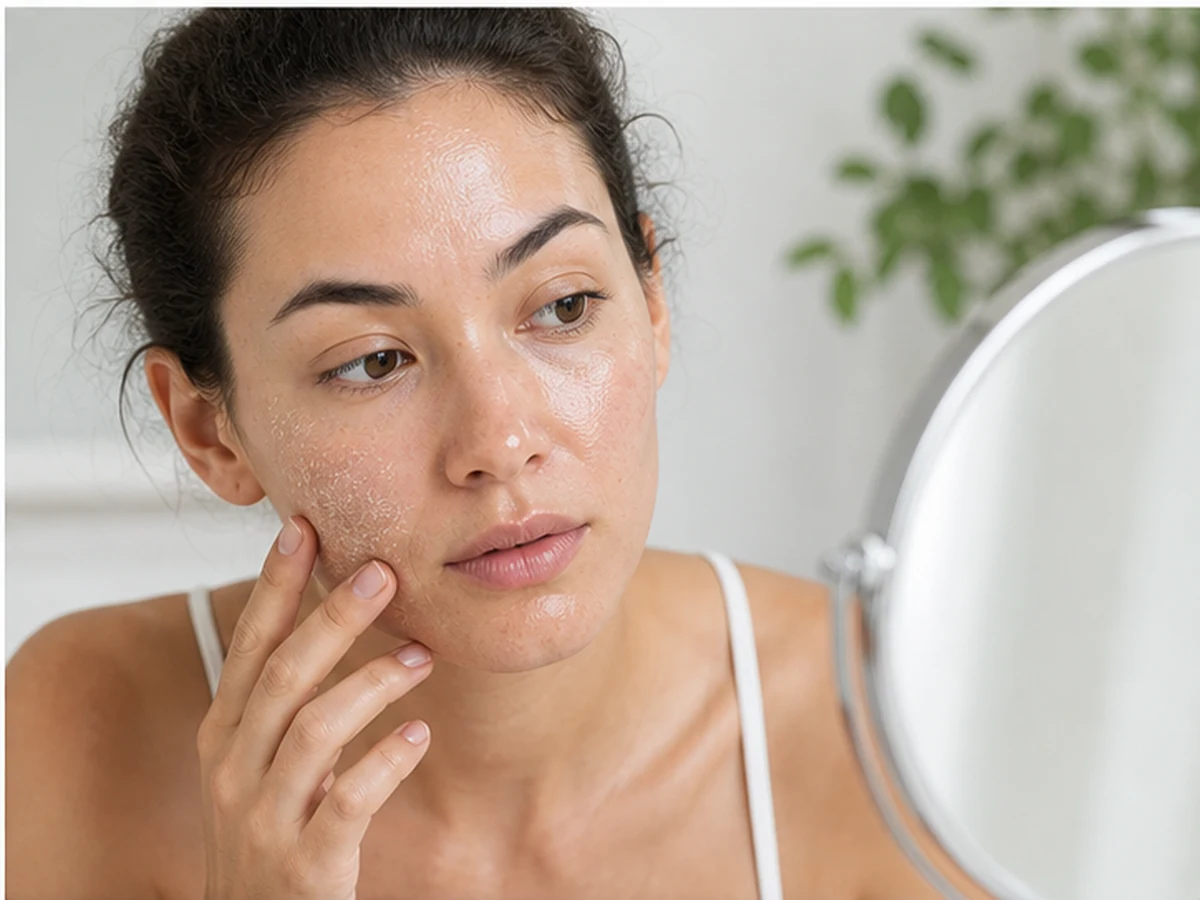
Shine alone isn't a reliable way to identify oily skin, since dehydrated, oil-deficient skin can produce a similar-looking sheen for entirely different reasons.
Shiny + tight?
Likely dehydrated dry skinShiny + slick?
Likely true oily skin
Use this section to decide
Does this advice apply to me?
Find the concern or goal closest to yours, then use the fit signal to decide how much weight to give this guide.If your goal is
Oily skin feelUse caution- Fit signal
- Limited evidence
Slick, soft
If your goal is
Dehydrated dry skin feelUse caution- Fit signal
- Limited evidence
Tight, rough
If your goal is
Shared traitDepends- Fit signal
- Possible fit
Visible shine
If your goal is
Safer first stepUsually relevant- Fit signal
- Often useful
Hydrate gently
Practical use
How to use it
Assess texture, not just shine
Note whether skin feels slick, tight, or rough.
Try a gentle, hydrating routine first
If unsure, a hydrating approach is less likely to worsen either condition.
Adjust based on how skin responds
Improvement with hydration suggests dehydration was the underlying issue.
Safety
Side effects and cautions
- Assuming all shine means excess oil
Dehydrated dry skin can also look shiny for different reasons.
- Using harsh, oil-stripping products on dehydrated skin
This can worsen dryness and irritation.
- Ignoring how the skin feels, only how it looks
Texture and sensation are more reliable indicators than shine alone.
Fit
Who should be careful
- Diagnosing without checking skin texture
Worth noting
Small details that can change the answer
- Shine Isn't Definitive. Both true oiliness and dehydrated dryness can produce visible surface shine.
- Texture Tells More. Oily skin tends to feel slick, while dehydrated dry skin often feels tight or rough.
- Common Confusion. This mix-up is sometimes informally called "dry-oily" skin.
- Risk of Overcorrection. Treating dehydrated dry skin as oily can worsen dryness and irritation.
Dry, dehydrated skin can be mistaken for oily skin due to surface shine.
True oiliness comes from excess sebum, while dehydration-related shine has different causes.
Texture and sensation are more reliable indicators than shine alone.
Treating dehydrated skin as oily can worsen dryness and irritation.
A gentle, hydrating approach is a safer starting point when the skin type is unclear.
Explanation
Why dry skin can look oily
Dehydration can change how light reflects off the skin's surface, sometimes producing a shine that resembles oiliness even without excess sebum. In some cases, barrier stress from dryness can also trigger a small amount of reactive oil production, adding to the confusion.
Myth Reality
Shine versus true oiliness
Dehydrated dry skin can also appear shiny, for different underlying reasons.
If the shine comes from dehydration, mattifying products can make dryness worse.
Decision Helper
Telling the two apart
Shiny skin that also feels tight or rough
Consider dehydrated dry skin rather than true oiliness.Tightness and roughness point to a lack of water, not excess oil.
Shiny skin that feels slick and soft
Consider true oily skin.A slick, soft feel is more consistent with excess sebum.
Dos Donts
Responding to shine correctly
Do
Texture is a better indicator than shine alone.
Helps address dehydration without worsening true oiliness.
Avoid
Can worsen dehydration if the shine isn't from true oil.
Questions
Frequently asked questions
Why does my dry skin look shiny?
Dehydration can change how the skin's surface reflects light, producing a shine that resembles oiliness.
How can I tell if my skin is dry or oily?
Pay attention to texture, oily skin tends to feel slick, while dehydrated dry skin often feels tight or rough.
Will a mattifying product help my dehydrated skin?
It may reduce shine temporarily but can worsen underlying dryness.
Is "dry-oily" skin a real skin type?
It's more of an informal description of dehydrated dry skin that appears shiny, rather than a distinct clinical skin type.