Evidence
What the evidence shows
Heat rash doesn't get infected because the sweat ducts are blocked - it gets infected because you scratch it. The infection is a secondary problem, not a progression of the heat rash itself.
Use this section to decide
Does this advice apply to me?
Find the concern or goal closest to yours, then use the fit signal to decide how much weight to give this guide.If your goal is
Risk levelUsually relevant- Fit signal
- Often useful
Low, if not scratched
If your goal is
Primary causeDepends- Fit signal
- Possible fit
Scratching breaks the skin
If your goal is
Warning signsUse caution- Fit signal
- Limited evidence
Pain, swelling, discharge
If your goal is
Action neededUse caution- Fit signal
- Limited evidence
See a doctor
Practical use
How to use it
Stop scratching immediately
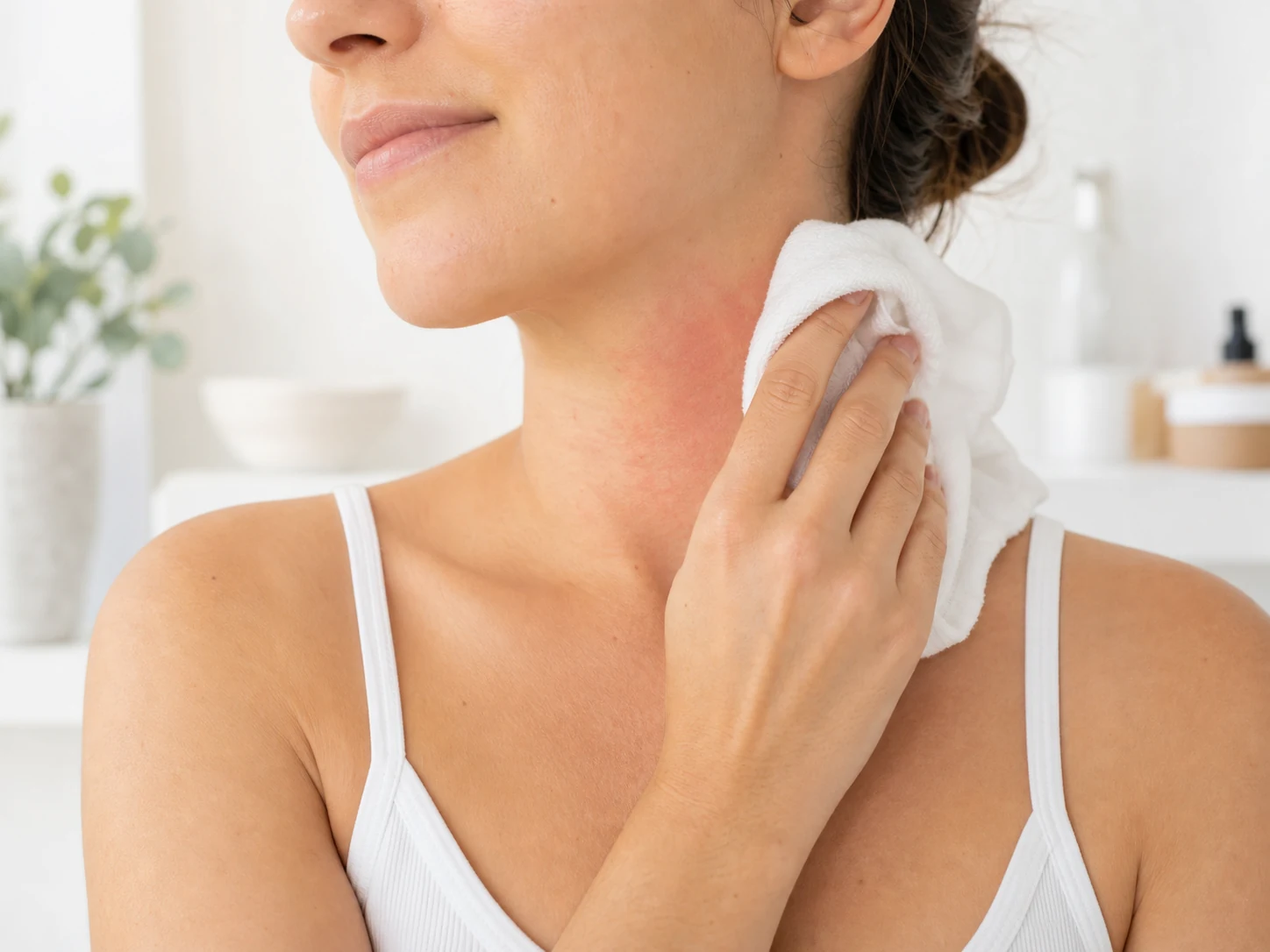
Cover the area if necessary, use cool compresses to relieve itching, and avoid any further irritation.
Keep the area clean and dry
Gently clean with mild soap and water, pat dry carefully, and avoid occlusive bandages.
Seek medical attention if signs appear
If you notice pain, swelling, redness spreading, discharge, or fever, see a healthcare provider promptly.
Safety
Side effects and cautions
- Scratching heat rash
Scratching is the primary cause of infection. Use cooling compresses to reduce the urge to scratch.
- Attempting to "pop" heat rash bumps
This breaks the skin and introduces bacteria. Leave the bumps alone.
- Ignoring signs of infection
Heat rash infections don't resolve on their own. Prompt treatment is essential.
- Worsening pain or tenderness
Key indicator · See a healthcare provider
- Redness spreading beyond the rash
Key indicator · See a healthcare provider promptly
- Pus or fluid discharge
Key indicator · Medical attention needed
- Fever or feeling unwell
Serious sign · Seek immediate medical care
Fit
Who should be careful
- Cases with confirmed infection that need immediate medical treatment
Worth noting
Small details that can change the answer
- Infection Risk. The primary risk factor for infection is scratching.
- Common Pathogens. Staphylococcus and Streptococcus are the most common bacteria involved.
- Signs to Watch. Pain, swelling, warmth, and discharge are key warning signs.
- Prevention. Keeping the rash cool, dry, and unscratched is the best prevention.
Heat rash can become infected, but this is usually caused by scratching.
Signs of infection include increasing pain, swelling, warmth, redness, and pus.
Secondary infections require medical attention and may need antibiotics.
Prevention is simple: don't scratch, keep the area cool and dry.
An infected heat rash is not something to treat at home - see a doctor.
Definition
What does an infected heat rash look like?
It's important to distinguish between the normal inflammation of heat rash and the signs of a secondary bacterial infection. Infected heat rash typically shows signs of bacterial growth and the body's response to it.
- Increased redness that may spread beyond the original rash
- Swelling and warmth in the affected area
- Pain or tenderness, especially with touch
- Pus or fluid-filled blisters that may rupture or crust over
- Fever, chills, or general feeling of being unwell
Explanation
How heat rash infections develop
The primary pathway to infection is through broken skin. Scratching is the most common culprit, but friction from clothing, harsh exfoliation, or attempts to "pop" heat rash bumps can also create micro-tears in the skin. Once the barrier is broken, bacteria from the skin surface can enter the deeper tissue. The warm, moist environment of a heat rash area creates an ideal breeding ground for bacterial growth.
Risks
Risks of an infected heat rash
While most secondary infections are localized and respond well to treatment, there are potential complications to be aware of:
- Cellulitis: a spreading skin infection that can become serious if untreated
- Impetigo: a contagious skin infection characterized by crusty sores
- Furuncles or boils: deeper infections that may require drainage
- In rare cases, systemic infection requiring hospitalization
- Scarring, particularly if the infection is deep or severe
Clinical Guidance
Medical guidance for infected heat rash
- Do not try to treat an infected heat rash with over-the-counter products alone
- See a healthcare provider for evaluation and appropriate treatment
- Your doctor may prescribe topical or oral antibiotics
- In severe cases, drainage or hospitalization may be required
- Keep the area clean and covered until you can see a doctor
Questions
Frequently asked questions
Can heat rash get infected without scratching?
It's possible but less common. Friction from clothing or other irritants can also break the skin.
How do I know if my heat rash is infected or just inflamed?
Infection typically causes increased pain, swelling, warmth, and discharge. If you're unsure, see a healthcare provider.
Can an infected heat rash heal on its own?
No, an infected heat rash requires medical treatment. Bacteria won't clear without intervention.
What is the treatment for an infected heat rash?
Treatment depends on severity but may include topical or oral antibiotics, and in some cases, drainage of abscesses.