Evidence
What the evidence shows
Daily toner use is not only safe for oily skin - it can be actively beneficial, provided you avoid the outdated, alcohol-heavy formulations that give toners a bad reputation.
Use this section to decide
Does this advice apply to me?
Find the concern or goal closest to yours, then use the fit signal to decide how much weight to give this guide.If your goal is
Best toner typeUsually relevant- Fit signal
- Often useful
Hydrating or BHA
If your goal is
Worst toner typeUse caution- Fit signal
- Limited evidence
Alcohol-based astringent
If your goal is
Daily use safeUsually relevant- Fit signal
- Often useful
Yes (hydrating toners)
If your goal is
Key ingredient to look forUse caution- Fit signal
- Limited evidence
Niacinamide or BHA
Explanation
How it works
Restores pH balance
Brings skin back to its natural acidic pH after cleansing.
Adds a layer of hydration
Provides water-based hydration that oily skin often lacks.
Prepares for absorption
Damp skin can better absorb subsequent serums and moisturizers.
Delivers targeted ingredients
Can include niacinamide, BHA, or calming actives.
Practical use
How to use it
Choose the right toner for your goals
Hydrating toner for daily use; BHA toner for exfoliating needs (use 1-2 times daily).
Apply after cleansing
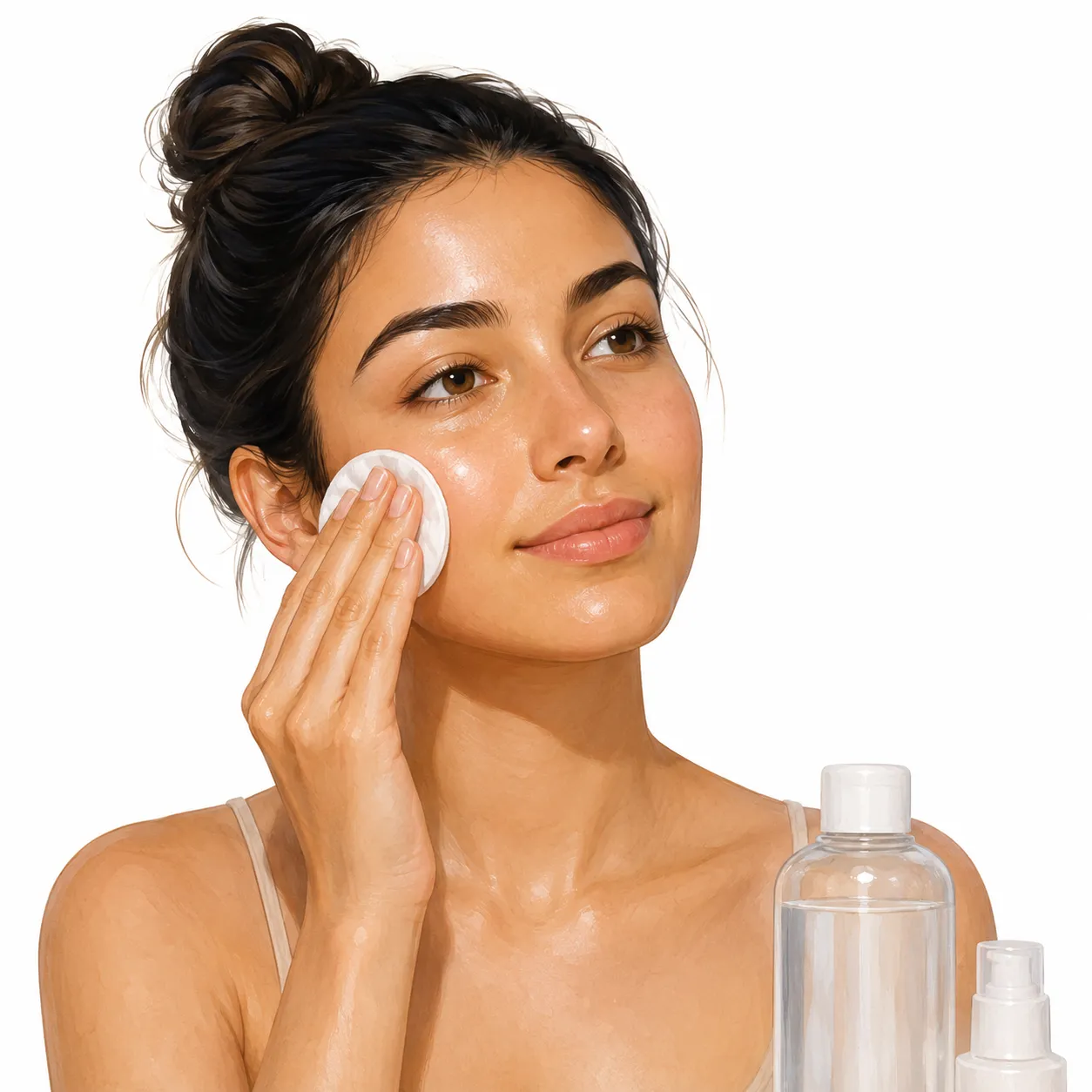
Use a cotton pad or your hands to apply toner to clean, damp skin.
Follow with serum and moisturizer
Allow toner to absorb slightly, then apply your other products.
Safety
Side effects and cautions
- Using astringent, alcohol-based toners
Choose hydrating or gentle exfoliating toners without alcohol.
- Not following with moisturizer
Toner hydrates, but you need a moisturizer to lock it in.
- Using multiple exfoliating products
If you use an exfoliating toner, skip other exfoliants that day.
Fit
Who should be careful
- Anyone using alcohol-based astringents (stop!)
Worth noting
Small details that can change the answer
- pH Balance. Skin's natural pH is around 4.5-5.5; toners can help restore balance after cleansing.
- Alcohol-Free. Alcohol-based toners can increase oil production through compensatory sebum secretion.
- Hydrating Toners. Hydrating toners with humectants can add a layer of hydration without oil.
- Exfoliating Toners. BHA or AHA toners can provide gentle daily exfoliation for oily skin.
Oily skin can use toner daily, but the type of toner matters.
Avoid alcohol-based astringents that strip the skin and trigger more oil.
Choose hydrating toners with humectants or gentle exfoliating toners with BHA.
Toner helps restore pH balance and preps skin for other products.
Follow with a lightweight moisturizer to lock in the hydration.
Science
Why modern toners are different
Cleansing can disrupt the skin's natural pH, leaving it slightly alkaline. Toners help restore the acidic pH, creating an optimal environment for other products and supporting the skin's natural enzymes. Additionally, hydrating toners with humectants attract water to the skin, while exfoliating toners provide gentle daily sloughing without the need for a separate exfoliating step.
- Acid Mantle
- The skin's natural acidic protective layer, typically between pH 4.5 and 5.5.
- Humectant
- An ingredient that attracts and holds water, drawing moisture into the skin.
Benefits
Benefits of daily toner use for oily skin
A well-chosen toner can become a cornerstone of your oily skin routine.
- Balances skin pH after cleansing
- Adds hydration without adding oil or weight
- Can deliver niacinamide or salicylic acid for targeted benefits
- Preps skin for better absorption of serums and moisturizers
Risks
Risks of wrong toner choice
Not all toners are created equal, and the wrong one can undo your other efforts.
- Alcohol-based toners can strip the barrier and trigger more oil production
- Over-exfoliating with strong BHA toners can cause irritation
- Fragrance or essential oils can irritate sensitive areas
- Drying toners can leave skin feeling tight and uncomfortable
Product Label Explainer
Decoding toner labels for oily skin
Alcohol denat.A drying solvent that can strip the barrier - generally avoid.Can increase oil production as the skin overcompensates.
avoidNiacinamideA B-vitamin that regulates oil and supports the barrier.Ideal for daily use on oily skin.
goodSalicylic acid (BHA)Oil-soluble exfoliant that clears pores.Good for daily use at low concentrations.
goodGlycerinA humectant that draws water into the skin.Hydrates without adding oil.
goodQuestions
Frequently asked questions
Is toner necessary for oily skin?
Not strictly, but it can be beneficial for adding hydration, balancing pH, and delivering targeted ingredients.
Can I use toner twice a day on oily skin?
Yes, with a hydrating toner. Exfoliating toners with BHA are typically used once daily.
Should I use a toner with salicylic acid every day?
You can, if it's a gentle formulation (0.5-1% BHA). Start slowly and adjust based on your skin's response.
Why do some toners make my skin feel tight?
That's a sign of an alcohol-based toner. Switch to an alcohol-free, hydrating formulation.