Evidence
What the evidence shows
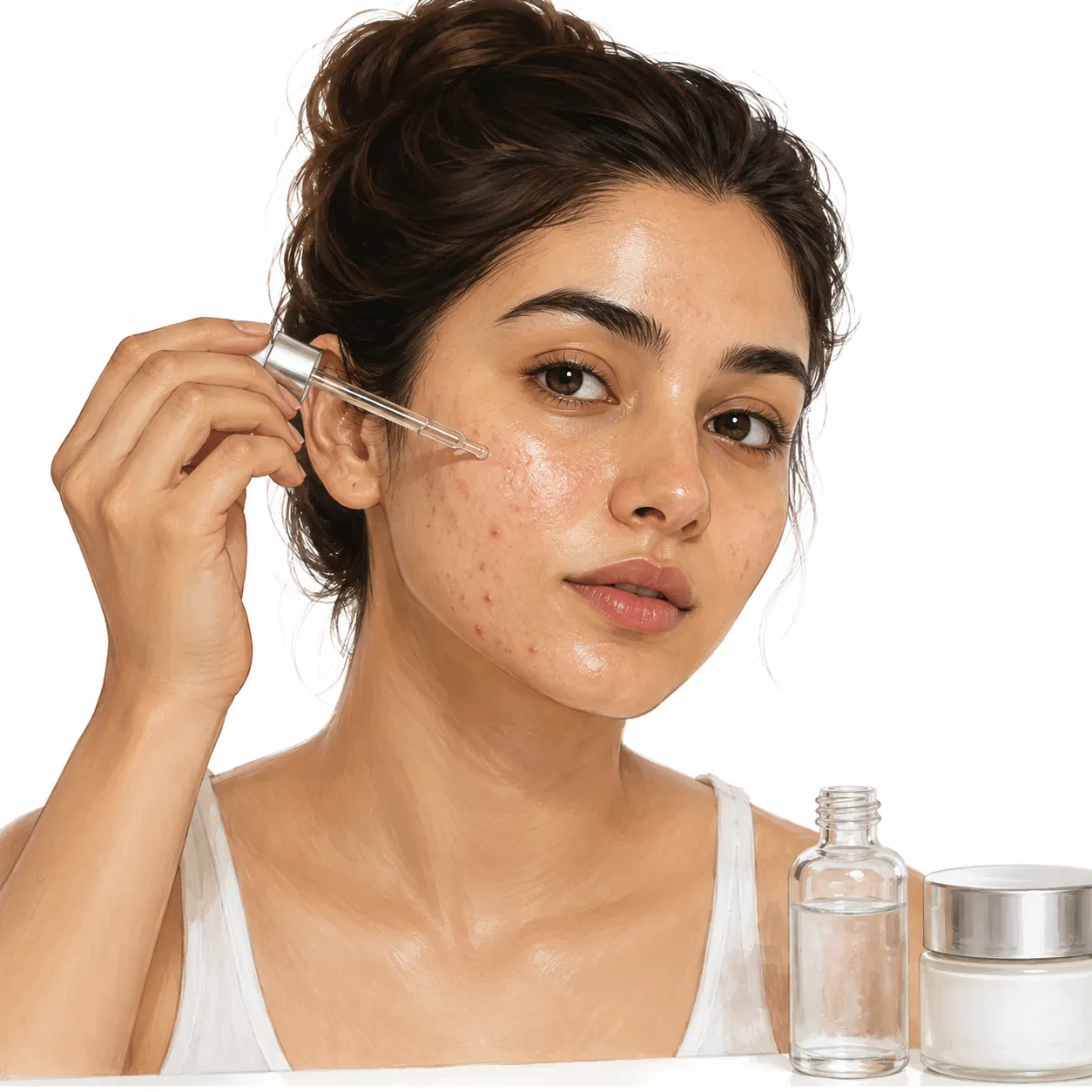
Salicylic acid's oil solubility is what makes it uniquely effective for oily skin - it goes where other acids simply can't reach.
Use this section to decide
Does this advice apply to me?
Find the concern or goal closest to yours, then use the fit signal to decide how much weight to give this guide.If your goal is
Pore clearanceUsually relevant- Fit signal
- Often useful
Excellent
If your goal is
Blackhead reductionUsually relevant- Fit signal
- Often useful
Excellent
If your goal is
Oil controlDepends- Fit signal
- Possible fit
Good
If your goal is
Anti-inflammatoryDepends- Fit signal
- Possible fit
Good
Practical use
How to use it
Choose a 0.5-1% salicylic acid product
This concentration is effective for most oily skin types.
Introduce gradually
Start with 1-3 times per week and increase as tolerated.
Follow with moisturizer
Always use a lightweight moisturizer to prevent over-drying.
Safety
Side effects and cautions
- Using salicylic acid daily from the start
Start with 1-3 times per week and increase gradually.
- Using too high a concentration
Start with 0.5-1% and increase only if needed.
- Skipping moisturizer after salicylic acid
Always follow with a lightweight moisturizer to prevent over-drying.
Fit
Who should be careful
- Those with dry or sensitive skin - use with caution
Worth noting
Small details that can change the answer
- Oil Solubility. Salicylic acid dissolves in oil, allowing it to penetrate pores.
- Pore Action. It helps break down blackheads and whiteheads from the inside.
- Anti-Inflammatory. It has mild anti-inflammatory properties for acne-prone skin.
- Concentration Range. OTC products typically contain 0.5-2% salicylic acid.
Salicylic acid is excellent for oily skin due to its oil-soluble nature.
It penetrates pores to break down blackheads and whiteheads from the inside.
It has mild anti-inflammatory properties that benefit acne-prone skin.
Start with a low concentration (0.5-1%) and build up gradually.
Always follow with a lightweight moisturizer.
Science
How salicylic acid works on oily skin
Salicylic acid's oil solubility is its key advantage. It dissolves into the skin's natural oils and travels down into the pore lining. Once there, it helps break down the bonds holding dead skin cells together, allowing them to be shed more easily. This prevents the buildup of the oil and dead skin mixture that leads to blackheads, whiteheads, and congestion.
- Beta hydroxy acid (BHA)
- A type of exfoliating acid that is oil-soluble and can penetrate pores.
- Comedone
- A clogged pore filled with oil and dead skin cells.
Dos Donts
Dos and don'ts for salicylic acid on oily skin
Do
Allows skin to adapt
Prevents over-exfoliation
Ensures proper absorption
Prevents over-drying
Allows skin to build tolerance
Avoid
Can cause over-exfoliation
Can cause irritation
Can lead to barrier damage
Will worsen irritation
Skin Type Suitability
Salicylic acid suitability by skin type
Ideal - oil solubility makes it perfect for pore clearance
Excellent - helps clear and prevent breakouts
Use on T-zone, less on cheeks
Can be drying - use low concentration and low frequency
Often irritating - patch test carefully
Questions
Frequently asked questions
Is salicylic acid safe for all oily skin?
Yes, but start with a lower concentration and build up gradually.
Can salicylic acid make oily skin worse?
No - it helps regulate and clear oil congestion.
How often should oily skin use salicylic acid?
Start with 1-3 times per week and increase as tolerated.
Can I use salicylic acid with other actives?
Yes, but introduce one active at a time and avoid using with other exfoliants.