Evidence
What the evidence shows
Tretinoin's barrier-damaging effects are more pronounced than OTC retinol, but the principles of safe use are the same - start slowly, support the barrier, and be patient.
Use this section to decide
Does this advice apply to me?
Find the concern or goal closest to yours, then use the fit signal to decide how much weight to give this guide.If your goal is
Damage RiskDepends- Fit signal
- Possible fit
High during adjustment
If your goal is
DurationUse caution- Fit signal
- Limited evidence
6-8 weeks temporary
If your goal is
Safe IntroductionUsually relevant- Fit signal
- Often useful
Very slow, buffered
If your goal is
Barrier SupportUsually relevant- Fit signal
- Often useful
Essential
Research notes already in this guide
- Studies show tretinoin temporarily increases TEWL and decreases barrier function.
- The barrier adapts and recovers with continued use.
- Slow introduction and barrier support significantly reduce tretinoin irritation.
- Tretinoin is considered the gold standard for anti-aging despite its barrier effects.
Expected results
Results and timeframe
The damage is typically temporary - the barrier adapts over 6-8 weeks.
Week 1-3 - Intense irritation - Significant dryness, flaking, and sensitivity - this is expected.
Week 4-6 - Adaptation begins - Sensitivity gradually decreases as the barrier adapts.
Week 7-8 - Barrier recovery - The barrier strengthens and irritation typically resolves.
Week 8+ - New normal - The barrier is stronger and tretinoin benefits become visible.
Practical use
How to use it
Start with the lowest concentration
0.025% cream is the standard starting concentration.
Use it 1-2 times per week initially
Increase frequency very gradually as your skin adapts.
Use the sandwich method
Apply moisturizer, then tretinoin, then another layer of moisturizer.
Support your barrier aggressively
Use ceramide-rich moisturizers and be extremely gentle with your skin.
Safety
Side effects and cautions
- Starting with too high a concentration
Start with 0.025% or 0.01% and work your way up.
- Using tretinoin daily from the start
Start with 1-2 times per week and gradually increase.
- Not using moisturizer with tretinoin
Barrier support is essential with tretinoin.
- Using too much product
A pea-sized amount is sufficient for the entire face.
Fit
Who should be careful
- Compromised barriers
- Impatient users
- Very sensitive skin without careful supervision
Helpful context
What else is worth knowing
Tretinoin barrier effects
More irritation risk
During adjustment
Barrier recovers
Minimizes damage
Tretinoin barrier adjustment timeline
- Week 1-3Intense irritation
Significant dryness, flaking, and sensitivity - this is expected.
- Week 4-6Adaptation begins
Sensitivity gradually decreases as the barrier adapts.
- Week 7-8Barrier recovery
The barrier strengthens and irritation typically resolves.
- Week 8+New normal
The barrier is stronger and tretinoin benefits become visible.
What experts say about tretinoin and barrier damage
Dr. Shereene IdrissTretinoin is powerful but manageable. Start slow, use the sandwich method, and be patient.
Dr. Whitney BoweWith tretinoin, less is more. Start with the lowest concentration and use it less frequently than you think you should.
Worth noting
Small details that can change the answer
- Potency. Tretinoin is about 10-20 times more potent than OTC retinol.
- Direct Action. Tretinoin works directly on skin receptors, bypassing the conversion step needed for retinol.
- Adaptation Time. The barrier typically adapts within 6-8 weeks of consistent use.
- TEWL Increase. Tretinoin can significantly increase TEWL during the adjustment period.
Tretinoin can temporarily damage the barrier, with more pronounced effects than OTC retinol.
Start with the lowest concentration and introduce it very slowly.
Barrier support (ceramide-rich moisturizers) is essential.
The long-term benefits of tretinoin often outweigh the temporary barrier effects.
Definition
How tretinoin affects the skin barrier
Understanding the mechanism.
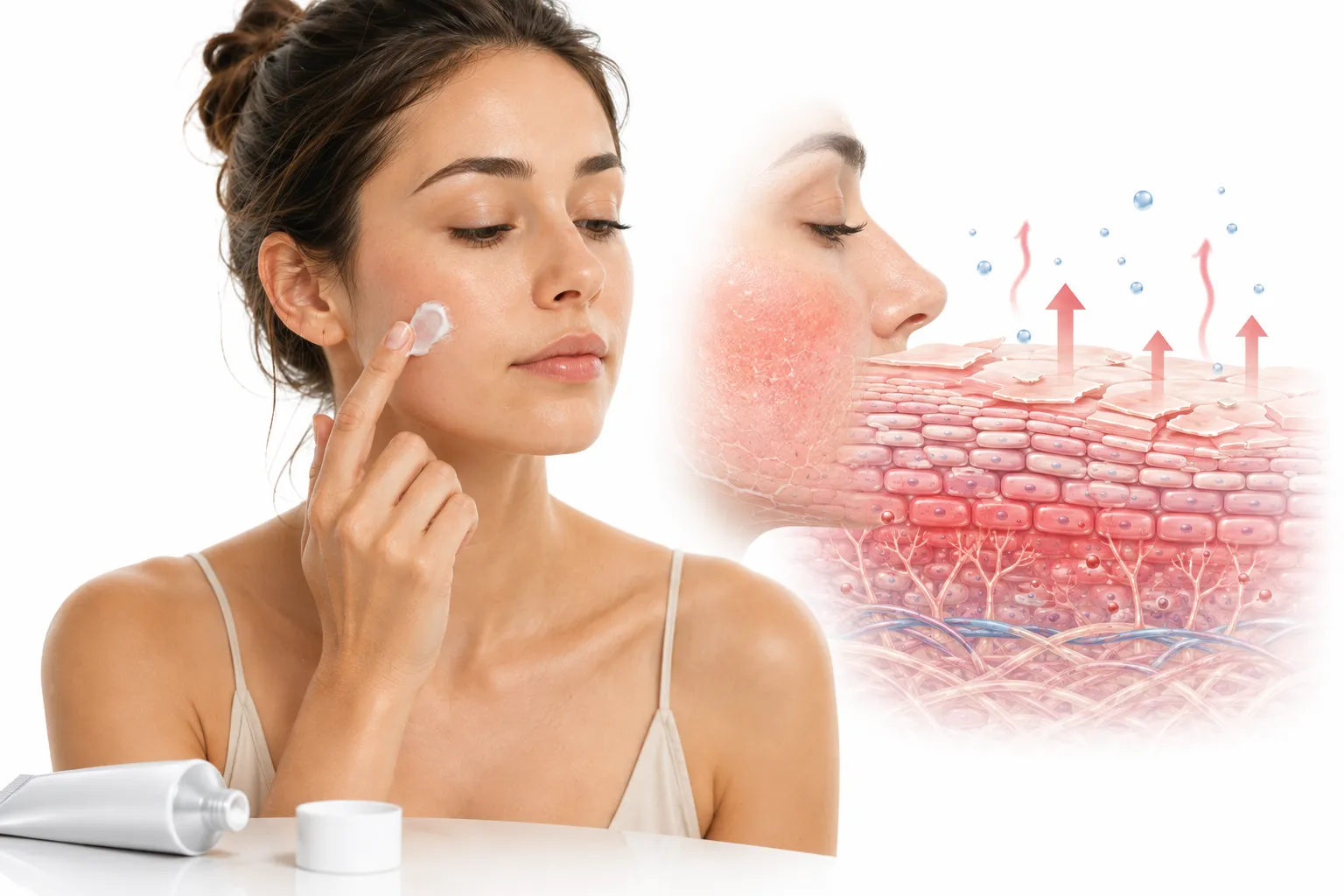
Tretinoin temporarily thins the stratum corneum and increases cell turnover, leading to increased water loss, dryness, and sensitivity. The effects are more pronounced than OTC retinol but follow the same adaptation pattern.
Explanation
Why tretinoin causes more barrier disruption than retinol
Tretinoin is a direct-acting retinoid that works immediately on skin receptors. This makes it more effective but also more irritating. The barrier-damaging effects are similar to retinol but more intense.
When tretinoin is most likely to damage the barrier
Here are situations where tretinoin barrier damage is more likely.
- Starting with a concentration that's too high (0.1% without building up)
- Using it daily from the start
- Using it on a compromised barrier
- Layering it with other strong actives
- Not using barrier-supporting moisturizers
- Using too much product - a pea-sized amount is sufficient
How to use tretinoin without damaging the barrier
Here's how to minimize tretinoin-related barrier damage.
- Start with the lowest concentration (0.025% or 0.01% gel)
- Use it only 1-2 times per week initially
- Use the "sandwich" method - moisturizer, tretinoin, moisturizer
- Apply only to clean, completely dry skin
- Use a pea-sized amount for your entire face
- Support your barrier with ceramide-rich moisturizers
- Be patient - adaptation typically takes 6-8 weeks
Questions
Frequently asked questions
Does tretinoin permanently damage the skin barrier?
No, the barrier damage is typically temporary and resolves as the skin adapts.
How long does tretinoin barrier damage last?
The adjustment period typically lasts 6-8 weeks.
Is tretinoin safe for sensitive skin?
It can be used with careful introduction, but it's more challenging for sensitive skin.
Can I use tretinoin on a compromised barrier?
No - wait until your barrier is intact before starting tretinoin.
References
Sources
The notes below are drawn from the evidence already cited in this guide. They are not a complete bibliography.
- Studies show tretinoin temporarily increases TEWL and decreases barrier function.
- The barrier adapts and recovers with continued use.
- Slow introduction and barrier support significantly reduce tretinoin irritation.
- Tretinoin is considered the gold standard for anti-aging despite its barrier effects.