Evidence
What the evidence shows
Sensitive combination skin is the ultimate test of skincare patience - you need to address multiple concerns (oil, dryness, sensitivity) without causing irritation. Success comes from simplicity and consistency.
Use this section to decide
Does this advice apply to me?
Find the concern or goal closest to yours, then use the fit signal to decide how much weight to give this guide.If your goal is
AnswerUsually relevant- Fit signal
- Often useful
Yes - common
If your goal is
ChallengeUse caution- Fit signal
- Limited evidence
Reactive + mixed zones
If your goal is
Key PrincipleUsually relevant- Fit signal
- Often useful
Gentle, zone-aware
If your goal is
Best ApproachUsually relevant- Fit signal
- Often useful
Minimal, soothing products
Research notes already in this guide
- Sensitive skin is one of the most commonly reported skin concerns.
- Combination skin is the most common skin type.
- The overlap of sensitive and combination skin is well documented.
- Gentle, minimalist routines are most effective for this skin type.
Expected results
Results and timeframe
Patience and consistency are key - improvement takes weeks.
Practical use
How to use it
Simplify your routine
Use only the gentlest cleanser, a soothing moisturizer, and sunscreen.
Apply products thoughtfully
Use lighter products on the T-zone, richer on the cheeks.
Patch test everything
Test new products on a small area before full-face use.
Be patient and consistent
Improvement takes weeks of consistent, gentle care.
Safety
Side effects and cautions
- Using the same product on your whole face
Different zones need different attention - a lighter touch on the T-zone, richer on the cheeks.
- Introducing too many products at once
Add one new product at a time and patch test to identify reactions.
- Using harsh products to control T-zone oiliness
Harsh products irritate the whole face - choose gentle options that also address oil.
Fit
Who should be careful
- Those who want a simple, one-product approach
Worth noting
Small details that can change the answer
- Prevalence. Sensitive combination skin is one of the most commonly reported skin types.
- Challenge. It requires managing oil, dryness, and reactivity simultaneously.
- Zone Differences. Different areas of the face have different needs and sensitivities.
- Patience Required. Results come from consistent, gentle care over weeks.
Sensitive combination skin is real and common - you're not imagining it.
It combines oiliness, dryness, and reactivity in different areas.
A minimalist, zone-aware approach is essential.
Use the gentlest possible products and patch test everything.
Definition
What is sensitive combination skin?
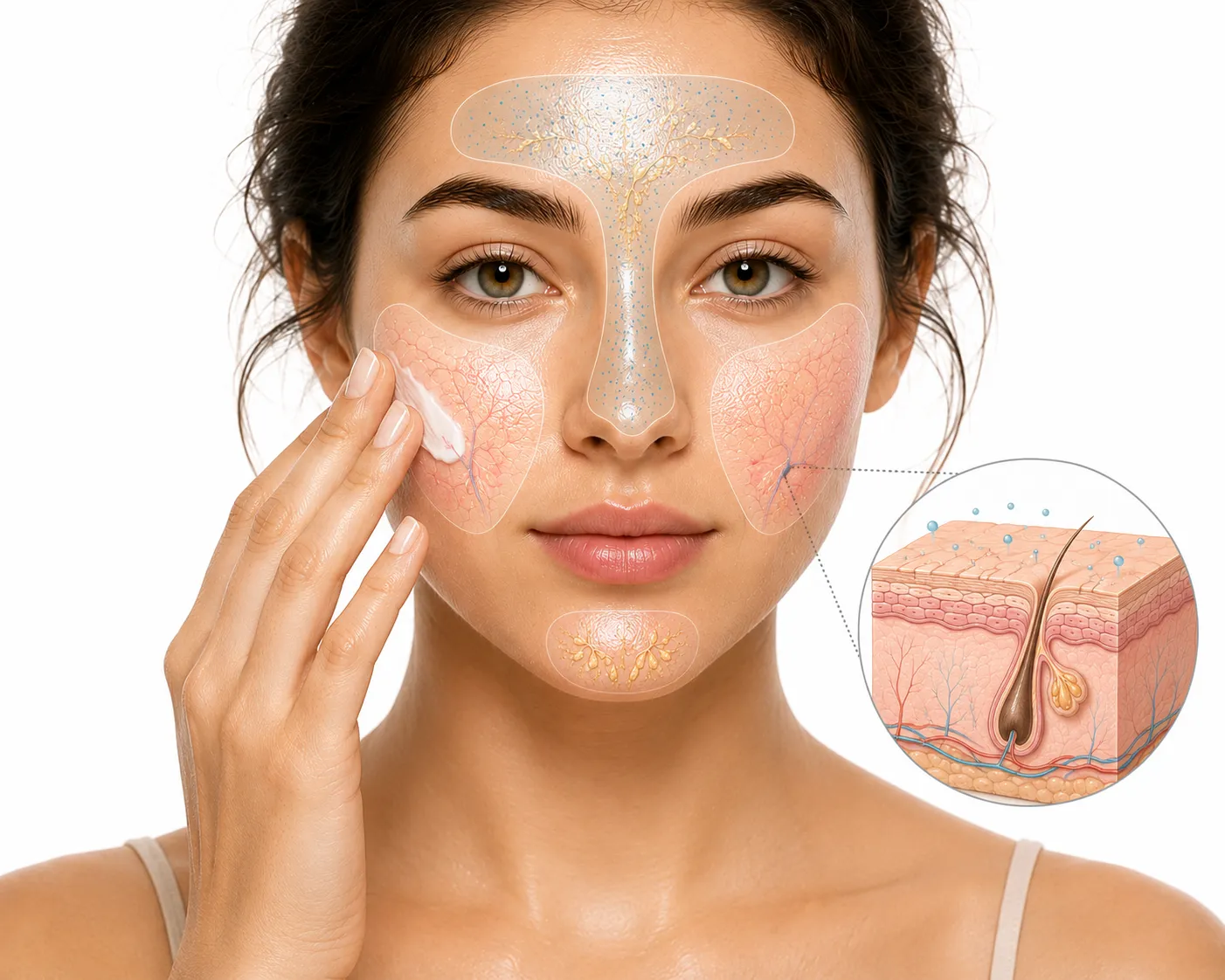
Sensitive combination skin is a skin type that combines the mixed characteristics of combination skin (oily T-zone, dry cheeks) with the reactivity of sensitive skin (easily irritated by products and environmental factors).
- Oily T-zone (forehead, nose, chin)
- Dry or normal cheeks
- Reactivity to products and environmental triggers
- Can have redness, stinging, or burning responses
- Requires the gentlest approach to skincare
Explanation
Why sensitive combination skin is challenging
The challenge comes from the different and sometimes conflicting needs of different areas. The T-zone needs oil control, but many oil-control ingredients can irritate sensitive skin. The cheeks need hydration, but heavy products can be too much for the T-zone. This means every product choice must be carefully balanced.
Benefits
How to care for sensitive combination skin
A careful, zone-aware approach is essential for sensitive combination skin.
- Use the gentlest possible cleanser - creamy, non-foaming, fragrance-free
- Choose soothing, barrier-supporting ingredients for all areas
- Apply lighter products to the T-zone, richer ones to the cheeks
- Avoid common irritants - fragrance, essential oils, harsh preservatives
- Introduce products one at a time and patch test everything
- Keep your routine simple - 3-4 products maximum
Questions
Frequently asked questions
Can sensitive combination skin use active ingredients?
Yes - but introduce them very slowly and at low concentrations.
What's the best moisturizer for sensitive combination skin?
A lightweight, soothing formula that's not too heavy for the T-zone nor too light for the cheeks.
Can I use different products on different areas?
Yes - in fact, it's often the best approach for this skin type.
What if my skin reacts to everything I try?
Simplify further - a very short ingredient list may be best.
References
Sources
The notes below are drawn from the evidence already cited in this guide. They are not a complete bibliography.
- Sensitive skin is one of the most commonly reported skin concerns.
- Combination skin is the most common skin type.
- The overlap of sensitive and combination skin is well documented.
- Gentle, minimalist routines are most effective for this skin type.