Evidence
What the evidence shows
Sensitive skin is about reactivity; dry skin is about hydration. You can be sensitive and oily, or dry and not sensitive. The common thread is barrier health - a compromised barrier can lead to both.
My skin stings and reacts, but feels hydrated
You have sensitive skin without dryness - focus on gentle, soothing products.My skin is flaky and tight, but doesn't react to products
You have dry skin without sensitivity - focus on rich hydration.My skin is both flaky and reactive
You have both conditions - choose gentle, barrier-supporting products.
Use this section to decide
Does this advice apply to me?
Find the concern or goal closest to yours, then use the fit signal to decide how much weight to give this guide.If your goal is
Sensitive skinUse caution- Fit signal
- Limited evidence
Reacts to irritants
If your goal is
Dry skinUse caution- Fit signal
- Limited evidence
Lacks oil and moisture
If your goal is
OverlapUsually relevant- Fit signal
- Often useful
Common, not universal
If your goal is
Key to managing bothUsually relevant- Fit signal
- Often useful
Barrier support and gentle care
Practical use
How to use it
Identify whether your skin is sensitive, dry, or both
Pay attention to how your skin feels and reacts to products.
Choose products that address your specific concerns
If you're dry, look for rich moisturizers; if you're sensitive, look for fragrance-free, gentle formulas.
Support the barrier
Regardless of your skin type, barrier-supporting ingredients like ceramides are beneficial.
Safety
Side effects and cautions
- Using rich creams on oily sensitive skin
Oily sensitive skin needs lightweight, non-comedogenic moisturizers.
- Skipping moisturizer on sensitive skin
Even sensitive skin needs hydration; choose a simple, fragrance-free formula.
- Treating sensitive and dry skin the same
They require different approaches - dry skin needs richer hydration, sensitive skin needs gentler ingredients.
Fit
Who should be careful
- Those looking for a simple yes/no answer
Worth noting
Small details that can change the answer
- Sensitive/Oily. Sensitive skin can be oily - excess sebum doesn't protect against reactivity.
- Dry/Non-Sensitive. Dry skin can be non-sensitive - it may not react to products despite being flaky.
- Barrier Link. A compromised barrier can cause both dryness and sensitivity.
- Treatment Focus. Both conditions benefit from barrier-supporting ingredients like ceramides.
Sensitive skin and dry skin are not the same thing.
Sensitive skin is about reactivity; dry skin is about hydration.
They often overlap, but you can have one without the other.
Oily sensitive skin exists - oil production doesn't protect against reactivity.
Barrier-supporting ingredients are beneficial for both conditions.
Definition
What are sensitive skin and dry skin?
Sensitive skin is characterized by reactivity to irritants, often due to a compromised barrier or increased nerve sensitivity. Dry skin is characterized by insufficient oil (sebum) and moisture, leading to flakiness, tightness, and a rough texture. They are distinct but overlapping conditions.
- Sensitive skin: reacts with stinging, burning, redness
- Dry skin: lacks oil and moisture, feels tight and flaky
- Overlap: common, but not universal
- Barrier: a compromised barrier can cause both
Explanation
The relationship between sensitivity and dryness
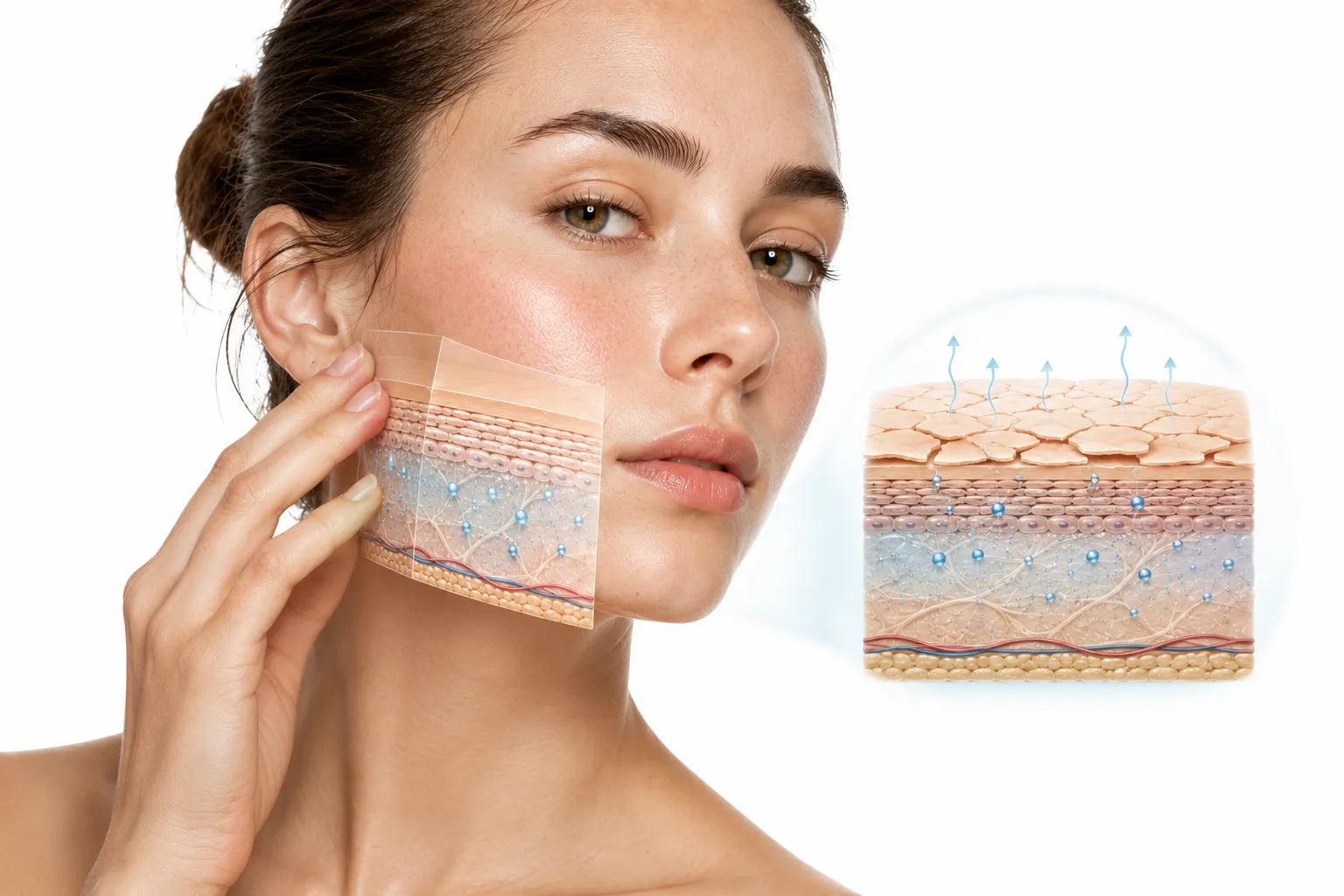
The relationship between sensitive skin and dry skin is rooted in the skin barrier. When the barrier is compromised, it can't retain moisture effectively (leading to dryness) or block irritants (leading to sensitivity). However, you can have sensitivity from increased nerve sensitivity without barrier issues, and you can have dryness from environmental factors without sensitivity.
Benefits
How to care for skin that is both sensitive and dry
Caring for skin that is both sensitive and dry requires a focus on barrier support and gentle hydration.
- Use fragrance-free, gentle cleansers
- Choose a rich, barrier-supporting moisturizer with ceramides
- Avoid harsh exfoliants and active ingredients
- Consider a humidifier in dry environments
- Apply moisturizer to damp skin for better absorption
Myth Reality
Common myths about sensitive and dry skin
Oily skin can be just as sensitive as dry skin.
Dry skin can be non-sensitive and tolerate standard products.
Sensitive skin often benefits from simple, barrier-supporting moisturizers.
Questions
Frequently asked questions
Can I have sensitive skin that is oily?
Yes, sensitive skin can be oily. This is often called "oily sensitive" skin.
Can I have dry skin that is not sensitive?
Yes, dry skin can be non-sensitive and tolerate most products.
What's the best moisturizer for sensitive, dry skin?
A fragrance-free, ceramide-rich cream is ideal.
Do sensitive and dry skin require different routines?
They have different needs - dry skin needs richer hydration, sensitive skin needs gentler ingredients.