Evidence
What the evidence shows
Tanning ability and skin sensitivity are determined by different factors - sensitivity is about reactivity, while tanning is about melanin production. One doesn't predict the other.
You have fair skin that burns easily
You likely have a Fitzpatrick Type I or II - avoid sun exposure and use SPF 50+.You have darker skin that tans easily
You likely have Type IV, V, or VI - you still need SPF 30 to prevent damage.You have sensitive skin regardless of skin tone
Use a mineral sunscreen to avoid irritation.
Use this section to decide
Does this advice apply to me?
Find the concern or goal closest to yours, then use the fit signal to decide how much weight to give this guide.If your goal is
Tanning abilityUse caution- Fit signal
- Limited evidence
Determined by skin tone
If your goal is
Sensitivity linkUse caution- Fit signal
- Limited evidence
Not directly related
If your goal is
Sun protectionUsually relevant- Fit signal
- Often useful
Essential for all sensitive skin
If your goal is
Key messageDepends- Fit signal
- Possible fit
A tan is a sign of damage
Practical use
How to use it
Identify your Fitzpatrick skin type
Understanding your skin's natural ability to tan can guide your sun protection strategy.
Use sunscreen daily
Mineral sunscreen (zinc oxide or titanium dioxide) is best for sensitive skin.
Avoid deliberate tanning
Tanning causes skin damage and can worsen sensitivity.
Safety
Side effects and cautions
- Assuming sensitive skin can't tan
Tanning ability is determined by skin tone, not sensitivity.
- Skipping sunscreen because you tan easily
A tan doesn't protect against skin cancer or premature aging.
- Tanning to "improve" sensitive skin
UV exposure triggers inflammation and can worsen sensitivity.
Fit
Who should be careful
- Those looking for a simple yes/no answer
Worth noting
Small details that can change the answer
- Fitzpatrick Types. Fitzpatrick skin type determines tanning ability, not sensitivity.
- Inflammation Link. UV exposure triggers inflammation, which can be more severe in sensitive skin.
- Melanin Function. Melanin is the skin's natural UV protection, but it doesn't fully prevent damage.
- Sun Protection. Regardless of sensitivity, all skin types need sun protection.
Tanning ability is determined by skin tone (Fitzpatrick type), not sensitivity.
Sensitive skin may burn more easily due to inflammation.
A tan is a sign of skin damage, not health.
Sun exposure can worsen sensitive skin.
Sunscreen is essential for all sensitive skin types.
Definition
What determines tanning ability?
Tanning ability is determined by your Fitzpatrick skin type, which is based on your genetic melanin production. It ranges from Type I (always burns, never tans) to Type VI (never burns, deeply pigmented). Sensitivity is a separate characteristic.
- Fitzpatrick Type I: always burns, never tans
- Type II: burns easily, tans minimally
- Type III: burns moderately, tans gradually
- Type IV: burns minimally, tans easily
- Type V: rarely burns, tans deeply
- Type VI: never burns, deeply pigmented
Explanation
The relationship between sensitivity and tanning
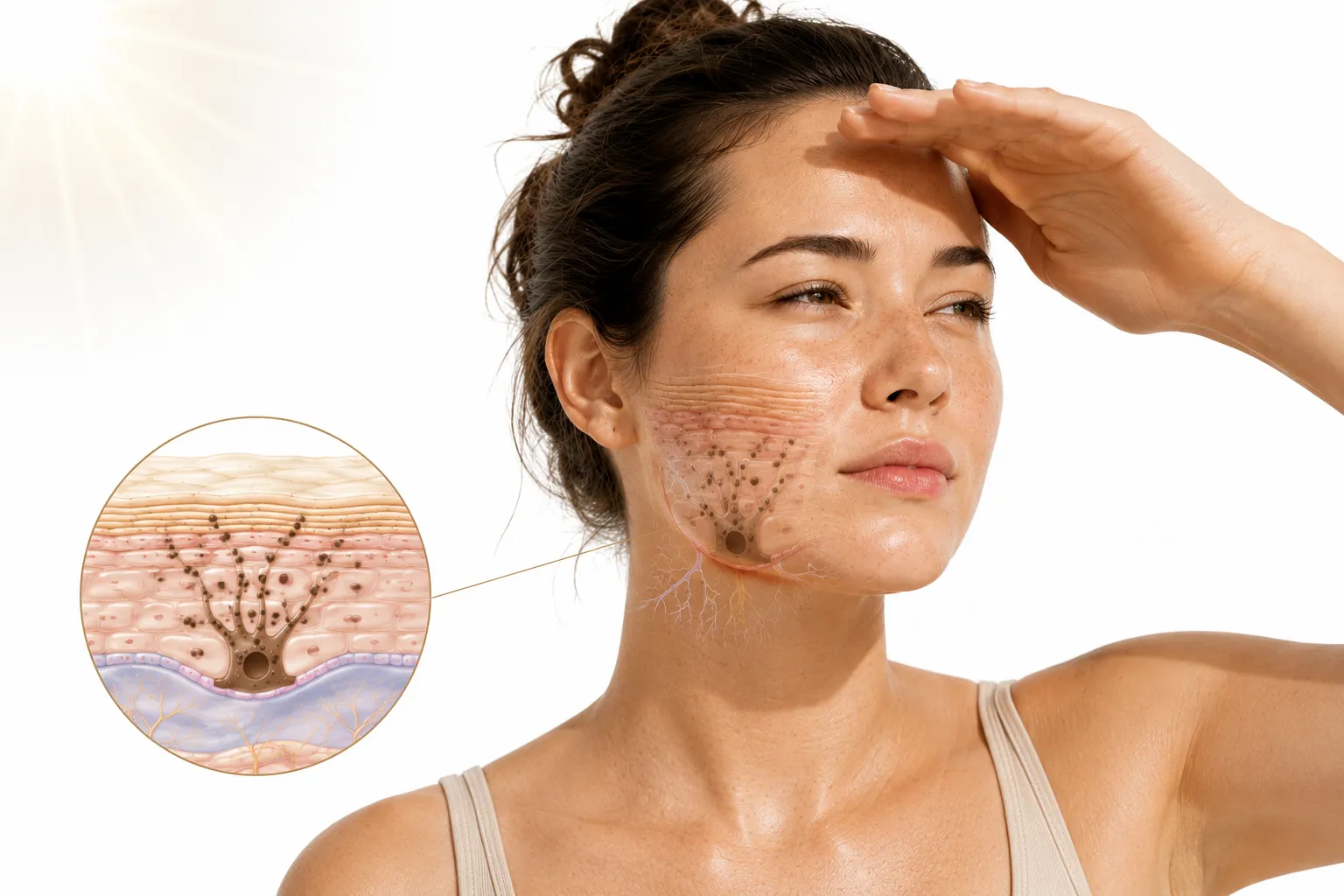
Sensitivity and tanning ability are independent. Sensitivity is about how the skin reacts to irritants and environmental factors, while tanning ability is about melanin production. Having sensitive skin doesn't mean you'll tan more or less easily - it's determined by your genetics. However, sensitive skin may burn more easily because UV exposure triggers inflammation, which can be more severe in sensitive individuals.
Benefits
How to protect sensitive skin from sun damage
Regardless of your tanning ability, protecting sensitive skin from UV damage is essential.
- Use a mineral sunscreen (zinc oxide or titanium dioxide)
- Apply SPF 30+ every morning, even on cloudy days
- Reapply every two hours when outside
- Seek shade during peak sun hours (10 AM - 4 PM)
- Wear protective clothing and hats
Myth Reality
Common myths about tanning and sensitive skin
UV damage occurs even without burning, and sensitive skin is more vulnerable to inflammation.
A tan is a sign of skin damage, not protection. It provides minimal protection (about SPF 2-3).
All skin types need sunscreen to prevent skin cancer and premature aging.
Questions
Frequently asked questions
Can sensitive skin tan safely?
There's no safe way to tan. Any tan is a sign of skin damage.
Does sensitive skin need SPF 50?
SPF 30 is sufficient if applied correctly, but SPF 50 offers more protection.
Is fake tan safe for sensitive skin?
Self-tanning products can be used but may cause irritation. Patch test first.
Can sun exposure make sensitive skin worse?
Yes, UV exposure triggers inflammation and can worsen sensitivity.