Evidence
What the evidence shows
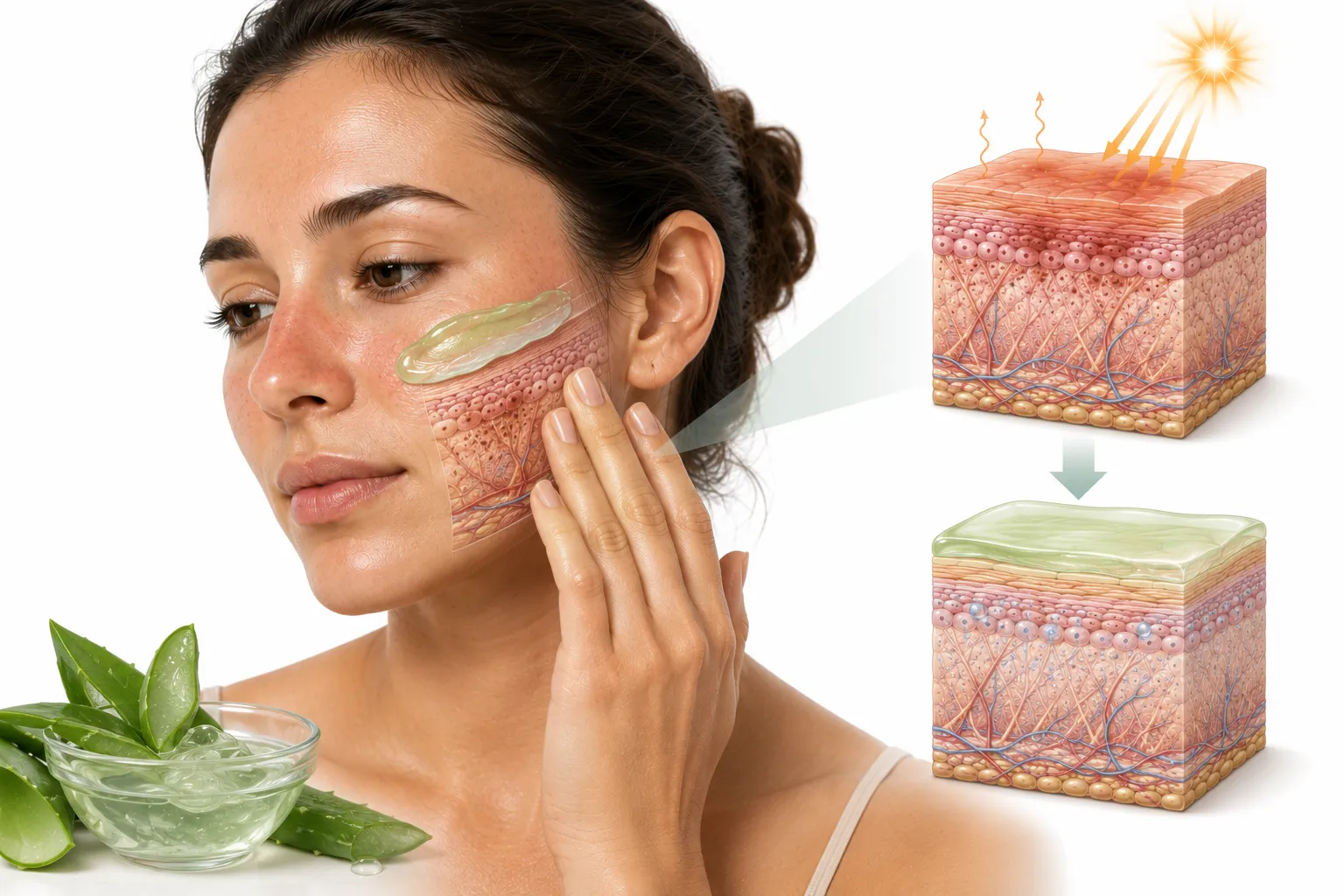
Aloe vera's reputation as a sun-damage remedy is really about comfort in the moment, not structural repair - it's most useful right after sun exposure, not as an ongoing treatment for existing photoaging.
Use this section to decide
Does this advice apply to me?
Find the concern or goal closest to yours, then use the fit signal to decide how much weight to give this guide.If your goal is
Main benefitUsually relevant- Fit signal
- Often useful
Soothing, hydration
If your goal is
Structural repairDepends- Fit signal
- Possible fit
Minimal
If your goal is
Best usedUse caution- Fit signal
- Limited evidence
Right after sun exposure
If your goal is
Sun protectionUse caution- Fit signal
- Limited evidence
None
Practical use
How to use it
Apply soon after sun exposure
Use pure aloe vera gel to soothe redness and discomfort.
Choose a simple formula
Look for high aloe content with minimal added fragrance or alcohol.
Pair with targeted repair ingredients
Add retinol or vitamin C separately to address deeper sun damage over time.
Safety
Side effects and cautions
- Relying on aloe vera as a treatment for existing sun damage
Use it for comfort and hydration, and pair it with ingredients like retinol or vitamin C for repair.
- Choosing a heavily fragranced aloe product for sunburned skin
Look for pure, minimally processed aloe vera gel to avoid further irritation.
- Skipping sunscreen because aloe vera is "protective"
Aloe vera provides no meaningful sun protection on its own.
Fit
Who should be careful
- Anyone seeking to fade sun spots or rebuild collagen
Helpful context
What else is worth knowing
Is aloe vera right for you?
Worth noting
Small details that can change the answer
- Anti-Inflammatory Properties. Aloe vera contains compounds thought to have mild anti-inflammatory effects.
- Hydration Support. It helps draw and retain moisture in the skin's surface layer.
- Best Used Soon After Exposure. Its soothing benefit is most noticeable when applied shortly after sun exposure or sunburn.
- Not a Structural Repair Ingredient. It does not directly address collagen breakdown or deeper pigmentation from long-term sun damage.
Aloe vera soothes and hydrates sun-exposed skin, easing redness and discomfort.
Its anti-inflammatory and hydrating properties are most useful shortly after sun exposure.
It does not rebuild collagen or meaningfully fade established hyperpigmentation.
It works best alongside, not instead of, targeted repair ingredients like retinol or vitamin C.
Pure, minimally processed formulas are best for sensitive, sun-exposed skin.
Explanation
What aloe vera actually does for sun-exposed skin
Aloe vera's main contributions are comfort and hydration. Its mild anti-inflammatory properties can ease redness and irritation, while its humectant qualities help skin retain moisture, both of which support a more comfortable recovery after sun exposure.
Benefits
Where aloe vera genuinely helps
For sun-exposed or mildly sun-damaged skin, aloe vera's realistic benefits include:
- Easing redness and discomfort after sun exposure
- Adding lightweight hydration to compromised skin
- Supporting a more comfortable-feeling barrier
- Layering well under other treatment-focused ingredients
Risks
Where expectations should be tempered
Aloe vera is often oversold as a fix for sun damage broadly, so it's worth being clear about its limits.
- Does not rebuild collagen lost from chronic UV exposure
- Has limited effect on established hyperpigmentation
- Some formulations include added fragrance or alcohol that can irritate sensitive, sun-exposed skin
Myth Reality
Common myths about aloe vera and sun damage
It soothes and hydrates but does not repair collagen or fade established pigmentation.
It offers no meaningful UV protection and should never replace sunscreen.
Questions
Frequently asked questions
Can aloe vera fade sun spots?
Not meaningfully; it soothes and hydrates but doesn't significantly affect established pigmentation.
Is aloe vera good for sunburn?
Yes, its soothing and hydrating properties make it a helpful option for easing sunburn discomfort.
Can I use aloe vera every day on sun-damaged skin?
Yes, pure aloe vera gel is generally well tolerated for daily use as a hydrating, soothing layer.
Does aloe vera protect against future sun damage?
No, it offers no meaningful UV protection and should not replace sunscreen.