Evidence
What the evidence shows
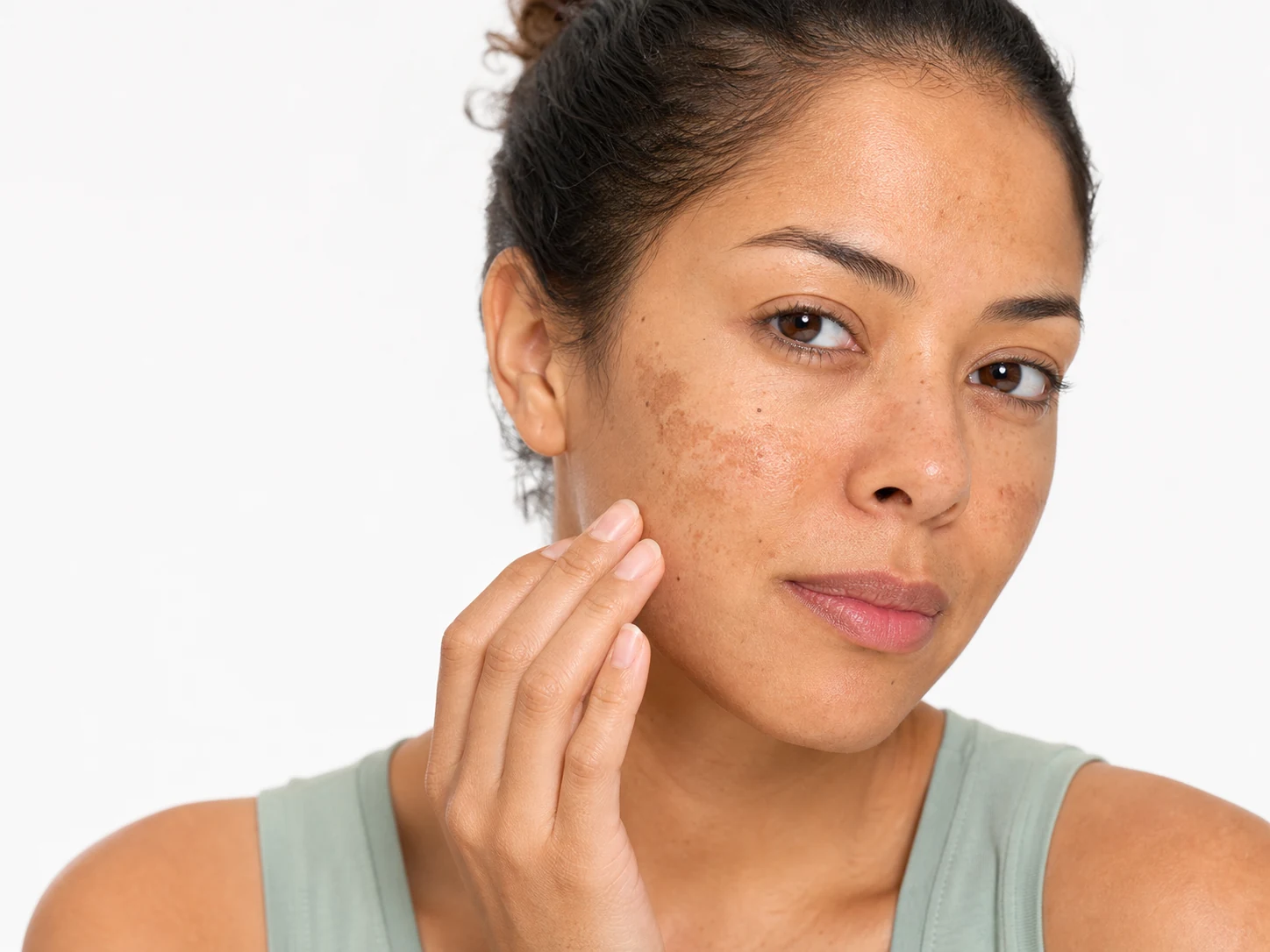
Niacinamide's greatest virtue for dark spots is the same quality that makes it seem too gentle to work: it doesn't attack pigment cells or peel the skin. It simply stops pigment from reaching the surface in the first place, which gradually lightens what's already there.
Use this section to decide
Does this advice apply to me?
Find the concern or goal closest to yours, then use the fit signal to decide how much weight to give this guide.If your goal is
Fading effectivenessDepends- Fit signal
- Possible fit
Gradual but consistent results
If your goal is
Skin compatibilityUsually relevant- Fit signal
- Often useful
Works for all skin types
Research notes already in this guide
- Multiple studies show niacinamide effectively reduces hyperpigmentation at 2-5% concentrations.
- It has been shown to be particularly effective for melasma and post-inflammatory hyperpigmentation.
- Research suggests it can work synergistically with other brightening agents.
- Its effects are generally observed within 4-8 weeks of consistent use.
Explanation
How it works
Melanocytes produce pigment
Melanocytes create melanin in response to UV exposure, inflammation, or hormonal changes.
Pigment is packaged for transfer
Melanocytes package melanin into tiny vesicles called melanosomes.
Niacinamide blocks transfer
Niacinamide prevents these melanosomes from moving into adjacent skin cells.
Pigment fades over time
As skin cells naturally shed, the amount of pigment on the surface gradually reduces.
Expected results
Results and timeframe
Results typically take 4-8 weeks of consistent use.
Practical use
How to use it
Choose the right product
Look for a serum or moisturizer with 2-5% niacinamide. Start with a lower concentration if you have sensitive skin.
Apply consistently
Use niacinamide daily, either in the morning or evening. Consistent application is key to seeing results.
Combine with sunscreen
Always use broad-spectrum sunscreen during the day to prevent new dark spots from forming.
Safety
Side effects and cautions
- Expecting overnight results
Niacinamide works gradually over weeks to months. Patience is essential for visible results.
- Using too high a concentration
Higher is not necessarily better. 2-5% is the optimal range; higher concentrations can cause irritation without additional benefits.
- Not using sunscreen alongside it
Niacinamide helps fade dark spots, but it doesn't prevent new ones from forming. Sun protection is essential for preventing recurrence.
Fit
Who should be careful
- Those seeking rapid results, people allergic to niacinamide
Worth noting
Small details that can change the answer
- Gentle Action. Niacinamide doesn't peel or irritate - it blocks pigment transfer.
- All Skin Types. Works safely on all skin tones without causing paradoxical darkening.
- Synergistic. Works well with other brightening ingredients like vitamin C and tranexamic acid.
- Results Timeline. Noticeable fading typically takes 4-8 weeks of consistent use.
Niacinamide is effective for fading dark spots by blocking melanin transfer.
It works gently without irritation, peeling, or sun sensitivity.
2-5% concentration is optimal for pigmentation benefits.
Sunscreen is essential to prevent new dark spots from forming.
Definition
How niacinamide fades dark spots
Niacinamide, also known as nicotinamide, is a form of vitamin B3. At concentrations of 2-5%, it has been shown to reduce the transfer of melanin from melanocytes to keratinocytes. This is the key mechanism for its pigmentation-fading effects.
- Doesn't block melanin production - it blocks melanin transfer
- Gradually reduces pigment at the skin surface
- Gentle enough for all skin types, including sensitive skin
- Can be combined with other brightening ingredients for enhanced effect
Questions
Frequently asked questions
Can niacinamide fade old dark spots?
Yes, niacinamide can help fade older dark spots, though fresher spots typically respond more quickly.
Is niacinamide better than vitamin C for dark spots?
Both are effective but work differently. Vitamin C inhibits melanin production, while niacinamide blocks melanin transfer. They can be used together for enhanced results.
Can niacinamide lighten skin permanently?
Niacinamide doesn't permanently alter skin color. Its effects are reversible if you stop using it, especially with ongoing sun exposure.
Does niacinamide work on all skin tones?
Yes, niacinamide is effective and safe for all skin tones, with no risk of paradoxical hyperpigmentation.
References
Sources
The notes below are drawn from the evidence already cited in this guide. They are not a complete bibliography.
- Multiple studies show niacinamide effectively reduces hyperpigmentation at 2-5% concentrations.
- It has been shown to be particularly effective for melasma and post-inflammatory hyperpigmentation.
- Research suggests it can work synergistically with other brightening agents.
- Its effects are generally observed within 4-8 weeks of consistent use.