Evidence
What the evidence shows
Oil cleansing works for combination skin because it removes oil-based impurities without stripping the skin - but success depends on the oil choice and emulsification technique.
Concerned about T-zone breakouts?
Choose grapeseed oil - it's very non-comedogenic.Worried about dry cheeks?
Consider jojoba oil - it's lightweight but more hydrating.Need a simple option?
Use a formulated cleansing oil designed for combination skin.
Use this section to decide
Does this advice apply to me?
Find the concern or goal closest to yours, then use the fit signal to decide how much weight to give this guide.If your goal is
Best oils for combo skinUsually relevant- Fit signal
- Often useful
Grapeseed, sunflower
If your goal is
Oils to avoidDepends- Fit signal
- Possible fit
Olive, coconut, heavy oils
If your goal is
Critical stepUsually relevant- Fit signal
- Often useful
Emulsify with water
If your goal is
After cleansingUse caution- Fit signal
- Limited evidence
Follow with water-based cleanser
Practical use
How to use it
Choose a lightweight oil
Look for grapeseed, sunflower, or a formulated cleansing oil designed for combination skin.
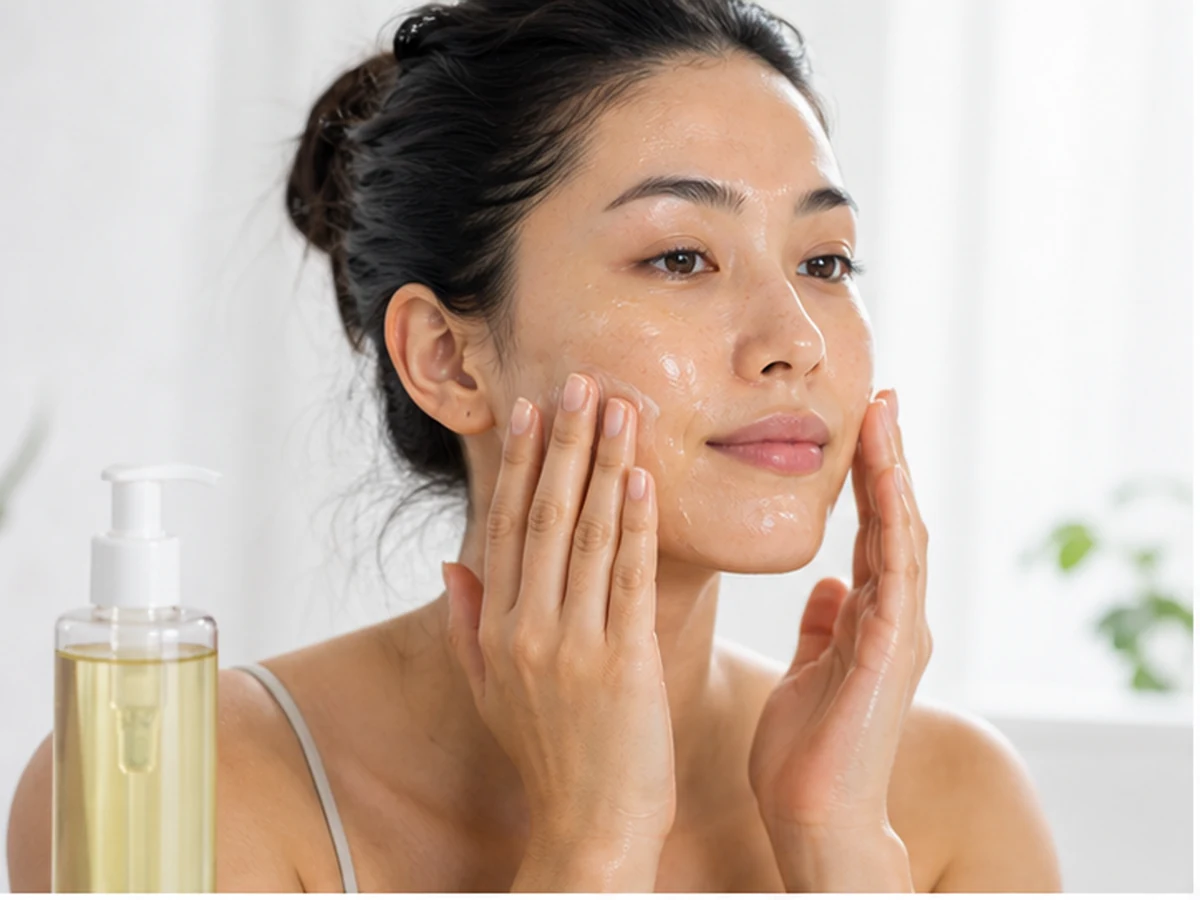
Apply to dry skin and massage
Massage for 1-2 minutes on dry skin to dissolve impurities.
Emulsify and rinse thoroughly
Add water, massage to create a milky emulsion, then rinse completely.
Safety
Side effects and cautions
- Using heavy oils on the T-zone
Choose lightweight oils like grapeseed or sunflower for combination skin.
- Not emulsifying properly
Always add water and massage to create a milky emulsion before rinsing.
- Skipping the rinse
Always rinse thoroughly - oil residue can cause issues.
Fit
Who should be careful
- Those who want a one-size-fits-all oil - choice matters
Worth noting
Small details that can change the answer
- Chemistry Principle. Oil dissolves oil - it's about molecular bonding, not just washing.
- Non-Comedogenic. Choose oils that are non-comedogenic to avoid T-zone clogging.
- Emulsification. Adding water transforms oil into a milky emulsion that rinses clean.
- Double Cleansing. Many people follow oil cleansing with a gentle water-based cleanser.
Combination skin can benefit from oil cleansing with the right oil and technique.
Choose lightweight, non-comedogenic oils to avoid T-zone clogging.
Proper emulsification is essential - add water and massage until milky.
Follow with a gentle water-based cleanser for a double cleanse.
Monitor your T-zone for any signs of oil residue or breakouts.
Skin Type Suitability
Cleansing oil suitability for combination skin
Works well with lightweight oils and proper rinsing
Works well - choose lightweight oils, focus on emulsification
Excellent - can use richer oils for added hydration
Patch test - some oils may cause reactions
Dos Donts
Dos and don'ts for oil cleansing combination skin
Do
Reduces the risk of T-zone clogging
Allows oil to bind to impurities
Allows oil to dissolve impurities
Turns oil into a milky rinseable emulsion
Removes any remaining residue
Avoid
Can clog pores
Prevents proper oil-impurity bonding
Leaves oil residue that can cause issues
Can irritate the skin
Ingredient Comparison
Best oils for combination skin
Grapeseed oil
bestBest for: Lightweight cleansing without cloggingLightweight · High linoleic acid · Non-comedogenic
Sunflower oil
goodBest for: Gentle, lightweight cleansingLightweight · High linoleic acid · Well-tolerated
Jojoba oil
goodBest for: Balanced cleansing with good skin compatibilityMimics human sebum · Well-tolerated
Limitations: Can be heavy for some T-zonesOlive oil
avoidBest for: Not recommended for combination skinHydrating
Limitations: Can be comedogenic · Too heavy for T-zoneBeginner Guide
How to oil cleanse with combination skin
- 1Week 1-2 · Start with 2-3 times per week
Use a lightweight oil. Observe how your T-zone and cheeks respond.
- 2Week 3-4 · Increase to daily if tolerated
Monitor for any T-zone breakouts or residue issues.
- 3Week 5+ · Daily or as needed
You may use oil cleansing as a first step in double cleansing.
Questions
Frequently asked questions
Will oil cleansing make my T-zone oilier?
Not if you use the right oil and emulsify properly - it should actually help balance oil production.
Can I use olive oil for oil cleansing?
It's too heavy and comedogenic for most combination skin types.
Do I need to double cleanse?
Many people with combination skin find double cleansing ensures complete removal.
Can oil cleansing help with blackheads?
Yes - oil cleansing can help dissolve the sebum plugs that cause blackheads.