Evidence
What the evidence shows
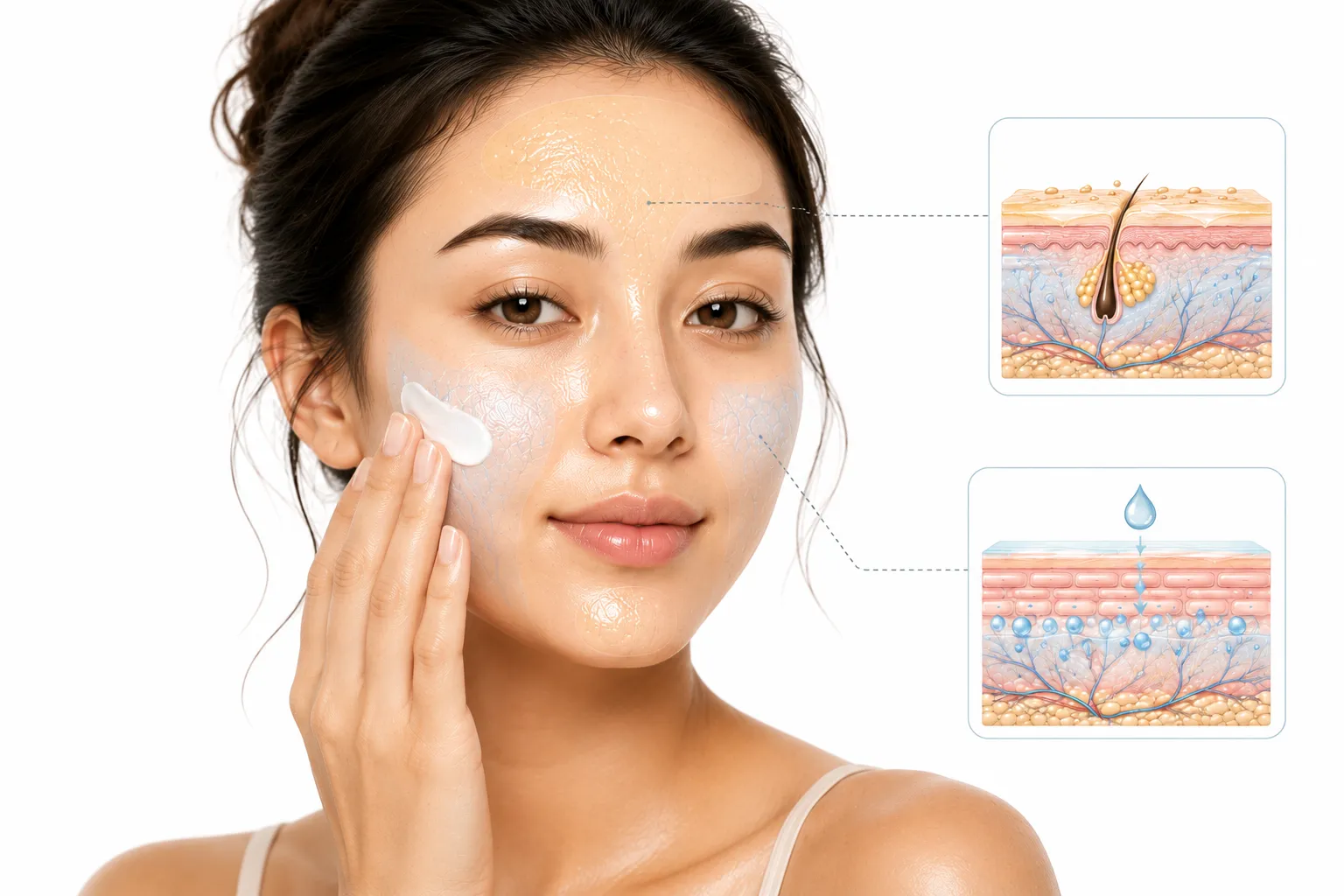
The question isn't whether combination skin needs moisturizer - it's how to choose the right textures for each zone. Skipping moisturizer makes the T-zone oilier, not less.
Use this section to decide
Does this advice apply to me?
Find the concern or goal closest to yours, then use the fit signal to decide how much weight to give this guide.If your goal is
Gel (T-zone)Usually relevant- Fit signal
- Often useful
Excellent for oily areas
If your goal is
Lotion (both zones)Depends- Fit signal
- Possible fit
Good but may not suit both
If your goal is
Cream (cheeks)Usually relevant- Fit signal
- Often useful
Excellent for dry areas
If your goal is
Ointment (any zone)Personal response varies- Fit signal
- Less predictable
Too heavy
Practical use
How to use it
Choose different moisturizers for different zones
A lightweight gel for the T-zone and a richer cream for the cheeks.
Apply to damp skin
Moisturizer works better when applied to slightly damp skin.
Adjust seasonally
You may need richer moisturizers in winter and lighter ones in summer.
Safety
Side effects and cautions
- Skipping moisturizer entirely
This can make the T-zone oilier as skin tries to compensate.
- Using the same moisturizer on both zones
Different zones have different needs - use different products.
- Using a rich cream on the T-zone
This can clog pores and cause breakouts.
Fit
Who should be careful
- Those who want a one-moisturizer solution - you may need two
Worth noting
Small details that can change the answer
- Universal Need. All skin types, including combination, need moisturizer for barrier health.
- T-Zone Requirement. The T-zone needs lightweight, oil-free hydration.
- Cheek Requirement. Cheeks need richer, barrier-supporting moisturization.
- Compensation Effect. Skipping moisturizer can cause the T-zone to produce more oil.
Combination skin needs moisturizer - skipping it makes the T-zone oilier.
Use a lightweight gel or lotion on the T-zone.
Use a richer cream on the cheeks.
A zonal approach with different moisturizers works best.
Apply to damp skin for better absorption.
Product Comparison
Comparing moisturizer types for combination skin
Gel moisturizer
Beginner friendlyBest for: T-zone - lightweight, oil-free hydrationLightweight · Oil-free · Good for T-zone
Lotion moisturizer
Beginner friendlyBest for: Both zones - lightweight enough for T-zone, hydrating enough for cheeksBalanced · Versatile
Cream moisturizer
Beginner friendlyBest for: Cheeks - richer hydration with barrier supportRich hydration · Barrier support
Ointment moisturizer
Experienced useBest for: Not recommended for combination skinIntense hydration
Consider: Too heavy for T-zone · Can clog poresDos Donts
Dos and don'ts for moisturizing combination skin
Do
Hydrates without clogging pores
Provides needed hydration and barrier support
Helps trap water in the skin
Addresses the different needs of each zone
Avoid
Can lead to compensatory oil production
Can clog pores and cause breakouts
May not provide enough hydration
Doesn't address different zone needs
Skin Type Suitability
Moisturizer suitability for combination skin
Gel or lotion moisturizers work well on the T-zone
Cream moisturizers work well on the cheeks
Zonal approach with different moisturizers works best
Questions
Frequently asked questions
Can I use one moisturizer for combination skin?
It's challenging - a zonal approach with different products usually works better.
Is gel moisturizer enough for combination skin?
It's great for the T-zone but may not be enough for the cheeks.
Can I skip moisturizer on oily parts?
No - this can cause compensatory oil production.
How do I know if my moisturizer is too heavy?
If your T-zone feels congested or develops breakouts, it's too heavy.