Evidence
What the evidence shows
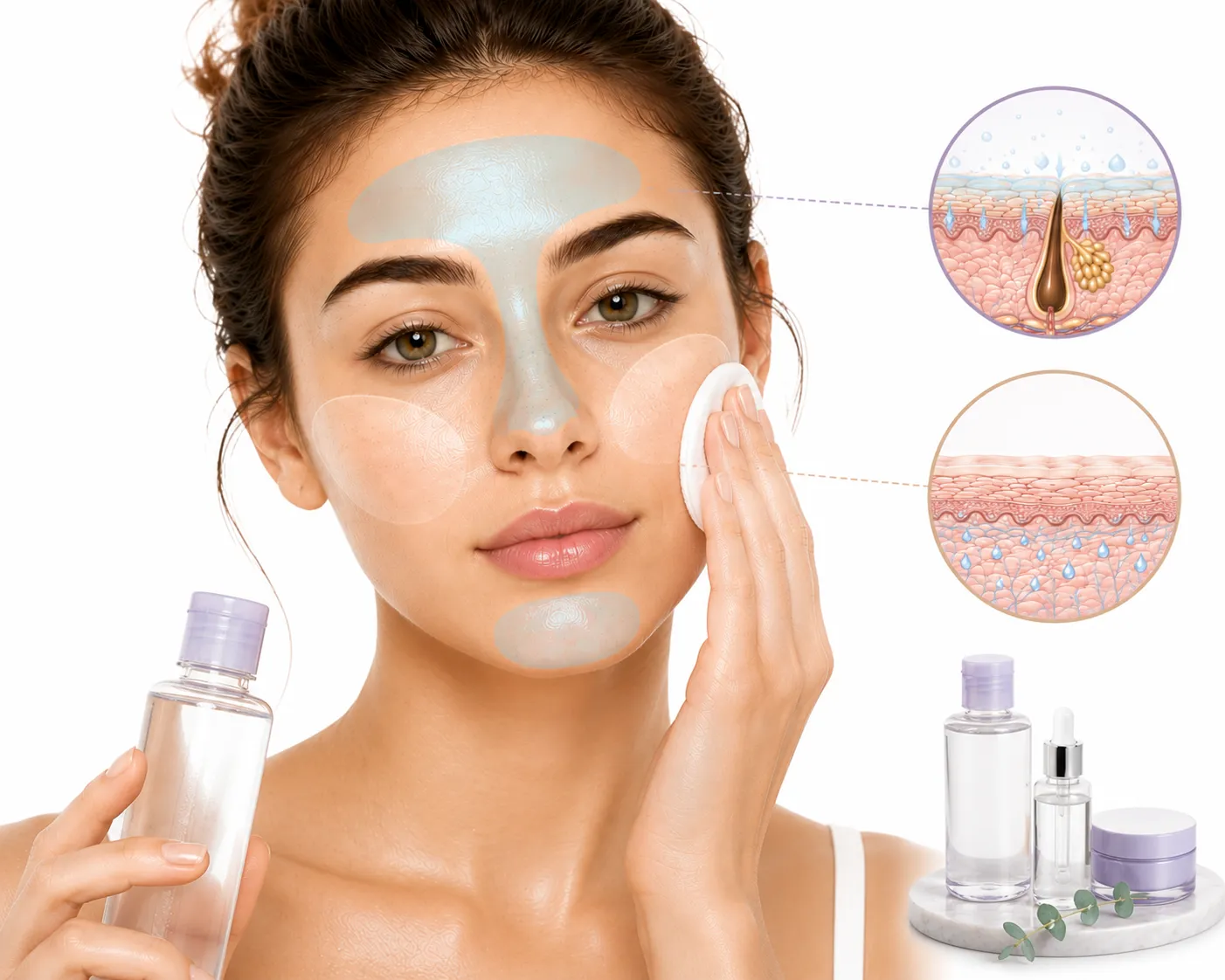
The usefulness of toner for combination skin has less to do with the step itself and everything to do with formula, since an astringent toner and a hydrating toner do almost opposite things.
Use this section to decide
Does this advice apply to me?
Find the concern or goal closest to yours, then use the fit signal to decide how much weight to give this guide.If your goal is
Best formulaUsually relevant- Fit signal
- Often useful
Hydrating
If your goal is
AvoidUse caution- Fit signal
- Limited evidence
High alcohol
If your goal is
ApplicationUse caution- Fit signal
- Limited evidence
Even, or T-zone focused
If your goal is
RoleUse caution- Fit signal
- Limited evidence
Prep layer
Practical use
How to use it
Check the ingredient list
Favor hydrating and balancing ingredients over alcohol-heavy formulas.
Apply after cleansing
Pat the toner in evenly across the face.
Follow with serum and moisturizer
Continue the routine with zone-appropriate products.
Safety
Side effects and cautions
- Choosing a toner based on old "pore-closing" claims
Focus on formula and ingredients rather than outdated marketing language.
- Using an alcohol-heavy toner across the whole face
Opt for a hydrating, low-alcohol formula instead.
- Skipping moisturizer because toner feels hydrating enough
Toner typically complements, rather than replaces, moisturizer.
Fit
Who should be careful
- Alcohol-heavy astringent formulas
Helpful context
What else is worth knowing
Is toner right for you?
Worth noting
Small details that can change the answer
- Formula Matters. Alcohol-based astringent toners behave very differently from hydrating, humectant-based ones.
- Dual-Purpose Potential. Some toners combine hydration with mild oil-balancing ingredients like niacinamide.
- Prep Layer. Toner is often used to prep skin for better absorption of subsequent products.
- Not Pore-Closing. Toner does not physically close pores, regardless of older marketing claims.
Combination skin can use toner, provided the formula is well chosen.
Hydrating, low-alcohol toners generally suit combination skin best.
Astringent, alcohol-based toners can worsen dryness on the cheeks.
Some toners combine hydration with oil-balancing ingredients like niacinamide.
Toner works as a prep layer rather than a pore-shrinking treatment.
Explanation
What toner actually does
A modern toner typically adds a layer of hydration or mild active ingredients right after cleansing, helping prep the skin for serums and moisturizers. It doesn't shrink pores, but it can improve how balanced skin feels across the day.
Ingredient Comparison
Toner formulas to consider
Hydrating toner (glycerin, hyaluronic acid)
bestBest for: General balance across combination skinAdds hydration · Low irritation risk
Limitations: Minimal oil control on its ownNiacinamide toner
goodBest for: T-zone oil balance with cheek-friendly hydrationHelps regulate oil · Generally gentle
Alcohol-based astringent toner
avoidBest for: Rarely recommended for combination skinTemporary mattifying effect
Limitations: Can dry out cheeks · May disrupt barrierRoutine Flow
Where toner fits in a combination-skin routine
- 1Cleanser
Use a gentle, non-stripping formula.
- 2Toner
Apply evenly, or focus a light layer extra on the T-zone.
- 3Serum
Follow with any targeted treatment.
- 4Moisturizer
Use a richer formula on the cheeks, lighter on the T-zone.
Dos Donts
Choosing a toner for combination skin
Do
These support hydration and balance.
Reduces unnecessary friction on the skin.
Avoid
Can dry out the cheeks and irritate the skin.
Formula differences matter more than the category itself.
Questions
Frequently asked questions
Does toner actually close pores?
No, pores don't open or close in that sense; toner may just temporarily improve texture.
Is toner necessary for combination skin?
It's not essential, but a well-formulated one can help balance oily and dry zones.
Can I use toner only on my T-zone?
Yes, some people apply toner more heavily there and lighter elsewhere.
What ingredients should I look for in a toner?
Glycerin, hyaluronic acid, and niacinamide are generally good choices for combination skin.