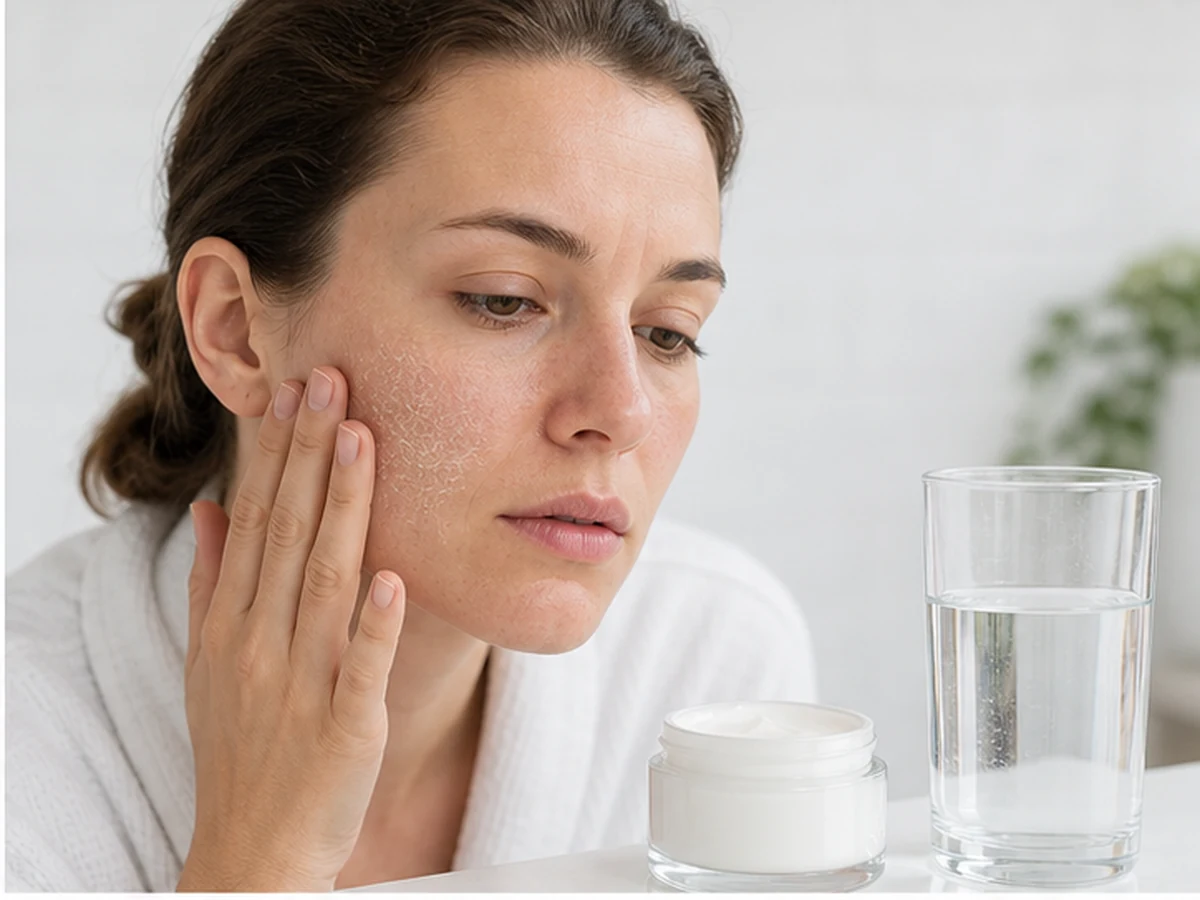
Evidence
What the evidence shows
Dry skin is a skin type defined by low oil production, while dehydration is a temporary water deficit that can affect any skin type, which is why even oily skin can feel dehydrated.
Skin feels tight but looks oily?
Likely dehydrationSkin is consistently flaky, low oil?
Likely dry skin type
Use this section to decide
Does this advice apply to me?
Find the concern or goal closest to yours, then use the fit signal to decide how much weight to give this guide.If your goal is
Dry skin causeUse caution- Fit signal
- Limited evidence
Low oil
If your goal is
Dehydration causeUse caution- Fit signal
- Limited evidence
Low water
If your goal is
Can overlapDepends- Fit signal
- Possible fit
Yes
If your goal is
FixUsually relevant- Fit signal
- Often useful
Water + moisturizer
Practical use
How to use it
Maintain regular water intake
Supports the skin's baseline hydration.
Use humectant-based products
Ingredients like hyaluronic acid and glycerin help draw in water.
Support the skin barrier
Use moisturizers with occlusive or emollient ingredients to lock hydration in.
Safety
Side effects and cautions
- Assuming dry skin and dehydrated skin are the same thing
Dry skin relates to oil, dehydration relates to water.
- Expecting water intake alone to fix chronic dryness
Pair hydration with barrier-supporting moisturizers.
- Assuming oily skin can't be dehydrated
Oily skin can still lack water even with normal oil levels.
Fit
Who should be careful
- Diagnosing chronic dry skin conditions
Worth noting
Small details that can change the answer
- Different Mechanisms. Dry skin relates to oil levels, dehydration relates to water levels.
- Any Skin Type. Dehydration can affect oily, normal, and dry skin alike.
- Barrier Role. A healthy lipid barrier helps the skin retain whatever water it has.
- Overlapping Symptoms. Both dryness and dehydration can cause tightness, dullness, and flaking.
Dehydration can make skin feel tight, dull, or dry, but it isn't the same as dry skin.
Dry skin relates to oil production; dehydration relates to water content.
Any skin type, including oily skin, can experience dehydration.
Water intake supports skin hydration but isn't a complete fix for chronic dryness.
Humectants and barrier-supporting moisturizers address dehydration more directly than drinking water alone.
Definition
Dry skin versus dehydrated skin
Dry skin is a skin type, largely determined by genetics and sebum production. Dehydrated skin is a temporary condition related to water content, and it can occur regardless of underlying skin type.
Explanation
How dehydration affects the skin
When the body doesn't have enough water, this can reduce the water available to skin cells, leading to a temporary loss of plumpness and a duller, tighter appearance. This effect can happen even in people whose skin produces plenty of oil.
Myth Reality
Common misconceptions
It can help with hydration, but chronic dry skin usually needs topical barrier support too.
Oily skin can absolutely be water-deficient even while producing plenty of sebum.
Questions
Frequently asked questions
Is dehydrated skin the same as dry skin?
No, dry skin is about oil levels while dehydrated skin is about water levels, though they can overlap.
Can oily skin be dehydrated?
Yes, oily skin can lack water even while still producing normal or excess sebum.
Will drinking more water clear up dry skin?
It may help overall hydration, but chronic dry skin usually also needs topical care.
What ingredients help with dehydration-related dryness?
Humectants like hyaluronic acid and glycerin are commonly used to address this.