Evidence
What the evidence shows
Hyaluronic acid is a hydration facilitator, not a barrier builder. It creates the conditions for repair, but you also need lipid-replenishing ingredients (like ceramides) to actually rebuild the barrier.
Use this section to decide
Does this advice apply to me?
Find the concern or goal closest to yours, then use the fit signal to decide how much weight to give this guide.If your goal is
Direct RoleUse caution- Fit signal
- Limited evidence
Hydration only
If your goal is
Indirect RoleUsually relevant- Fit signal
- Often useful
Creates repair conditions
If your goal is
Needed WithUsually relevant- Fit signal
- Often useful
Ceramides, fatty acids
If your goal is
Evidence LevelUsually relevant- Fit signal
- Often useful
Good for hydration
Research notes already in this guide
- Hyaluronic acid has strong evidence for hydration and reducing TEWL.
- The evidence for direct barrier repair is limited - it's more about creating the right conditions.
- It's most effective when used alongside lipid-replenishing ingredients.
Practical use
How to use it
Apply to damp skin
Hyaluronic acid needs water to work - apply to slightly damp skin.
Follow with a moisturizer
Seal in the hydration with a barrier-supporting moisturizer.
Layer with lipid-replenishing ingredients
Combine with ceramides, cholesterol, and fatty acids for complete barrier repair.
Safety
Side effects and cautions
- Using hyaluronic acid alone for barrier repair
It's a supportive ingredient, not a complete solution. Use it alongside ceramides and fatty acids.
- Applying to dry skin
Apply to damp skin so it has water to pull into the skin.
- Not following with a moisturizer
Always seal in hyaluronic acid with a moisturizer to lock in hydration.
Fit
Who should be careful
- Being used alone for barrier repair
- Being applied to dry skin without a moisturizer
Helpful context
What else is worth knowing
How hyaluronic acid supports barrier repair
Hydration provision
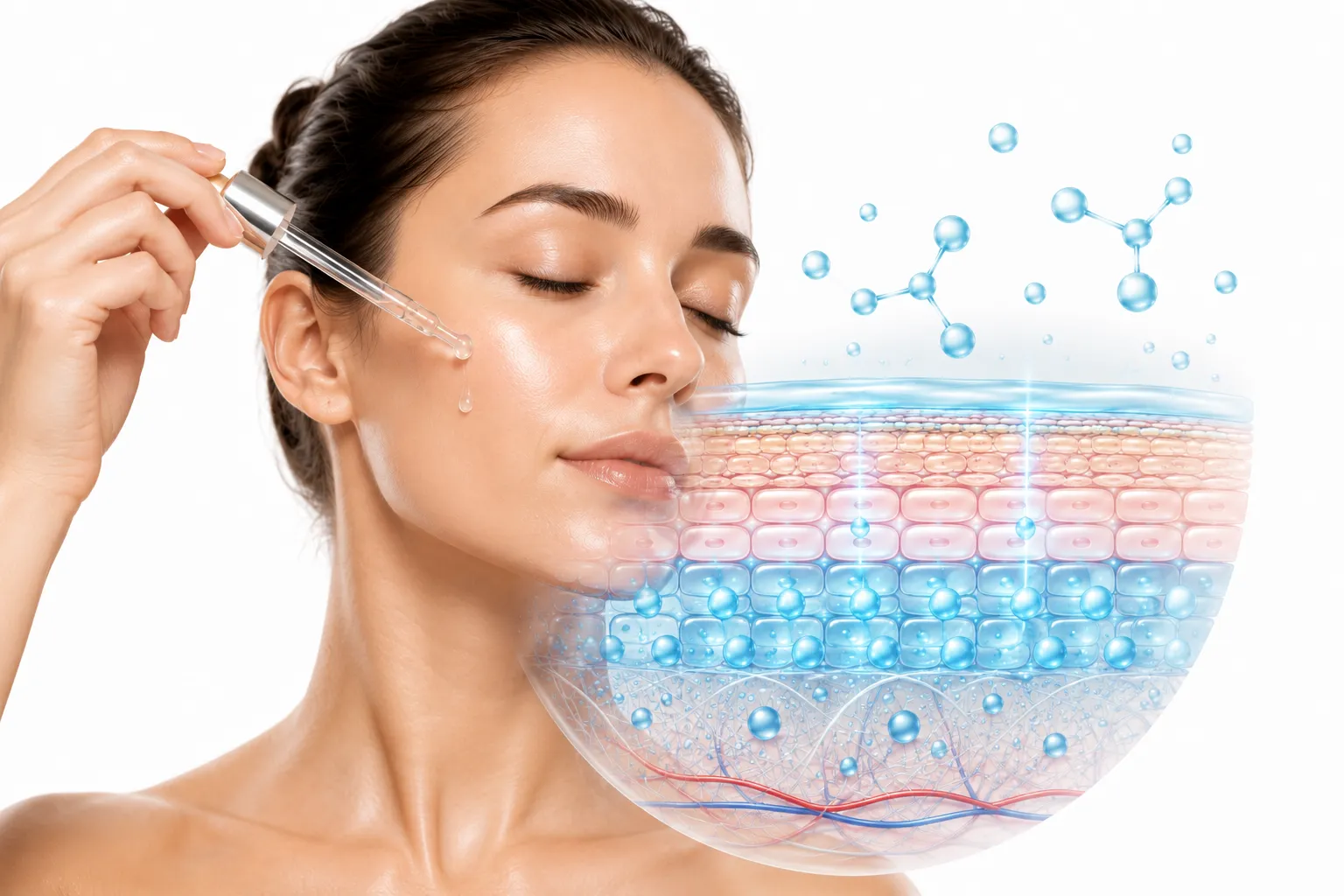
Hyaluronic acid draws water into the skin, maintaining the hydration level needed for barrier function.
Enzyme support
The enzymes that produce barrier lipids work best in a hydrated environment.
TEWL reduction
A hydrated barrier loses less water, further supporting repair.
What experts say about hyaluronic acid for barrier repair
Dr. Hadley KingHyaluronic acid is great for hydration, but it's not a complete barrier repair solution. Pair it with ceramides.
Dr. Shari MarchbeinHyaluronic acid creates the conditions for barrier repair, but you need lipids to actually rebuild the barrier.
Worth noting
Small details that can change the answer
- Water Content. The barrier needs about 10-20% water content to function properly. Hyaluronic acid helps maintain this level.
- Lipid Function. Lipids need water to function properly - dehydrated lipids are brittle and prone to breaking.
- Barrier Enzymes. The enzymes that create barrier lipids work best in a hydrated environment.
- TEWL. Hyaluronic acid can reduce TEWL (transepidermal water loss) by keeping the skin hydrated.
Hyaluronic acid supports barrier repair indirectly by providing essential hydration.
It doesn't rebuild the lipid structure directly - that's the job of ceramides and fatty acids.
A hydrated environment is essential for the skin to repair itself.
Apply hyaluronic acid to damp skin and follow with a moisturizer.
It works best as part of a comprehensive barrier repair routine.
Definition
What hyaluronic acid does for the barrier
Understanding the indirect role.
Hyaluronic acid supports barrier function by providing hydration. It doesn't rebuild the lipid structure directly, but it creates the conditions that allow the barrier to repair itself.
Benefits
How hyaluronic acid supports barrier repair
Here's how hyaluronic acid specifically helps the barrier.
- Maintains hydration - the barrier needs water to function properly
- Supports lipid function - lipids work best in a hydrated environment
- Reduces water loss - a hydrated barrier retains water more effectively
- Soothes the skin - hydration reduces the irritation that can worsen barrier damage
- Supports enzyme function - the enzymes that produce barrier lipids need water to work
How to use hyaluronic acid for barrier support
Here are some tips for using hyaluronic acid as part of a barrier repair routine.
- Apply to damp skin for best absorption
- Follow with a moisturizer to seal in the hydration
- Layer it with lipid-replenishing ingredients like ceramides and fatty acids
- Use it twice daily for consistent hydration
- In dry climates, apply a moisturizer immediately after to prevent reverse water loss
When hyaluronic acid might not be enough
Hyaluronic acid is helpful, but it's not a complete solution for barrier repair.
- If you're only using hyaluronic acid and no lipid-replenishing ingredients
- If you're in a very dry climate - you need a moisturizer on top
- If you have severe barrier damage - you need comprehensive repair
Questions
Frequently asked questions
Does hyaluronic acid repair the skin barrier?
Indirectly, by providing hydration that supports barrier function and creates the conditions for repair.
Can I use hyaluronic acid alone for barrier repair?
No - you need lipid-replenishing ingredients like ceramides and fatty acids to actually rebuild the barrier.
What's the best way to use hyaluronic acid for barrier health?
Apply to damp skin, follow with a moisturizer, and use it alongside lipid-replenishing ingredients.
Can hyaluronic acid make barrier damage worse?
In dry climates, if applied to dry skin without a moisturizer, it can pull water from the skin - always apply to damp skin and seal it in.
References
Sources
The notes below are drawn from the evidence already cited in this guide. They are not a complete bibliography.
- Hyaluronic acid has strong evidence for hydration and reducing TEWL.
- The evidence for direct barrier repair is limited - it's more about creating the right conditions.
- It's most effective when used alongside lipid-replenishing ingredients.