Evidence
What the evidence shows
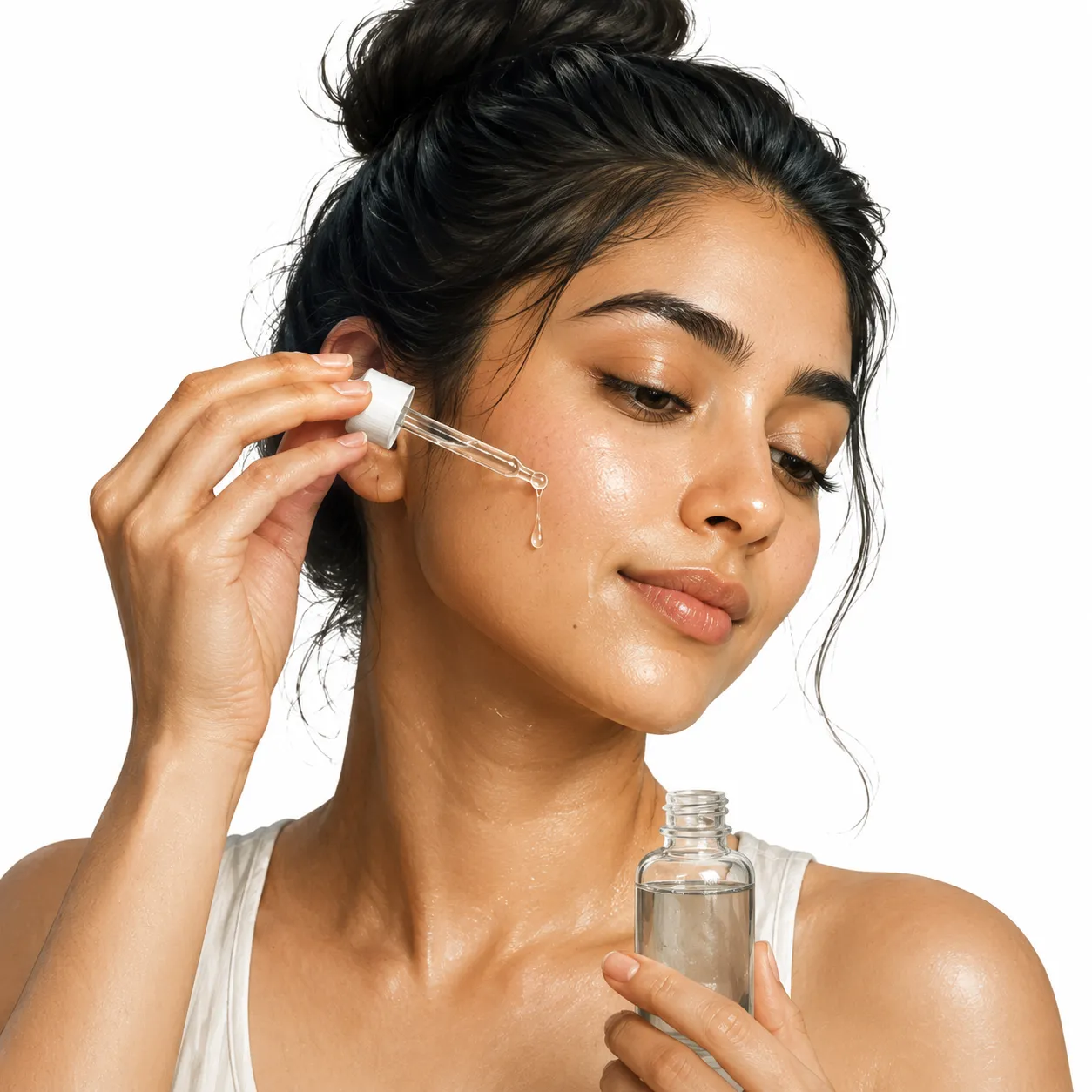
Oily skin and dehydrated skin are not mutually exclusive - hyaluronic acid hydrates without adding oil, making it perfect for oily skin.
Use this section to decide
Does this advice apply to me?
Find the concern or goal closest to yours, then use the fit signal to decide how much weight to give this guide.If your goal is
Oil-free hydrationUsually relevant- Fit signal
- Often useful
Excellent
If your goal is
Oil balancingDepends- Fit signal
- Possible fit
Can help reduce excess oil
If your goal is
Texture improvementDepends- Fit signal
- Possible fit
Plumps and smooths
If your goal is
Non-comedogenicUsually relevant- Fit signal
- Often useful
Won't clog pores
Expected results
Results and timeframe
Apply to damp skin for the best results.
Practical use
How to use it
Apply to damp skin
After cleansing, don't dry your skin completely - apply hyaluronic acid while the skin is still slightly damp.
Choose a lightweight serum
Look for a water-based hyaluronic acid serum without heavy oils.
Lock it in with a lightweight moisturizer
Follow with an oil-free or lightweight moisturizer to seal in hydration.
Safety
Side effects and cautions
- Using hyaluronic acid on completely dry skin
Apply to damp skin for best results.
- Choosing heavy creams over serums
Lightweight serums or gels are better for oily skin.
- Skipping moisturizer after hyaluronic acid
Lock the hydration in with a lightweight moisturizer.
Fit
Who should be careful
- Those who apply it to dry skin - it needs water to work
Worth noting
Small details that can change the answer
- Humectant Property. Hyaluronic acid draws water to the skin's surface.
- Oil-Free Hydration. It provides hydration without adding oil or heaviness.
- Water Attraction. It can hold up to 1000 times its weight in water.
- Balancing Effect. Proper hydration can help regulate oil production.
Hyaluronic acid is suitable for all skin types, including oily skin.
It provides hydration without adding any oil or heaviness.
Oily skin often suffers from dehydration - hyaluronic acid addresses this perfectly.
Choose lightweight, water-based formulations for oily skin.
Science
How hyaluronic acid works on oily skin
Hyaluronic acid is a humectant - it draws water from the environment and from deeper skin layers to the surface. This increases the skin's water content without adding any oil. For oily skin, this is ideal because it addresses the hydration gap without contributing to the oiliness. Properly hydrated skin also signals to the oil glands that the skin is balanced, which can help regulate sebum production.
- Humectant
- An ingredient that draws moisture to the skin's surface.
- Dehydration
- A lack of water in the skin, which can occur even in oily skin.
Dos Donts
Dos and don'ts for hyaluronic acid on oily skin
Do
Helps pull water into the skin more effectively
Avoids adding unnecessary oils
Helps lock the hydration in
Hydration improves with regular use
Avoid
Can draw water from deeper layers, potentially dehydrating
May add unnecessary oil
Hydration needs to be locked in
Needs water to work effectively
Skin Type Suitability
Hyaluronic acid suitability by skin type
Excellent - provides oil-free hydration
Works on both oily and dry zones
Excellent - provides much-needed hydration
Well-tolerated - patch test as with any product
Questions
Frequently asked questions
Can hyaluronic acid make oily skin oilier?
No - it hydrates without adding oil and can even help balance oil production.
Is hyaluronic acid the same as moisturizer?
No - it's a hydrator (adds water), not a moisturizer (which also adds oils). Oily skin needs both.
Can I use hyaluronic acid daily?
Yes, it's safe for daily use on all skin types.
Do I need to use a moisturizer with hyaluronic acid?
Yes - to lock the hydration in and prevent water loss.