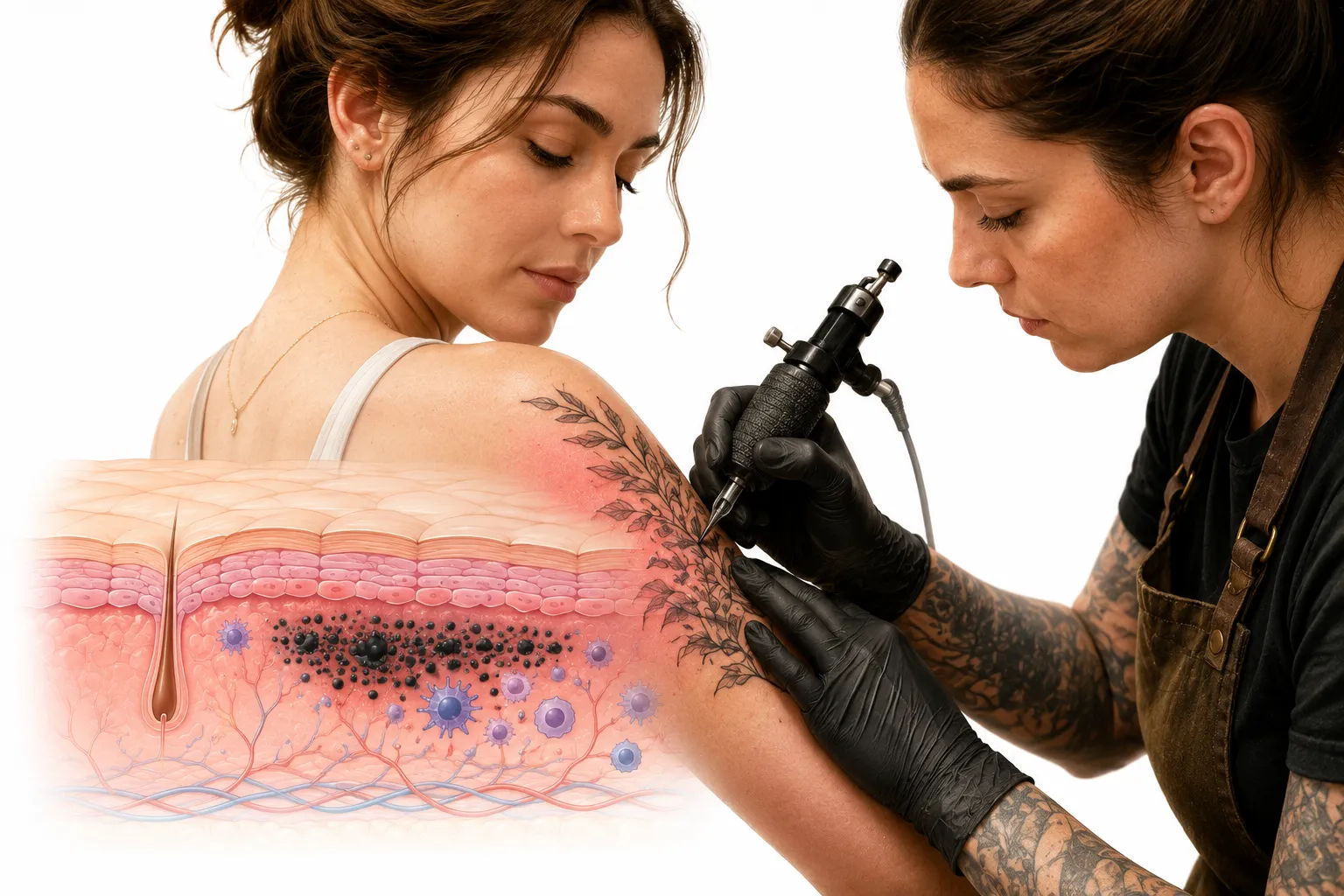
Evidence
What the evidence shows
The key to tattooing sensitive skin is anticipation - prepare for a stronger reaction, use gentler products, and give the skin more time to heal.
Very reactive skin?
Get an ink patch test before your appointment.Mildly sensitive skin?
Discuss your sensitivity with the artist before the appointment.Healing a tattoo?
Use only gentle, fragrance-free products.
Use this section to decide
Does this advice apply to me?
Find the concern or goal closest to yours, then use the fit signal to decide how much weight to give this guide.If your goal is
SuitabilityUsually relevant- Fit signal
- Often useful
Yes - with extra caution
If your goal is
Key preparationUsually relevant- Fit signal
- Often useful
Patch test ink if possible
If your goal is
AftercareUsually relevant- Fit signal
- Often useful
Gentle, fragrance-free products
If your goal is
Healing timeUse caution- Fit signal
- Limited evidence
May take longer
Expected results
Results and timeframe
Be patient - sensitive skin may take longer to heal.
Practical use
How to use it
Discuss your sensitive skin with the artist
Be upfront about your skin sensitivity before the appointment.
Consider an ink patch test
This can identify potential reactions before the full tattoo.
Use gentle aftercare products
Stick to fragrance-free, gentle products for the healing process.
Safety
Side effects and cautions
- Not discussing sensitive skin with the artist beforehand
Always tell your artist about your sensitive skin.
- Using harsh or scented products on the healing tattoo
Stick to gentle, fragrance-free products.
- Comparing healing to others with different skin types
Sensitive skin heals differently - be patient.
Fit
Who should be careful
- Those who expect the same experience as other skin types - sensitive skin needs extra care
Worth noting
Small details that can change the answer
- Reactivity Risk. Sensitive skin may react more strongly to the tattooing process.
- Patch Testing. Consider an ink patch test before the full tattoo.
- Product Selection. Use only gentle, fragrance-free aftercare products.
- Healing Time. Sensitive skin may take longer to heal.
People with sensitive skin can get tattoos with extra precautions.
Discuss your sensitivity with the artist beforehand.
Consider an ink patch test to check for reactions.
Use only gentle, fragrance-free aftercare products.
Before After Expectation
Before and after: tattoo on sensitive skin
Before starting
- Concerned about skin reactions to ink and process
- May react to certain products and ingredients
- Needs careful preparation and discussion with artist
Realistic result
- Well-cared-for tattoo with minimal reactions
- Used gentle, appropriate aftercare products
- Healed beautifully with patience and care
Individual results vary based on skin condition and aftercare.
Dos Donts
Dos and don'ts for sensitive skin tattoos
Do
Allows for better preparation and technique adjustment
Identifies potential reactions before the full tattoo
Minimizes the risk of irritation
Sensitive skin may take longer to heal
Ensures proper healing
Avoid
Can cause reactions
Can lead to complications
Can irritate sensitive skin
Sensitive skin heals differently
Decision Helper
Decisions for sensitive skin tattooing
Very sensitive, reactive skin
Get an ink patch test 1-2 weeks before the appointmentIdentifies any ink allergies before the full tattoo
Moderately sensitive skin
Discuss your sensitivity with the artist and choose gentle aftercare productsPrepares for a smoother experience
Healing a new tattoo
Use only gentle, fragrance-free productsMinimizes the risk of reactions during healing
Clinical Guidance
Clinical guidance for sensitive skin tattooing
- Consult with your tattoo artist and consider a patch test for the ink
- Use only hypoallergenic, fragrance-free aftercare products
- Monitor the tattoo closely for any signs of unusual reactions
- If you have a severe skin condition, consult a dermatologist first
- Be prepared for a potentially longer healing process
Questions
Frequently asked questions
Will a tattoo irritate sensitive skin?
It may cause more redness and irritation initially, but proper aftercare minimizes this.
Can I get a tattoo if I react to everything?
Yes, but take extra precautions - patch test, use gentle products, and be patient.
How long does a tattoo take to heal on sensitive skin?
It may take longer than other skin types - potentially 3-4 weeks or more.
Can I use regular tattoo aftercare products?
Only if they're fragrance-free and gentle - otherwise, choose products designed for sensitive skin.