Evidence
What the evidence shows
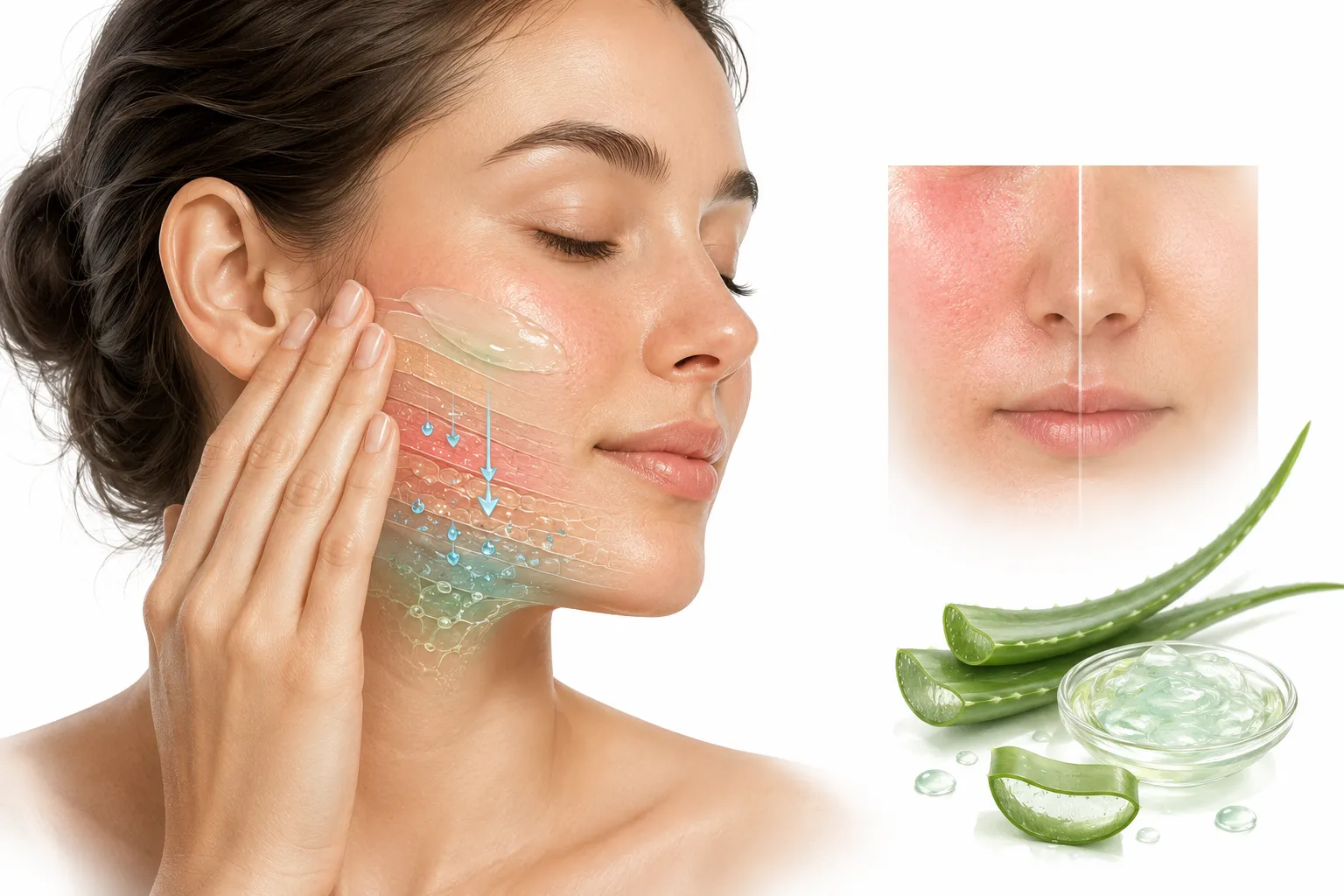
Aloe vera's benefits for sensitive skin come from its polysaccharides, which have hydrating and anti-inflammatory properties. But the gel is only as good as its ingredients - many commercial aloe products are essentially water with a splash of aloe.
You have red, inflamed skin
Aloe vera is excellent for calming redness and inflammation.You have a latex allergy
Aloe vera may cross-react with latex. Patch test first.You need deep, lasting moisture
Aloe vera provides lightweight hydration but isn't occlusive. Use a moisturizer afterward.
Use this section to decide
Does this advice apply to me?
Find the concern or goal closest to yours, then use the fit signal to decide how much weight to give this guide.If your goal is
TypeUsually relevant- Fit signal
- Often useful
Soothing plant extract
If your goal is
Key benefitUsually relevant- Fit signal
- Often useful
Anti-inflammatory, hydrating
If your goal is
Best productUse caution- Fit signal
- Limited evidence
Pure, unscented aloe gel
If your goal is
ConsiderationDepends- Fit signal
- Possible fit
Latex allergy possible
Practical use
How to use it
Choose pure, unscented aloe vera gel
Look for products with minimal ingredients - ideally 100% aloe vera gel without alcohol or fragrance.
Patch test before use
Apply a small amount to your inner arm and wait 24 hours to check for any reaction.
Apply as a soothing layer
Use a thin layer on irritated or sensitive skin, followed by a moisturizer if needed.
Safety
Side effects and cautions
- Using a commercial aloe gel with added alcohol
Check the ingredient list - many products contain alcohol or fragrance. Look for pure aloe vera gel.
- Using aloe vera as a standalone moisturizer
Aloe vera provides lightweight hydration but isn't occlusive enough for dry skin. Use a moisturizer afterward.
- Applying aloe to broken skin
Aloe is generally safe for minor scrapes, but avoid using it on deep wounds.
Fit
Who should be careful
- Those with latex allergies, or who react to aloe vera
Worth noting
Small details that can change the answer
- Anti-inflammatory. Aloe vera contains over 75 active compounds, including glucomannans, which have anti-inflammatory properties.
- Moisture Binding. Aloe vera's polysaccharides help bind moisture to the skin.
- Latex Allergy. People with latex allergies may also react to aloe vera, as they contain similar proteins.
- Commercial Additives. Many commercial aloe gels contain alcohol, fragrance, or preservatives that can irritate sensitive skin.
Aloe vera is generally safe and soothing for sensitive skin.
Pure, unscented aloe vera gel is the best choice.
Avoid commercial gels with added alcohol, fragrance, or preservatives.
Patch test first, especially if you have a latex allergy.
Aloe vera is a soother, not a complete moisturizer.
Definition
What is aloe vera gel?
Aloe vera gel is a clear, jelly-like substance extracted from the leaves of the aloe vera plant. It's used topically for its soothing, moisturizing, and healing properties. It's a popular ingredient in skincare products for sensitive and irritated skin.
- Extracted from the inner leaf of the aloe vera plant
- Contains polysaccharides, amino acids, vitamins, and minerals
- Known for anti-inflammatory and soothing properties
- Can be used as a moisturizer, soother, or ingredient in other products
Science
Why aloe vera soothes sensitive skin
Aloe vera's soothing properties come from its complex polysaccharides, which have a moisturizing and anti-inflammatory effect on the skin. The glucomannans in aloe vera have been shown to activate the skin's natural healing processes, reducing inflammation and promoting wound healing. It also contains vitamins (A, C, E, B12) and minerals (calcium, magnesium, zinc) that support skin health.
- Polysaccharide
- A long chain of sugars that has moisturizing and skin-soothing properties.
- Glucomannan
- A type of polysaccharide found in aloe vera that has anti-inflammatory properties.
Benefits
What aloe vera does for sensitive skin
Aloe vera offers a range of benefits for sensitive, reactive skin.
- Soothes redness and inflammation
- Provides lightweight hydration without feeling heavy
- Calms stinging and burning sensations
- Supports wound healing and skin repair
- Can be used on sunburned or irritated skin
Risks
Risks for sensitive skin
Aloe vera is generally safe, but there are a few risks to be aware of.
- Contact dermatitis is possible, especially with latex allergy
- Commercial gels often contain alcohol, fragrance, or preservatives that can irritate
- Pure aloe vera gel can have an unpleasant texture or smell
- Overuse can lead to a slight drying effect, as aloe vera is a mild astringent
Questions
Frequently asked questions
Can aloe vera gel help with rosacea?
Yes, aloe vera's anti-inflammatory properties can help soothe rosacea redness and inflammation.
Is it safe to use aloe vera gel on the face every day?
Yes, pure aloe vera gel is safe for daily use on the face.
Can aloe vera make sensitive skin worse?
If you have a latex allergy or use a product with irritating additives, yes. Patch test first.
Is aloe vera gel good for sunburn on sensitive skin?
Yes, aloe vera is excellent for sunburn and is a standard recommendation for soothing sun-damaged skin.