Evidence
What the evidence shows
Alpha arbutin is a hydroquinone derivative that's significantly gentler because it releases hydroquinone slowly and at a lower concentration, reducing the risk of irritation.
You have dark spots or pigmentation
Alpha arbutin is a good option for gentle brightening.You've reacted to hydroquinone before
Alpha arbutin is a gentler alternative, but patch test first.You have sensitive skin that reacts to many products
Alpha arbutin is well-tolerated, but start with a low concentration.
Use this section to decide
Does this advice apply to me?
Find the concern or goal closest to yours, then use the fit signal to decide how much weight to give this guide.If your goal is
TypeUsually relevant- Fit signal
- Often useful
Tyrosinase inhibitor
If your goal is
Best strengthUsually relevant- Fit signal
- Often useful
1-2%
If your goal is
Key benefitUse caution- Fit signal
- Limited evidence
Gentle brightening
If your goal is
EvidenceUsually relevant- Fit signal
- Often useful
Good
Expected results
Results and timeframe
Consistent use and daily sunscreen are key to seeing results.
Practical use
How to use it
Choose a product with 1-2% alpha arbutin
Look for serums or creams that list alpha arbutin as a key ingredient.
Start with every other day use
Apply in the morning or evening, starting with a lower frequency.
Use sunscreen daily
Alpha arbutin increases sun sensitivity, so SPF 30+ every morning is essential.
Safety
Side effects and cautions
- Using alpha arbutin without sunscreen
Alpha arbutin can increase sun sensitivity; daily SPF is essential.
- Expecting immediate results
Brightening takes 4-8 weeks of consistent use.
- Using it at the same time as strong actives
Introduce alpha arbutin gradually and avoid using it with harsh actives initially.
Fit
Who should be careful
- Those with known allergies to hydroquinone or arbutin compounds
Worth noting
Small details that can change the answer
- Mechanism. Alpha arbutin inhibits tyrosinase, the key enzyme in melanin production.
- Gentleness. Alpha arbutin is one of the gentlest tyrosinase inhibitors available.
- Concentration. Effective concentrations typically range from 1-2%.
- Safety. Alpha arbutin is not associated with the ochronosis (skin darkening) risk of hydroquinone.
Alpha arbutin is generally safe and well-tolerated by sensitive skin.
It works by slowly releasing hydroquinone, reducing the risk of irritation.
Typical concentrations are 1-2%.
It's a gentler alternative to hydroquinone for pigmentation concerns.
Definition
What is alpha arbutin?
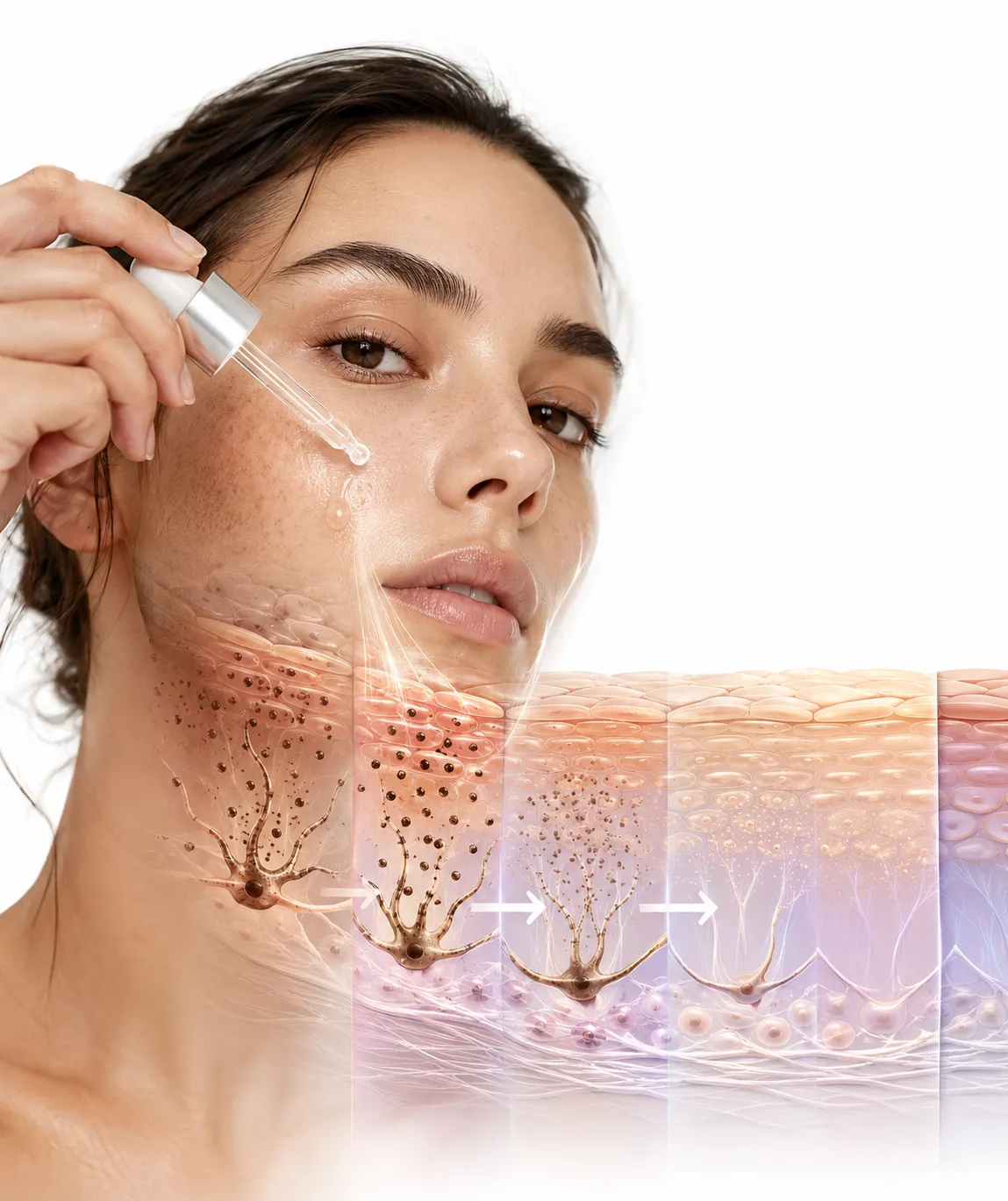
Alpha arbutin is a glycosylated hydroquinone derivative that's used to lighten hyperpigmentation and even out skin tone. It works by inhibiting tyrosinase, the enzyme that produces melanin. It's considered one of the gentlest brightening ingredients available.
- Naturally derived from bearberry plants
- Inhibits tyrosinase, reducing melanin production
- Gentler than hydroquinone
- Typically used in concentrations of 1-2%
Science
Why alpha arbutin is gentler on skin
Alpha arbutin is gentler than hydroquinone because it's a prodrug - it releases hydroquinone slowly over time, at a much lower concentration than direct hydroquinone application. This slow-release mechanism prevents the cellular stress that can cause inflammation, redness, and ochronosis (a permanent darkening of the skin).
- Tyrosinase Inhibitor
- A compound that reduces the activity of tyrosinase, the enzyme that produces melanin.
- Prodrug
- An inactive compound that's metabolized in the body to release an active drug, often reducing side effects.
Benefits
What alpha arbutin does for sensitive skin
For sensitive skin with pigmentation concerns, alpha arbutin offers a unique set of benefits.
- Fades dark spots and hyperpigmentation
- Even out skin tone with minimal irritation
- Is well-tolerated by most sensitive skin types
- Can be used in combination with other gentle ingredients
- Doesn't carry the risk of ochronosis associated with hydroquinone
Risks
Potential risks for sensitive skin
While alpha arbutin is generally safe, there are a few things to be aware of.
- Mild irritation can occur at higher concentrations (above 2%)
- Rare allergic reactions are possible
- May not be as effective as stronger tyrosinase inhibitors
- Can increase sun sensitivity, so sunscreen use is essential
Questions
Frequently asked questions
Can alpha arbutin cause purging?
No, alpha arbutin doesn't typically cause purging, as it doesn't affect cell turnover.
Is alpha arbutin better than vitamin C for sensitive skin?
They work differently - alpha arbutin is better for targeted pigmentation, while vitamin C is an antioxidant that brightens and protects. Both can be used together.
Can I use alpha arbutin with retinol?
Yes, but introduce them separately and consider using one in the morning and one at night to minimize irritation.
How long does it take for alpha arbutin to work?
Visible results typically take 4-8 weeks of consistent use.