Evidence
What the evidence shows
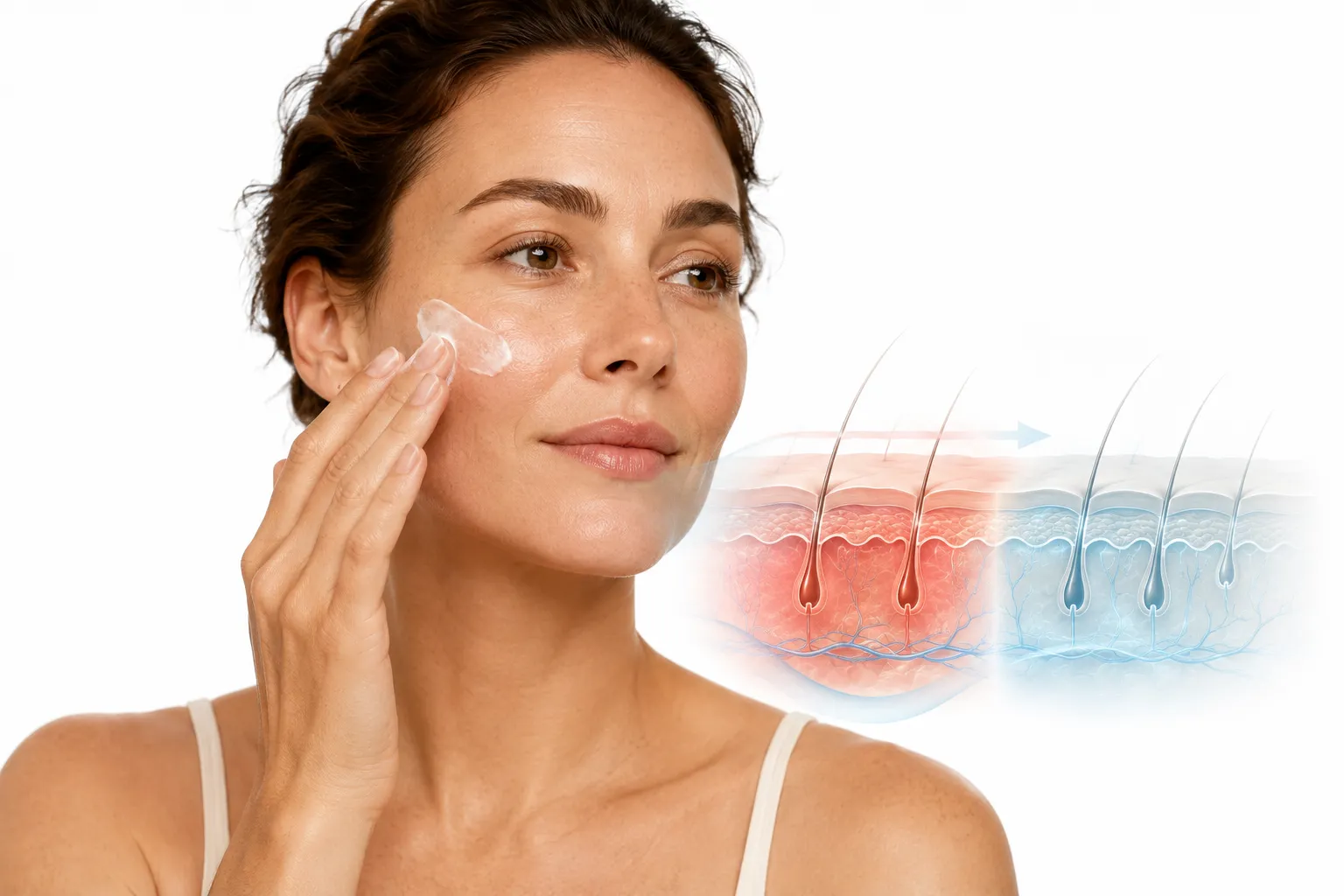
Azelaic acid is unique among acids because it's not a keratolytic (exfoliating) acid - it works by reducing inflammation and fighting bacteria, making it ideal for sensitive, reactive skin.
Rosacea treatment
FDA-approved for rosaceaAcne treatment
Effective for acne with minimal irritationPigmentation
Effective for hyperpigmentation
Use this section to decide
Does this advice apply to me?
Find the concern or goal closest to yours, then use the fit signal to decide how much weight to give this guide.If your goal is
TypeUsually relevant- Fit signal
- Often useful
Dicarboxylic acid
If your goal is
Best strengthUsually relevant- Fit signal
- Often useful
10% (OTC)
If your goal is
Key benefitUse caution- Fit signal
- Limited evidence
Anti-inflammatory, antibacterial
If your goal is
EvidenceUsually relevant- Fit signal
- Often useful
Strong
Expected results
Results and timeframe
Consistent use and daily sunscreen are key to seeing results.
Practical use
How to use it
Start with a lower concentration (10%)
OTC products are a good starting point for sensitive skin.
Apply a pea-sized amount to clean, dry skin
Use once daily, starting with every other day if you're concerned about irritation.
Use sunscreen daily
Azelaic acid can increase sun sensitivity, so SPF 30+ every morning is essential.
Safety
Side effects and cautions
- Expecting immediate results
Azelaic acid works gradually; give it 4-8 weeks to see results.
- Using too much product
A pea-sized amount is enough for the entire face.
- Using it with other strong actives initially
Introduce azelaic acid slowly and avoid other actives until your skin adjusts.
Fit
Who should be careful
- Those who experience persistent itching or burning (rare)
Worth noting
Small details that can change the answer
- Mechanism. Azelaic acid has three mechanisms: anti-inflammatory, antibacterial, and tyrosinase-inhibiting.
- Rosacea Treatment. Azelaic acid is an FDA-approved treatment for rosacea, a condition associated with sensitive skin.
- Concentration. OTC products are typically 10%; prescription strengths are 15-20%.
- Itching Common. Mild itching or tingling is common in the first 2-4 weeks of use, but it usually subsides.
Azelaic acid is safe and often recommended for sensitive skin.
It works by reducing inflammation, fighting bacteria, and inhibiting tyrosinase.
OTC products are 10%; prescription strengths are 15-20%.
Initial itching is common but usually subsides.
Definition
What is azelaic acid?
Azelaic acid is a naturally occurring dicarboxylic acid that has anti-inflammatory, antibacterial, and tyrosinase-inhibiting properties. It's used to treat acne, rosacea, and hyperpigmentation. Unlike exfoliating acids, it doesn't peel the skin, making it well-suited to sensitive skin.
- Naturally occurring in grains
- Anti-inflammatory, antibacterial, and brightening
- Does not exfoliate the skin
- Available OTC (10%) and by prescription (15-20%)
Science
Why azelaic acid is gentle on sensitive skin
Azelaic acid is gentle on sensitive skin because it doesn't act as a keratolytic (exfoliant). Instead, it works by reducing inflammatory cytokines, which calms redness and reactivity. It also fights P. acnes bacteria without disrupting the skin's microbiome. Its tyrosinase-inhibiting properties reduce pigmentation without causing the irritation associated with hydroquinone.
- Keratolytic
- An agent that removes or exfoliates the outer layer of the skin; azelaic acid is not a keratolytic.
- Tyrosinase Inhibitor
- A compound that reduces the activity of tyrosinase, the enzyme that produces melanin.
Benefits
What azelaic acid does for sensitive skin
Azelaic acid offers a range of benefits that make it a standout ingredient for sensitive skin.
- Reduces redness and inflammation associated with rosacea
- Fights acne-causing bacteria without irritation
- Fades dark spots and hyperpigmentation
- Doesn't cause the burning or stinging of other acids
- Can be used long-term without the risk of resistance
Risks
Potential risks for sensitive skin
Azelaic acid is generally safe, but there are a few things to be aware of.
- Initial itching or tingling is common and usually subsides
- Rare allergic reactions are possible
- Sun sensitivity may increase, so sunscreen is essential
- Using too much can cause dryness or peeling
Questions
Frequently asked questions
Can azelaic acid help with rosacea?
Yes, azelaic acid is an FDA-approved treatment for rosacea.
Does azelaic acid cause purging?
Azelaic acid doesn't typically cause purging, as it doesn't exfoliate the skin.
Can I use azelaic acid with other active ingredients?
Yes, but introduce them slowly and avoid using multiple actives at once initially.
How long does azelaic acid take to work?
Visible results typically take 4-8 weeks of consistent use.