Evidence
What the evidence shows
Type I skin has the lowest baseline melanin activity on the Fitzpatrick scale, which is why it offers minimal natural UV protection and shows almost no visible tanning response, even after repeated sun exposure.
Use this section to decide
Does this advice apply to me?
Find the concern or goal closest to yours, then use the fit signal to decide how much weight to give this guide.If your goal is
Burn tendencyUse caution- Fit signal
- Limited evidence
Always
If your goal is
Tan tendencyUse caution- Fit signal
- Limited evidence
Almost never
If your goal is
Recommended SPFDepends- Fit signal
- Possible fit
50+
If your goal is
EvidenceUsually relevant- Fit signal
- Often useful
Strong
Practical use
How to use it
Use a high SPF sunscreen
SPF 50 or higher is commonly recommended for Type I skin.
Seek shade during peak sun hours
Limiting direct exposure meaningfully reduces burn risk for this skin type.
Wear protective clothing when possible
Hats, sleeves, and sun-protective fabrics add an extra layer of defense.
Safety
Side effects and cautions
- Trying to tan Type I skin through repeated sun exposure
Focus on sun protection instead, since tanning ability is minimal and burn risk is high.
- Using a low SPF because "a little color would be nice"
Use a high SPF broad-spectrum sunscreen consistently, given the elevated burn and damage risk.
- Skipping protective clothing or shade during peak sun hours
Combine sunscreen with shade and protective clothing for more complete protection.
- Sunburn
Use high SPF sunscreen and seek shade during peak sun hours.
- Long-term UV damage
Consistent, diligent sun protection reduces cumulative risk over time.
Fit
Who should be careful
- Expecting any meaningful tan development
Helpful context
What else is worth knowing
Where Type I sits on the Fitzpatrick scale
Type I
Always burns, almost never tans.
Type II
Usually burns, tans minimally.
Type III
Sometimes burns, tans gradually.
Worth noting
Small details that can change the answer
- Fitzpatrick Scale. Type I sits at the most sun-sensitive end of the six-point Fitzpatrick scale.
- Melanin. Type I skin has relatively low baseline melanin activity, limiting its natural UV protection.
- Burn Risk. Type I skin is considered to carry the highest relative risk of sunburn among Fitzpatrick types.
- Cancer Risk. Fair, sun-sensitive skin types like Type I are associated with a higher relative risk of skin cancer over a lifetime of unprotected sun exposure.
Fitzpatrick Type I skin almost never tans and always burns with sun exposure.
It represents the most sun-sensitive category on the Fitzpatrick scale.
Low baseline melanin activity explains its minimal natural tanning response.
Type I skin carries a comparatively higher risk of sunburn and long-term UV damage.
Diligent, high-SPF sun protection is especially important for this skin type.
Definition
What is Fitzpatrick Skin Type I?
Understanding the most sun-sensitive category.
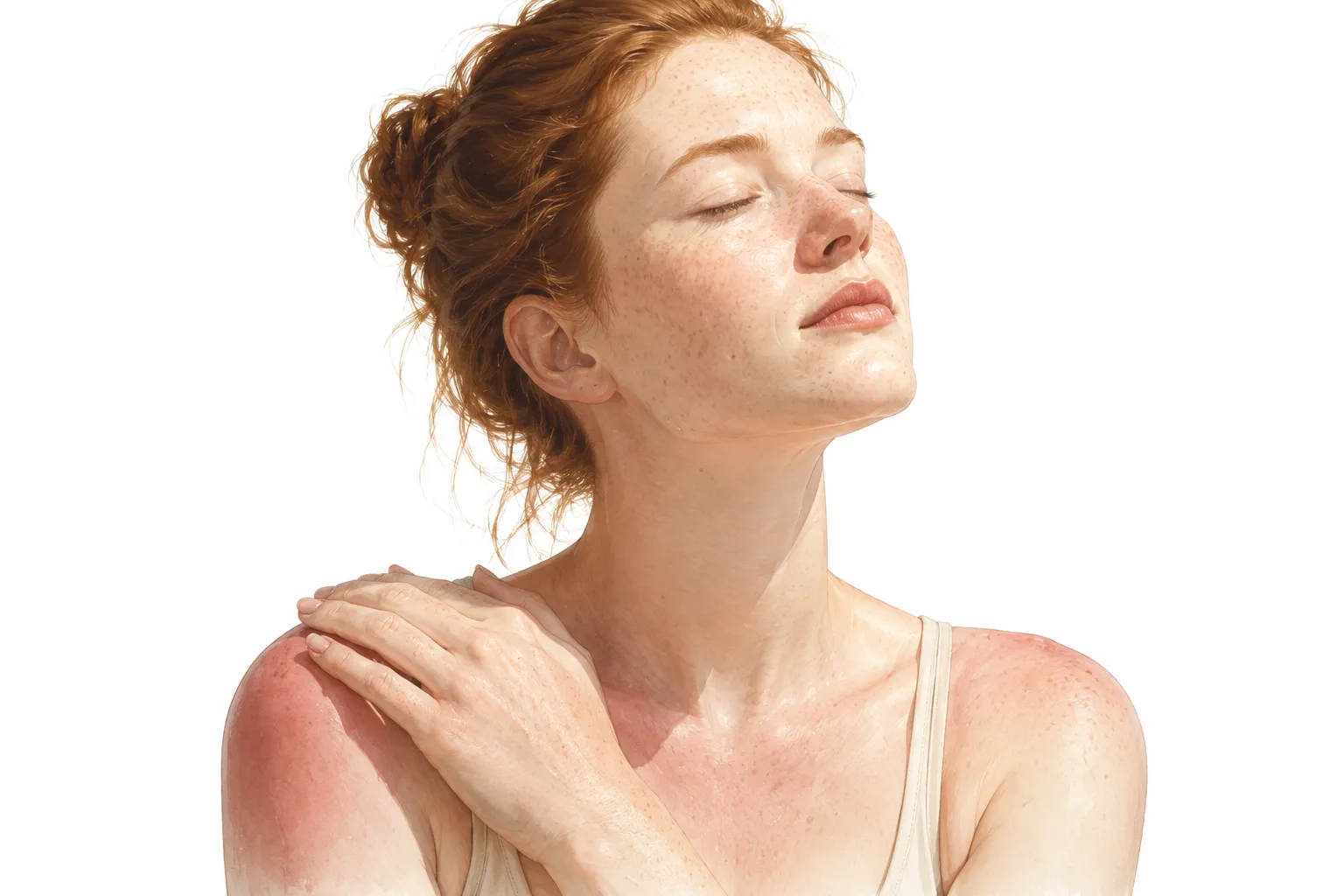
Fitzpatrick Skin Type I describes very fair skin that always burns and almost never tans with sun exposure. It sits at the most sun-sensitive end of the six-point Fitzpatrick scale.
Explanation
Why Type I skin does not tan
Tanning ability across the Fitzpatrick scale correlates with baseline melanin activity. Type I skin has the lowest relative melanin activity on the scale, which limits its natural tanning response almost entirely.
Risks
Why sun protection matters most here
Because Type I skin offers minimal natural UV protection, sun exposure carries a comparatively higher risk of sunburn and long-term UV damage, making diligent sun protection especially important.
Common myths about Type I skin
Myth
Everyone can eventually build up a tan with enough sun exposure.
Reality
Type I skin shows minimal tanning response even with repeated exposure, and forcing it mainly increases burn risk.
Myth
A light tan on Type I skin offers real sun protection.
Reality
Even if minor color change occurs, it offers negligible protection against further UV damage.
Questions
Frequently asked questions
What is Fitzpatrick Skin Type I?
It describes very fair skin that always burns and almost never tans, sitting at the most sun-sensitive end of the Fitzpatrick scale.
Can Type I skin ever get a tan?
It shows minimal tanning response even with repeated sun exposure, and any resulting color change offers little to no real protection.
Is Type I skin at higher risk of skin cancer?
Yes, fair, sun-sensitive skin types like Type I are associated with a higher relative lifetime skin cancer risk without diligent sun protection.
What SPF should Type I skin use?
SPF 50 or higher is commonly recommended, along with shade and protective clothing during peak sun hours.