Evidence
What the evidence shows
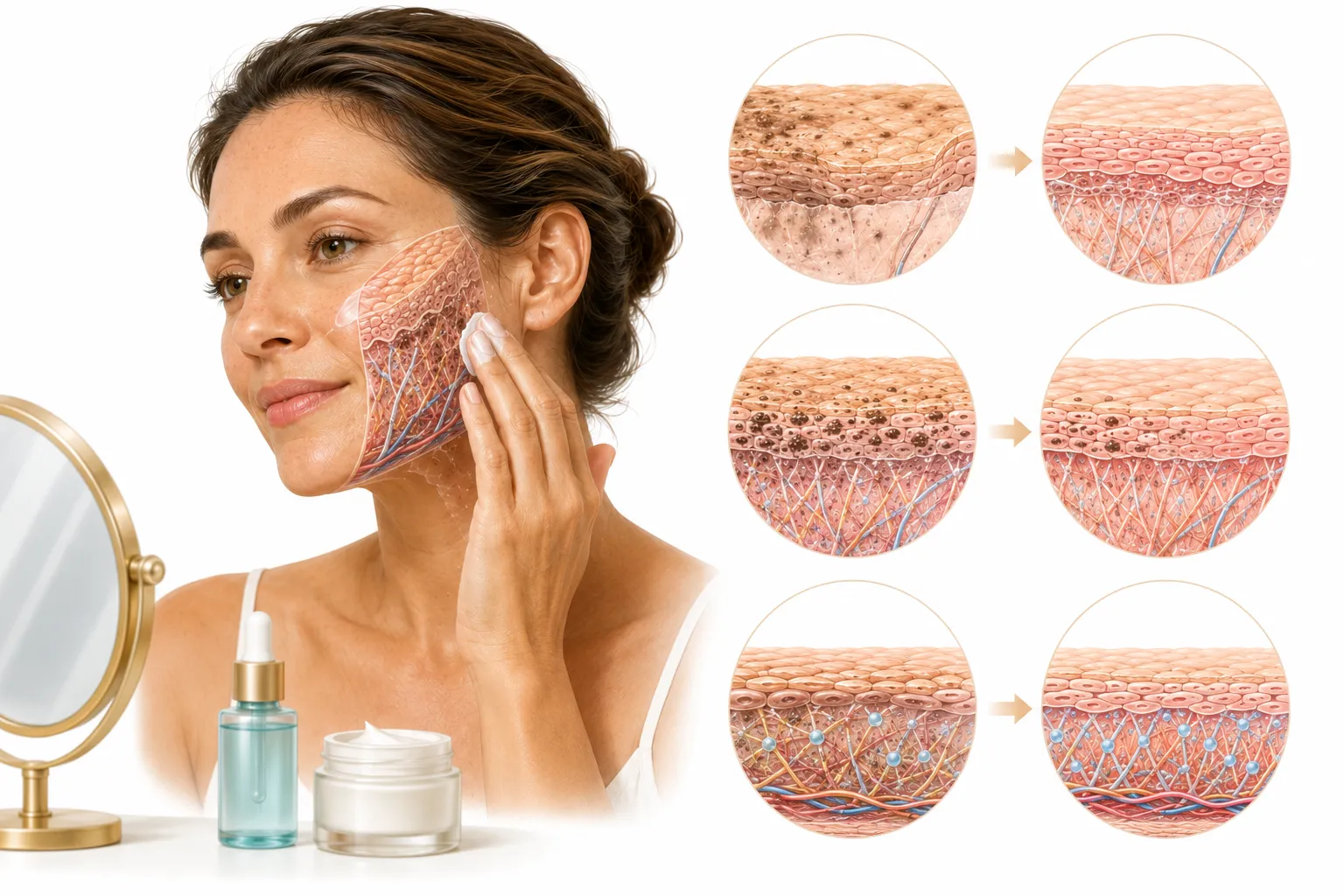
Sun damage is not entirely reversible, but the skin's capacity for repair is significant. The extent of repair depends on the severity of the damage and the consistency of the treatment.
Can OTC products help?
Yes, retinoids and vitamin C can be effective.Do I need a dermatologist?
For severe damage, yes.How long does it take?
Months to years.
Use this section to decide
Does this advice apply to me?
Find the concern or goal closest to yours, then use the fit signal to decide how much weight to give this guide.If your goal is
RepairableUsually relevant- Fit signal
- Often useful
Texture, tone, fine lines
If your goal is
Partially RepairableUse caution- Fit signal
- Limited evidence
Wrinkles, elasticity
If your goal is
IrreversibleDepends- Fit signal
- Possible fit
Deep wrinkles, sagging
If your goal is
Key FactorUse caution- Fit signal
- Limited evidence
Consistency
Research notes already in this guide
- Retinoids have been shown to improve the signs of photoaging in clinical studies.
- Sunscreen is proven to reduce the development of new sun damage.
- The skin's repair mechanisms are well-documented in dermatology.
Explanation
How it works
DNA repair
Enzymes in the skin repair UV-induced DNA damage.
Antioxidant defense
Antioxidants neutralize free radicals generated by UV exposure.
Collagen synthesis
Fibroblasts produce new collagen to replace damaged fibers.
Cellular turnover
The epidermis sheds damaged cells and replaces them with new ones.
Practical use
How to use it
Start with sun protection
Use sunscreen every day to prevent further damage.
Use a retinoid
A topical retinoid can help stimulate repair.
Consider in-office treatments
For more significant damage, consult a dermatologist.
Safety
Side effects and cautions
- Thinking that repair is impossible and giving up
Even modest improvements can significantly improve skin health and appearance.
- Believing that sun damage can be completely reversed
Some damage is permanent; the goal is improvement, not perfection.
- Not using sunscreen while trying to repair damage
Without sunscreen, repair efforts will be undermined by new damage.
Fit
Who should be careful
- Those with severe sun damage who need in-office treatments
- Those seeking complete reversal of all signs of aging
Worth noting
Small details that can change the answer
- DNA Repair. The skin has enzymes that repair DNA damage caused by UV radiation.
- Antioxidant Defenses. The skin has a natural antioxidant defense system that can be supported by topical antioxidants.
- Collagen Production. Collagen production slows with age and is inhibited by UV damage.
- Limitations. Deep wrinkles and sagging are difficult to reverse without in-office procedures.
Yes, sun-damaged skin can be repaired to a significant degree.
Some aspects, like fine lines and pigmentation, are more responsive to treatment.
Deep wrinkles and sagging are more difficult to reverse.
Consistent sun protection is the most important factor in repair.
Setting realistic expectations is key to satisfaction with treatment.
Definition
What can and cannot be repaired in sun-damaged skin
The repair capacity of the skin depends on the type of damage. Some aspects of photoaging are more reversible than others. Understanding the distinction can help you set realistic expectations.
- Reversible: Fine lines, pigmentation changes, rough texture.
- Partially reversible: Moderate wrinkles, reduced elasticity.
- Irreversible: Deep wrinkles, severe sagging, significant elastosis.
Benefits
The benefits of treating sun-damaged skin
Treating sun-damaged skin offers several benefits, even if complete repair is not possible. It can improve the skin's appearance, reduce the risk of skin cancer, and support the skin's overall health.
- Reduces the risk of skin cancer.
- Improves skin texture and tone.
- Fades pigmentation and age spots.
- Boosts skin health and resilience.
Questions
Frequently asked questions
Can sun-damaged skin be completely reversed?
It cannot be completely reversed, but significant improvement is possible.
What is the best treatment for sun-damaged skin?
A combination of sunscreen, retinoids, and supportive treatments is usually most effective.
Is it ever too late to treat sun-damaged skin?
It is never too late. Even advanced photoaging can be improved.
Can I repair sun-damaged skin without a dermatologist?
Mild to moderate damage can be treated with OTC products, but severe damage requires professional care.
References
Sources
The notes below are drawn from the evidence already cited in this guide. They are not a complete bibliography.
- Retinoids have been shown to improve the signs of photoaging in clinical studies.
- Sunscreen is proven to reduce the development of new sun damage.
- The skin's repair mechanisms are well-documented in dermatology.