Evidence
What the evidence shows
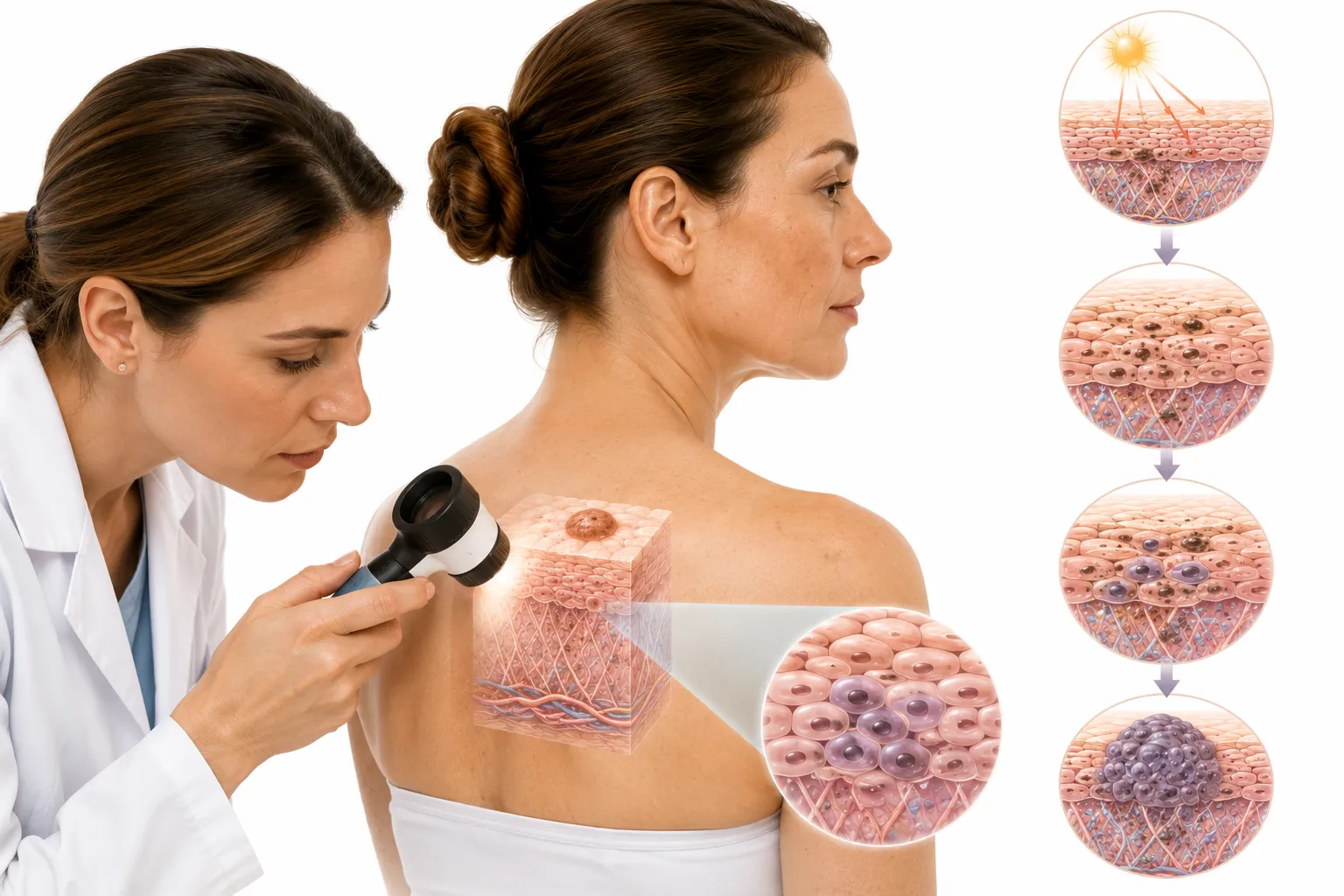
Skin cancer is essentially a failure of DNA repair. Sun exposure creates DNA damage, and while the skin has mechanisms to fix this damage, it doesn't always succeed, and when it doesn't, cancer can develop.
UV as carcinogen
WHO classification, well-establishedDose-response relationship
Clear evidence of cumulative riskSunscreen effectiveness
Reduces melanoma risk by 50%
Use this section to decide
Does this advice apply to me?
Find the concern or goal closest to yours, then use the fit signal to decide how much weight to give this guide.If your goal is
UV damageUse caution- Fit signal
- Limited evidence
Direct DNA mutation
If your goal is
Cancer riskUse caution- Fit signal
- Limited evidence
Increases with exposure
If your goal is
PreventionUsually relevant- Fit signal
- Often useful
Sun protection, skin checks
If your goal is
DetectionUse caution- Fit signal
- Limited evidence
ABCDE method
Research notes already in this guide
- UV radiation is classified as a known human carcinogen by the World Health Organization.
- There is a well-established dose-response relationship between UV exposure and skin cancer risk.
- The risk of melanoma increases with the number of severe sunburns, especially in childhood.
- Regular sunscreen use reduces the risk of melanoma by approximately 50%.
Explanation
How it works
DNA damage occurs
UV radiation creates mutations in the DNA of skin cells.
Repair mechanisms try to fix the damage
DNA repair enzymes attempt to correct the mutations.
Some mutations persist
Repair is incomplete, and mutations accumulate over time.
Cancer develops
Mutations in critical genes lead to uncontrolled cell growth.
Practical use
How to use it
Practice comprehensive sun protection
Use sunscreen daily, seek shade, and wear protective clothing.
Get regular skin checks
See a dermatologist for annual skin checks, and know your own skin for changes.
Follow the ABCDEs of melanoma detection
Look for Asymmetry, Border irregularity, Color variation, Diameter over 6mm, and Evolving spots.
Safety
Side effects and cautions
- Thinking only sunburn causes skin cancer
All UV exposure, including tans that never burn, causes DNA damage.
- Assuming a tan is safe protection
A tan is a sign of DNA damage and provides minimal protection from further UV damage.
- Forgetting to have skin checks
Regular skin checks are essential for early detection and treatment.
Fit
Who should be careful
- A guarantee that any given sun exposure will or won't cause cancer
Helpful context
What else is worth knowing
Who is most at risk for skin cancer from sun damage?
Worth noting
Small details that can change the answer
- UV and Melanoma. About 90% of melanoma cases are linked to UV exposure.
- Squamous Cell Carcinoma. Most SCC cases are caused by cumulative sun exposure over a lifetime.
- Basal Cell Carcinoma. BCC is the most common skin cancer and is strongly linked to UV exposure.
- Tanning Beds. Using a tanning bed before age 35 increases the risk of melanoma by 75%.
UV radiation is a known carcinogen that directly damages skin cell DNA.
Most skin cancers are caused by cumulative or intense UV exposure.
Not all sun-damaged skin becomes cancerous, but the risk increases with exposure.
Regular skin checks are essential for early detection and treatment.
Sun protection is the most effective way to prevent skin cancer.
Definition
What is skin cancer and how is it linked to sun damage?
Skin cancer is an abnormal growth of skin cells that develops when DNA mutations cause cells to proliferate uncontrollably. UV radiation is a known carcinogen that causes these mutations by damaging the DNA in skin cells. The three main types of skin cancer - basal cell carcinoma, squamous cell carcinoma, and melanoma - are all strongly linked to UV exposure.
- Basal cell carcinoma (BCC): Most common, slow-growing, rarely spreads.
- Squamous cell carcinoma (SCC): Second most common, can spread if untreated.
- Melanoma: Most dangerous, can spread rapidly, linked to intense UV exposure.
Risks
Risk factors that increase the likelihood of sun damage developing into cancer
While anyone can develop skin cancer from sun exposure, certain factors increase the risk.
- Fair skin, light hair, and light eyes
- A history of severe or frequent sunburns, especially in childhood
- A family history of skin cancer
- Having many moles or atypical moles
- The use of tanning beds
Questions
Frequently asked questions
Can a sunburn cause skin cancer immediately?
No, skin cancer typically develops years or decades after UV exposure. The damage accumulates over time.
Is all sun damage a precursor to skin cancer?
Not directly. Most sun damage causes visible changes like wrinkles and dark spots, but some mutations can lead to cancer.
Can I reduce my risk if I already have sun-damaged skin?
Yes. Preventing further damage with sun protection and regular skin checks reduces risk.
Do tanning beds cause skin cancer?
Yes. Tanning beds emit UV radiation that is known to cause skin cancer, including melanoma.
References
Sources
The notes below are drawn from the evidence already cited in this guide. They are not a complete bibliography.
- UV radiation is classified as a known human carcinogen by the World Health Organization.
- There is a well-established dose-response relationship between UV exposure and skin cancer risk.
- The risk of melanoma increases with the number of severe sunburns, especially in childhood.
- Regular sunscreen use reduces the risk of melanoma by approximately 50%.