Evidence
What the evidence shows
Niacinamide is well-studied and generally safe for sensitive skin.
Barrier support
Well establishedTolerance at 2-5%
Strong evidenceIrritation risk
Low with proper use
Use this section to decide
Does this advice apply to me?
Find the concern or goal closest to yours, then use the fit signal to decide how much weight to give this guide.If your goal is
Safety for sensitive skinUsually relevant- Fit signal
- Often useful
Yes, with care
If your goal is
Optimal concentrationUsually relevant- Fit signal
- Often useful
2-5%
If your goal is
Key benefitUsually relevant- Fit signal
- Often useful
Barrier support
If your goal is
Risk factorDepends- Fit signal
- Possible fit
High concentrations
Research notes already in this guide
- Niacinamide is one of the most well-studied skincare ingredients.
- Clinical studies show it's well-tolerated at 2-5% concentrations.
- Research supports its barrier-supporting and anti-inflammatory properties.
- Higher concentrations (10%+) may cause irritation in some people.
Practical use
How to use it
Start with a low concentration
Choose a 2-5% niacinamide product for sensitive skin.
Introduce gradually
Use 2-3 times per week initially, then increase as tolerated.
Patch test
Test on a small area for 48 hours before full application.
Safety
Side effects and cautions
- Starting with a high concentration niacinamide
Start with 2-5% for sensitive skin.
- Using it every day immediately
Start with 2-3 times per week and increase gradually.
- Using it with other active ingredients
Introduce one new ingredient at a time.
Fit
Who should be careful
- Those with confirmed niacinamide sensitivity
Worth noting
Small details that can change the answer
- Optimal Concentration. For sensitive skin, 2-5% niacinamide is the safest and most effective range.
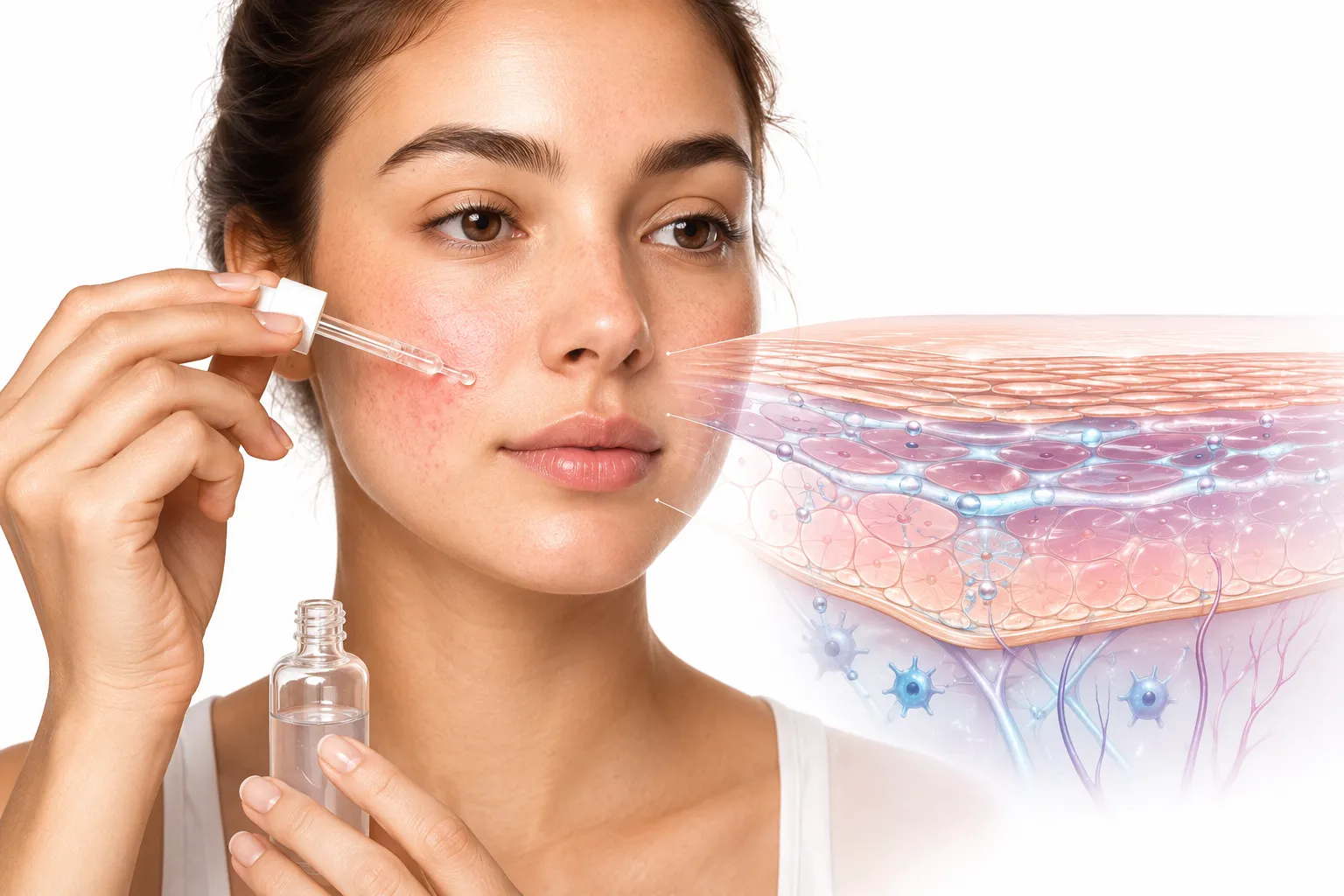
- Barrier Support. Niacinamide supports barrier function, which is beneficial for sensitive skin.
- Niacinamide Flush. Some people experience temporary redness that is not an allergic reaction.
- Formulation Matters. Other ingredients in the product may cause irritation, not the niacinamide.
Niacinamide is generally well-tolerated by sensitive skin.
Irritation usually comes from high concentrations or improper introduction.
2-5% is the optimal concentration for sensitive skin.
Start slowly and patch test to minimize irritation risk.
Niacinamide can actually soothe and support sensitive skin when used correctly.
Definition
What is niacinamide and how does it affect sensitive skin?
Niacinamide is vitamin B3, a water-soluble vitamin that supports the skin barrier and has anti-inflammatory properties.
- A form of vitamin B3
- Supports barrier function
- Reduces redness and inflammation
- Regulates oil production
- Generally well-tolerated by sensitive skin
Explanation
Why some people with sensitive skin experience irritation
Irritation from niacinamide is usually not caused by the ingredient itself.
Benefits
How to use niacinamide on sensitive skin safely
Follow these guidelines to minimize the risk of irritation.
- Start with a lower concentration: 2-5% is ideal
- Introduce gradually: Use 2-3 times per week initially
- Patch test: Test on a small area before full application
- Choose simple formulations: Avoid products with other potential irritants
- Moisturize: Apply over a moisturizer to buffer the effect
Risks
When to avoid niacinamide
Certain situations may warrant avoiding niacinamide.
- Known sensitivity or allergy to niacinamide
- If you experience persistent irritation
- When using other irritating ingredients
- If you have a damaged barrier (heal it first)
Questions
Frequently asked questions
Can niacinamide make sensitive skin worse?
It can if you use too high a concentration or introduce it too quickly.
What percentage of niacinamide is safe for sensitive skin?
2-5% is generally safe and effective for sensitive skin.
Is niacinamide flush dangerous?
No. It's a temporary redness that usually resolves on its own.
Can I use niacinamide if I have rosacea?
Niacinamide can actually help rosacea by reducing redness. Start slowly and consult your dermatologist.
References
Sources
The notes below are drawn from the evidence already cited in this guide. They are not a complete bibliography.
- Niacinamide is one of the most well-studied skincare ingredients.
- Clinical studies show it's well-tolerated at 2-5% concentrations.
- Research supports its barrier-supporting and anti-inflammatory properties.
- Higher concentrations (10%+) may cause irritation in some people.