Evidence
What the evidence shows
The mechanisms and management are well-documented.
Barrier function
Well establishedVascular reactivity
Well documentedManagement approaches
Supported
Use this section to decide
Does this advice apply to me?
Find the concern or goal closest to yours, then use the fit signal to decide how much weight to give this guide.If your goal is
Direct answerUsually relevant- Fit signal
- Often useful
Yes
If your goal is
Key mechanism 1Usually relevant- Fit signal
- Often useful
Barrier compromise
If your goal is
Key mechanism 2Usually relevant- Fit signal
- Often useful
Vascular reactivity
If your goal is
Best approachUsually relevant- Fit signal
- Often useful
Barrier support + calming
Research notes already in this guide
- The role of barrier function in skin redness is well-documented.
- Vascular reactivity in sensitive skin is recognized.
- Calming ingredients have evidence for reducing redness.
- Management approaches are supported by dermatological practice.
Explanation
How it works
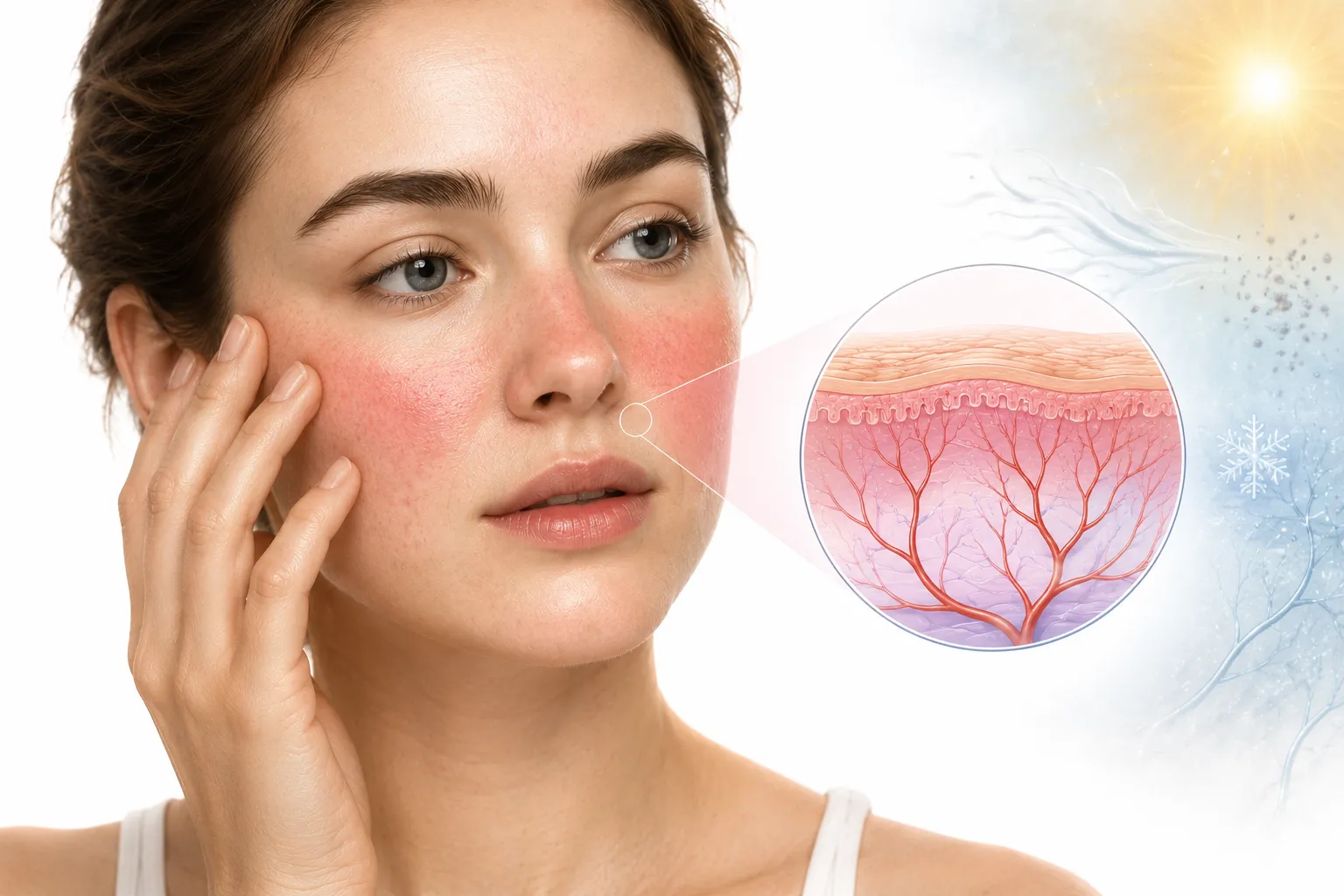
Barrier dysfunction
Irritants penetrate the compromised barrier, triggering an inflammatory response.
Vascular reactivity
Blood vessels dilate in response to stimuli, causing flushing.
Combined effect
Inflammation and dilation work together to create visible redness.
Persistence
Without intervention, the redness can persist.
Practical use
How to use it
Support your barrier
Use a ceramide-rich, soothing moisturizer.
Use calming ingredients
Look for niacinamide, green tea, or oat extract.
Avoid triggers
Identify and avoid what causes your redness.
Safety
Side effects and cautions
- Using hot water to wash sensitive skin
Use lukewarm water to avoid triggering redness.
- Using harsh, stripping products that worsen redness
Choose gentle, barrier-supporting products.
- Ignoring redness and hoping it will go away
Active management is needed to reduce redness.
Fit
Who should be careful
- Expecting immediate results
Worth noting
Small details that can change the answer
- Barrier Function. A compromised barrier allows irritants to penetrate and trigger inflammation.
- Vascular Reactivity. Sensitive skin has blood vessels that dilate more easily in response to stimuli.
- Inflammatory Response. Inflammation from sensitivity leads to visible redness.
- Common Triggers. Temperature changes, products, stress, and certain foods can trigger redness.
Sensitive skin gets red easily due to barrier dysfunction and vascular reactivity.
Two mechanisms combine to cause redness.
Common triggers include temperature, products, stress, and certain foods.
Managing redness requires barrier support, calming ingredients, and trigger avoidance.
With consistent care, redness can be significantly reduced.
Definition
Why sensitive skin gets red easily
Two biological factors combine to cause redness in sensitive skin.
- Compromised barrier: Allows irritants to penetrate and trigger inflammation
- Vascular reactivity: Blood vessels dilate easily in response to stimuli
- Inflammation: The immune response leads to visible redness
- Combined effect: The two mechanisms work together
- Not a weakness: It's a biological characteristic
Explanation
Common triggers for redness in sensitive skin
Understanding triggers helps you avoid them.
Benefits
How to manage redness in sensitive skin
A combination of barrier support and trigger avoidance is most effective.
- Support the barrier with ceramide-rich moisturizers
- Use calming ingredients like niacinamide and green tea
- Avoid known triggers
- Use physical sunscreens (zinc oxide/titanium dioxide)
- Consider gentle, anti-inflammatory skincare
Questions
Frequently asked questions
Why does my sensitive skin turn red so easily?
A compromised barrier allows irritants in, and reactive blood vessels dilate easily.
Is redness in sensitive skin permanent?
It can be managed with consistent care and may improve over time.
Can I reduce redness in sensitive skin?
Yes. Barrier support, calming ingredients, and trigger avoidance are effective.
Should I see a doctor for redness?
If your redness is severe, persistent, or accompanied by other symptoms, see a doctor.
References
Sources
The notes below are drawn from the evidence already cited in this guide. They are not a complete bibliography.
- The role of barrier function in skin redness is well-documented.
- Vascular reactivity in sensitive skin is recognized.
- Calming ingredients have evidence for reducing redness.
- Management approaches are supported by dermatological practice.