Evidence
What the evidence shows
Melasma is a condition, not just a symptom. It's driven by hormonal factors and melanocyte hyperactivity that general hyperpigmentation treatments often can't fully address.
Is the pigmentation symmetrical on your face?
Symmetrical patches suggest melasma.Did it appear during or after pregnancy?
Hormonal changes are a classic melasma trigger.Is it on your cheeks, forehead, nose, or upper lip?
These are the classic melasma locations.Did it appear after a breakout or sunburn?
This suggests PIH or sun damage, not melasma.
Use this section to decide
Does this advice apply to me?
Find the concern or goal closest to yours, then use the fit signal to decide how much weight to give this guide.If your goal is
HyperpigmentationUse caution- Fit signal
- Limited evidence
Broad term, many causes
If your goal is
MelasmaDepends- Fit signal
- Possible fit
Specific type, hormonal
If your goal is
PatternUse caution- Fit signal
- Limited evidence
Symmetrical facial patches
If your goal is
TreatmentDepends- Fit signal
- Possible fit
More challenging
If your goal is
Key InsightUsually relevant- Fit signal
- Often useful
Not interchangeable
Practical use
How to use it
Get a proper diagnosis
Consult a dermatologist to confirm whether you have melasma or another type of hyperpigmentation.
Use sunscreen religiously
Melasma is highly sun-sensitive - SPF 30+ daily, reapply often.
Consider combination treatment
Melasma often responds best to a combination of topical treatments and professional procedures.
Safety
Side effects and cautions
- Treating melasma like ordinary sun spots
Melasma needs specific treatments and careful sun protection.
- Using aggressive treatments on melasma
Aggressive treatments can cause rebound pigmentation in melasma.
- Thinking melasma is just a cosmetic issue
While harmless, melasma can be emotionally distressing and requires proper management.
Fit
Who should be careful
- None - this is foundational knowledge
Worth noting
Small details that can change the answer
- Melasma Pattern. Melasma appears symmetrically on the face (cheeks, forehead, nose, upper lip).
- Hormonal Trigger. Estrogen and progesterone stimulate melanocyte activity in melasma.
- Gender Factor. Melasma is 10 times more common in women than men.
- Treatment Challenge. Melasma is more stubborn and prone to recurrence than other pigmentation.
Melasma is a specific type of hyperpigmentation, not the same as general hyperpigmentation.
It's driven by hormones (estrogen, progesterone) and sun exposure.
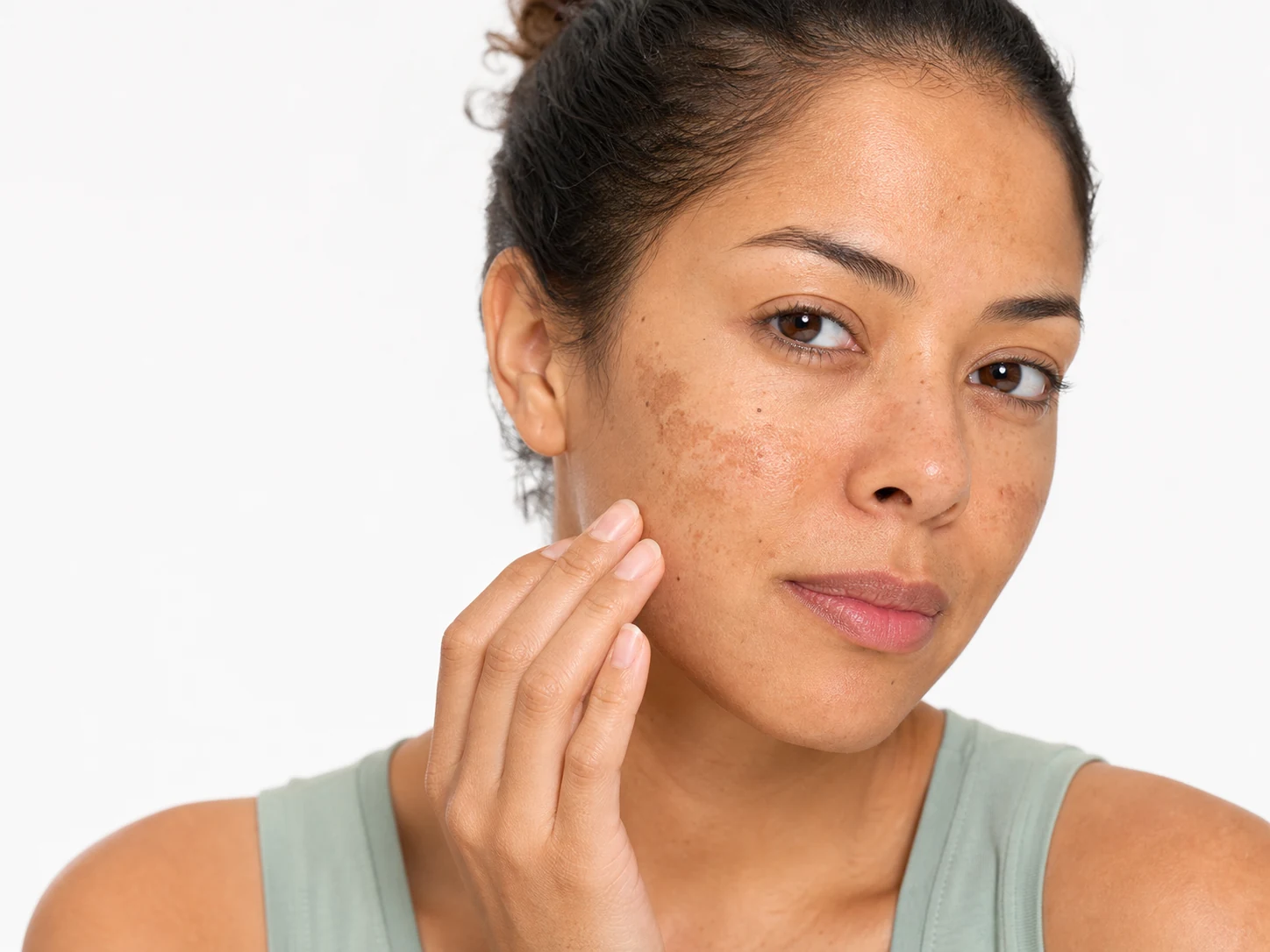
It appears as symmetrical patches on the face.
It's more common in women and is notoriously stubborn.
Melasma requires specific treatments and religious sun protection.
Definition
What is melasma?
Melasma is a specific form of hyperpigmentation characterized by symmetrical, brown or gray-brown patches on sun-exposed areas of the face. It's driven by hormonal factors and sun exposure and is much more common in women.
- Symmetrical facial patches
- Hormonal triggers (estrogen, progesterone)
- Sun exposure aggravates it
- More common in women (10:1 ratio)
Definition
What is general hyperpigmentation?
General hyperpigmentation is any excess melanin production in the skin. It can be localized (dark spots) or diffuse, triggered by sun exposure, inflammation, injury, or other factors. It's not typically driven by hormones.
- Triggered by sun, inflammation, or injury
- Not typically hormonal
- Can appear anywhere on the body
- Usually easier to treat than melasma
Key differences at a glance
| Factor |
|---|
Risks
Why melasma is harder to treat
Melasma's hormonal component makes it particularly challenging.
- Hormonal triggers are harder to control than environmental ones
- Melanocytes in melasma are hyperactive and more responsive to hormones
- Sun exposure can quickly reverse treatment progress
- Some treatments can trigger rebound pigmentation in melasma-prone skin
Questions
Frequently asked questions
Can men get melasma?
Yes, though it's much less common - about 10% of melasma cases are in men.
Is melasma more common in certain skin types?
It's more common in people with darker skin (Fitzpatrick skin types III-V).
Will melasma go away after pregnancy?
It may fade, but it often persists or returns with future hormonal changes or sun exposure.
Can melasma be cured?
It can be managed and improved, but it's often a chronic condition requiring ongoing maintenance.