Evidence
What the evidence shows
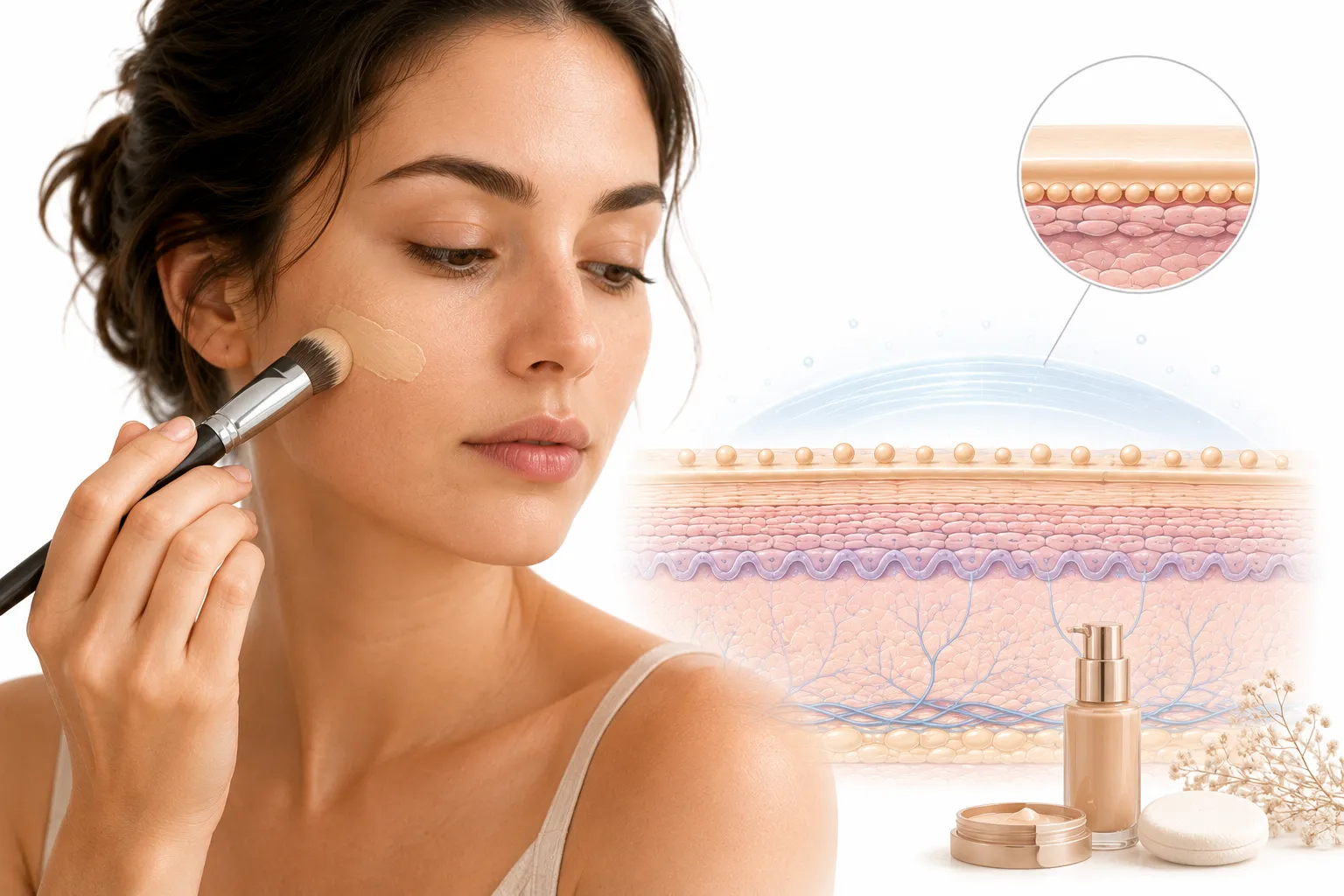
Sensitive skin reacts more to the vehicle - the liquid or powder base - than to the pigments themselves. The added ingredients that give foundation its texture and longevity are often the problem.
My sensitive skin is oily and prone to breakouts
Choose a mineral powder foundation for its breathable, non-comedogenic formula.My sensitive skin is dry and flaky
Choose a fragrance-free silicone-based liquid foundation for its hydrating, smoothing effect.I need high SPF in my foundation
Use a mineral foundation with zinc oxide; avoid chemical sunscreen foundations.
Use this section to decide
Does this advice apply to me?
Find the concern or goal closest to yours, then use the fit signal to decide how much weight to give this guide.If your goal is
Safest formatUsually relevant- Fit signal
- Often useful
Mineral powder
If your goal is
AvoidUse caution- Fit signal
- Limited evidence
Fragrance, essential oils, chemical SPF
If your goal is
FinishUse caution- Fit signal
- Limited evidence
Satin or natural
If your goal is
ApplicationUse caution- Fit signal
- Limited evidence
Hands or soft sponge
Practical use
How to use it
Patch test before purchase
Apply foundation behind your ear or on your jawline and wear it for 24 hours to check for reactions.
Choose fragrance-free and simple
Short ingredient lists reduce the risk of encountering your personal trigger.
Apply with clean tools or hands
Fingers are often gentlest; if you use a brush or sponge, wash it after every use.
Safety
Side effects and cautions
- Assuming "natural" or "organic" means gentle
Natural foundations often contain essential oils and plant extracts that are potent allergens.
- Using foundation with SPF as your only sunscreen
The SPF in foundation rarely provides adequate full-face coverage; you need a separate sunscreen.
- Applying with dirty brushes or sponges
Bacteria buildup on applicators can cause breakouts and irritation regardless of foundation quality.
Fit
Who should be careful
- Those who need heavy, full coverage for scarring or hyperpigmentation
Worth noting
Small details that can change the answer
- Particle Size. Mineral foundation particles are typically larger than penetration thresholds, meaning they are unlikely to absorb into the skin.
- Fragrance Impact. Fragrance is the single most common cosmetic allergen, affecting up to 1 in 10 people with sensitive skin.
- Sunscreen Note. Chemical sunscreens in foundations can trigger reactions; mineral SPF is generally safer for sensitive skin.
- Acne Risk. Non-comedogenic labeling means the product is formulated not to block pores, though this doesn't guarantee no breakouts for everyone.
Fragrance and essential oils are the most common triggers in foundation for sensitive skin.
Mineral foundations are often the safest choice due to their simple, non-absorbing pigment base.
Silicone-based liquids can work well for drier sensitive skin types.
A short ingredient list is your best friend when selecting a foundation.
Patch testing is essential, even if the foundation claims to be dermatologist-tested.
Definition
What is foundation?
Foundation is a cosmetic product applied to the face to even out skin tone, cover imperfections, and create a base for other makeup. It comes in many forms - liquid, cream, powder, mousse, and stick - and can have a variety of finishes from matte to dewy. For sensitive skin, the formulation matters more than the finish because some ingredients are inherently more reactive.
- Available in liquid, powder, cream, and stick formats
- Offers varying coverage levels from sheer to full
- Can include additional benefits like SPF or skincare ingredients
- For sensitive skin, mineral powder or silicone-based liquid are generally safest
Risks
Foundation ingredients that can trigger sensitive skin
Not all foundations are created equal, and some contain ingredients that are more likely to provoke reactions. These are the most common culprits.
- Fragrance and essential oils: the most common contact allergens
- Chemical UV filters: oxybenzone, avobenzone, and octinoxate can cause irritation
- Alcohol denat.: drying and stripping, worsens barrier dysfunction
- Parabens and formaldehyde-releasing preservatives: potential irritants
- Heavy waxes and oils: can be occlusive and pore-blocking in some sensitive types
Benefits
What to look for in a sensitive-skin foundation
A well-chosen foundation can provide coverage without consequences. These features indicate a formula designed for sensitivity.
- Fragrance-free and essential-oil-free formulation
- Non-comedogenic to minimize the risk of breakouts
- Simple, short ingredient list with fewer potential triggers
- Mineral pigment base where possible
- Dermatologist-tested and labeled for sensitive skin
Ingredient Comparison
Mineral vs. liquid foundation for sensitive skin
Mineral powder foundation
bestBest for: Oily and combination sensitive skinShort ingredient list · Sits on top of skin · Contains non-irritating zinc oxide/titanium dioxide · Provides physical SPF
Limitations: Can be drying · May settle into lines · Requires thorough blendingSilicone-based liquid foundation
goodBest for: Dry and mature sensitive skinCreates a smooth, protective barrier · Excellent texture and spreadability · Less likely to dry skin out
Limitations: Sometimes contains more ingredients · Some silicones can trap oilWater-based liquid foundation
okayBest for: Normal to slightly oily sensitive skinLightweight feel · Good for everyday wear
Limitations: Often contains preservatives · Can be less durableQuestions
Frequently asked questions
Are all mineral foundations safe for sensitive skin?
Most are, but some add bismuth oxychloride, which can be irritating. Look for 100% pure mineral formulas without added preservatives or fragrances.
Can sensitive skin wear liquid foundation?
Yes, but choose fragrance-free, alcohol-free silicone-based liquids that don't rely on strong preservatives.
Is powder or liquid better for sensitive, dry skin?
Liquid is generally better for dry skin because powder can cling to dry patches and accentuate texture.
How do I know if my foundation is causing problems?
If you notice redness, stinging, or breakouts within 24-48 hours of applying, your foundation may be the cause. Stop use and see if symptoms resolve.