Evidence
What the evidence shows
Skin reactions to laundry detergent are rarely caused by the cleaning agents themselves - they're caused by the added fragrance and dyes that serve no cleaning purpose.
I have severe eczema
Use a fragrance-free, dye-free, enzyme-free liquid detergent.I need to remove stains, but my skin is sensitive
Spot treat with a gentle, unscented pretreat stain remover instead of using a heavy-duty detergent.I'm on a budget
Store-brand free-and-clear detergents are usually just as effective as name brands.
Use this section to decide
Does this advice apply to me?
Find the concern or goal closest to yours, then use the fit signal to decide how much weight to give this guide.If your goal is
AvoidUse caution- Fit signal
- Limited evidence
Fragrance, dyes, enzymes, brighteners
If your goal is
Look forUsually relevant- Fit signal
- Often useful
"Free & Clear" label
If your goal is
Best formatUse caution- Fit signal
- Limited evidence
Liquid
If your goal is
Important extraUse caution- Fit signal
- Limited evidence
Double rinse
Practical use
How to use it
Choose a fragrance-free, dye-free detergent
Look for "Free & Clear" labels and check the ingredient list for fragrance, parfum, or dyes.
Use less than recommended
Start with half the manufacturer's recommended amount and adjust based on cleaning results.
Run an extra rinse cycle
This ensures all detergent residue is removed from your clothes.
Safety
Side effects and cautions
- Using fabric softener with a gentle detergent
Fabric softeners are full of fragrances and waxes that can irritate sensitive skin; skip them entirely.
- Using the maximum recommended amount of detergent
More detergent doesn't mean cleaner clothes - it means more residue. Use the minimum effective dose.
- Filling the washing machine too full
Overloaded machines don't rinse properly, leaving detergent residue on clothes.
Fit
Who should be careful
- Those needing heavy stain removal on tough fabrics
Worth noting
Small details that can change the answer
- Fabric Trapping. Fragrance molecules can persist in synthetic fabrics for dozens of washes, continually releasing irritants.
- Enzyme Effect. Protease enzymes break down protein-based stains - but also the proteins in the skin's outer layer.
- Optical Brighteners. These fluorescent compounds can be irritating and are banned in some countries for textile use.
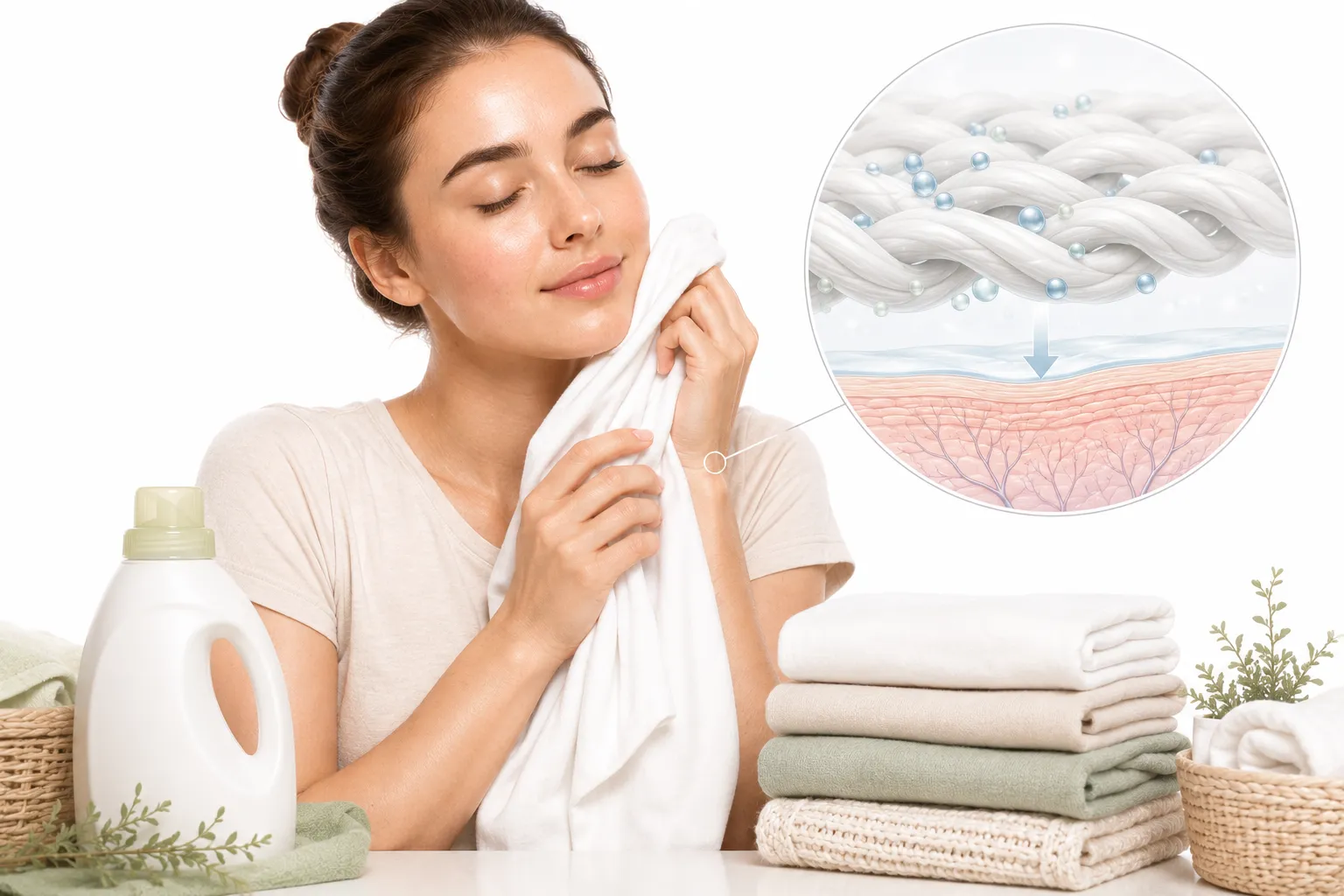
- Washing Machine Residue. Detergent can build up in washing machine seals and on clothes over time, increasing exposure even with lower use.
Fragrance and dyes are the primary causes of laundry detergent-related skin irritation.
Skip fabric softeners entirely - they are full of potential irritants.
"Free & Clear" style detergents are consistently safest for sensitive skin.
Using less detergent and running an extra rinse cycle reduces residue significantly.
If you have eczema or contact dermatitis, switching laundry detergent is one of the most effective first steps.
Definition
What is laundry detergent?
Laundry detergent is a water-based cleaning formulation for clothes, containing surfactants, enzymes (in some formulations), builders, and often fragrances and dyes. It's designed to remove stains and dirt from fabric. For sensitive skin, the distinction between basic detergent and detergent with additives is crucial.
- Comes in liquid, powder, and pod formats
- Contains surfactants as the primary cleaning agents
- Often includes additives like fragrance, dye, or brighteners
- For sensitive skin, fragrance-free and dye-free are essential
Science
Why laundry detergent irritates skin
Laundry detergent irritates skin through two main mechanisms: direct contact with residual additives left in fabric, and through the physical action of enzymes that can break down proteins. When clothing is worn, moisture and friction help transfer these residues to the skin, where they can trigger inflammation. The reaction is often subtle and delayed, making it difficult to connect with the detergent.
- Contact Dermatitis
- An inflammation of the skin caused by direct contact with an irritant or allergen, characterized by redness, itching, and sometimes blistering.
- Surfactants
- Molecules with water-loving and oil-loving ends that lift stains from fabric, but some can also strip the skin barrier.
Risks
Detergent ingredients to avoid
These ingredients are the most common triggers in laundry detergents for sensitive skin. Avoiding them dramatically reduces the risk of irritation.
- Synthetic fragrance: the number one cause of laundry-related contact dermatitis
- Dyes: serve no cleaning purpose and are a common allergen
- Enzymes (protease, amylase, lipase): can be irritating to the skin barrier
- Optical brighteners: fluorescent compounds that can sensitize skin
- Bleach and bleaching agents: harsh and stripping
Benefits
What to look for in a sensitive-skin detergent
The right detergent cleans effectively without leaving behind any irritants. Here's what to prioritize.
- Fragrance-free and dye-free formulation
- No optical brighteners or fluorescent whiteners
- Hypoallergenic labeling (though this isn't regulated, it's a useful signal)
- Plant-based surfactants can be gentler than synthetic ones
- Easily rinse-able, leaving minimal to no residue on fabric
Questions
Frequently asked questions
Can I make my own laundry detergent for sensitive skin?
Yes, many people use a simple mix of washing soda, borax, and castile soap. However, ensure the formula rinses cleanly.
Are natural or eco-friendly detergents better for sensitive skin?
Not necessarily - they can still contain essential oils and fragrance. Look for fragrance-free and dye-free above all else.
How do I know if my detergent is irritating my skin?
If you have persistent itching, redness, or dryness on areas covered by clothing, your detergent might be the cause. Try a different one for two weeks.
Is powder or liquid better for sensitive skin?
Both can work, but liquids tend to dissolve and rinse more completely, potentially leaving less residue.