Evidence
What the evidence shows
A healthy skin barrier is the single most important factor in how your skin looks and feels - even the best active ingredients won't help if your barrier is compromised.
Structure and function
Structure and functionRepair mechanisms
Repair mechanismsClinical application
Clinical application
Use this section to decide
Does this advice apply to me?
Find the concern or goal closest to yours, then use the fit signal to decide how much weight to give this guide.If your goal is
FunctionUsually relevant- Fit signal
- Often useful
Protection & moisture
If your goal is
StructureUse caution- Fit signal
- Limited evidence
Brick-and-mortar
If your goal is
Key LipidsUsually relevant- Fit signal
- Often useful
Ceramides
If your goal is
pHUse caution- Fit signal
- Limited evidence
4.5-5.5
Research notes already in this guide
- Increased transepidermal water loss leads to dry, dehydrated skin.
- Environmental irritants and allergens penetrate more easily.
- Inflammatory skin conditions like eczema and rosacea are more likely.
- Studies show barrier function declines significantly with age.
Explanation
How it works
Lipids form a seal
Ceramides, cholesterol, and fatty acids create a waterproof matrix between cells.
Natural moisturizing factors hold water
Amino acids and other compounds within cells attract and retain moisture.
Desmosomes create structural integrity
Special proteins connect corneocytes, preventing gaps from forming.
Enzymes manage turnover
Specialized enzymes regulate the breakdown and shedding of cells.
Practical use
How to use it
Use gentle, pH-balanced cleansers
Avoid stripping cleansers and use lukewarm water rather than hot.
Moisturize consistently
Look for products containing ceramides, cholesterol, and fatty acids.
Protect from environmental stress
Use a broad-spectrum sunscreen daily and consider barrier-supporting serums.
Safety
Side effects and cautions
- Over-exfoliating in pursuit of "glowing" skin
Stripping the barrier leads to redness, sensitivity, and more breakouts.
- Using harsh soaps or high-pH cleansers
Alkaline cleansers disrupt the barrier's natural acidic environment.
- Skipping moisturizer on oily skin
Even oily skin needs moisture to maintain barrier integrity.
Fit
Who should be careful
- Not applicable - all skin has a barrier
Worth noting
Small details that can change the answer
- Thickness. The skin barrier is only about 10-20 micrometers thick - thinner than a human hair.
- Lipid Ratio. A healthy barrier has roughly equal parts ceramides, cholesterol, and fatty acids.
- pH Factor. The barrier functions optimally at an acidic pH of 4.5 to 5.5.
- Turnover Time. The barrier completely regenerates every 28 days on average.
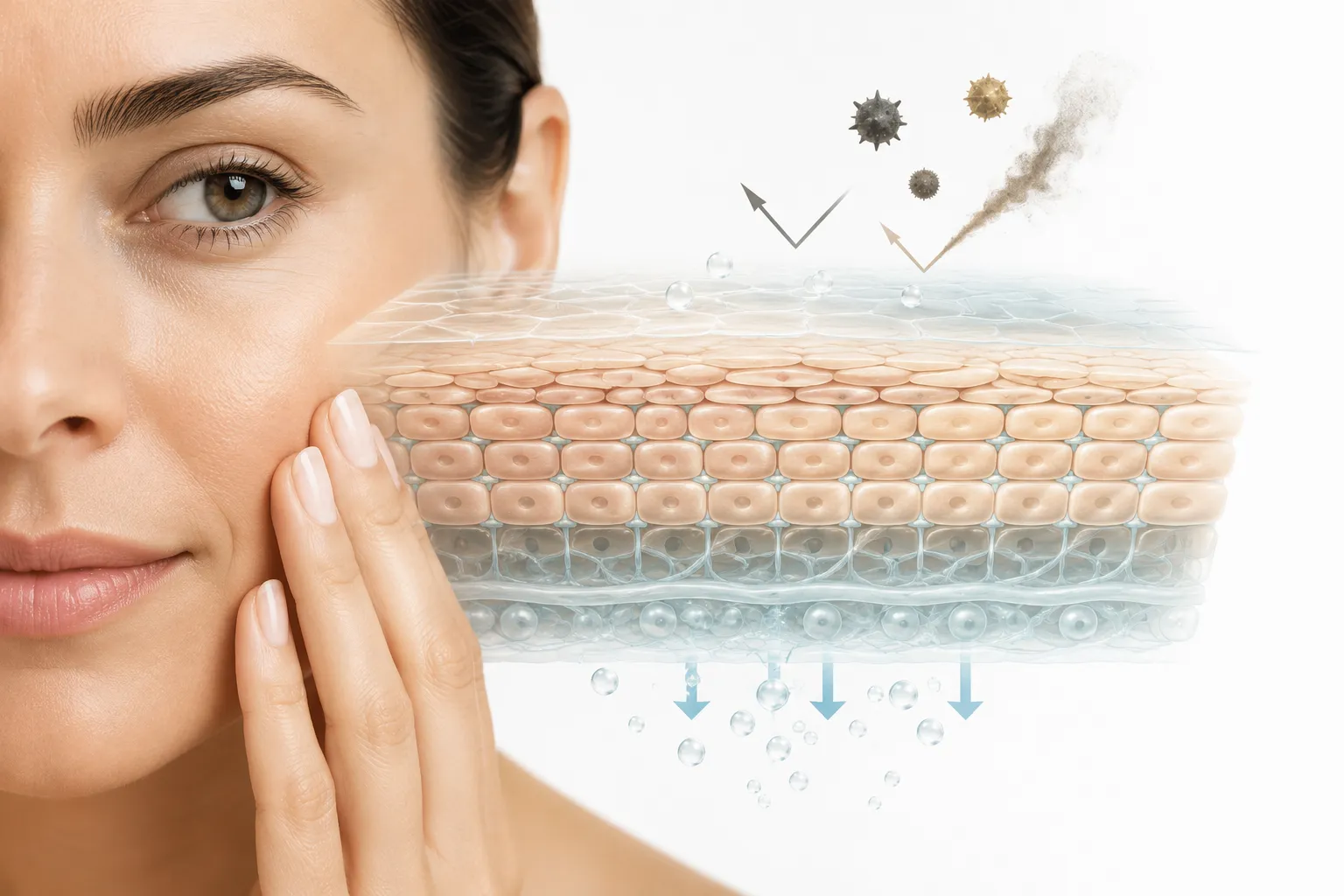
The skin barrier is a microscopic shield that protects against moisture loss and external threats.
It's built like a brick wall, with corneocytes as bricks and lipids as mortar.
A healthy barrier keeps skin hydrated, resilient, and less prone to irritation.
Over-cleansing, harsh products, and environmental stress are the main threats to barrier health.
Restoring a damaged barrier requires patience, gentle products, and consistent care.
Definition
What exactly is the skin barrier?
The skin barrier is the physical and functional structure that separates your body from the outside world. It's the outermost part of the epidermis, specifically the stratum corneum, and it serves two essential purposes: keeping moisture inside the skin and keeping environmental threats outside.
- Prevents excessive water loss (transepidermal water loss)
- Blocks entry of bacteria, allergens, and irritants
- Protects from UV radiation
- Maintains skin's structural integrity
Science
The biology behind the barrier
The stratum corneum is composed of corneocytes, which are essentially protein-rich shells of what were once living skin cells. These cells are embedded in a lipid matrix that acts like waterproof mortar. The lipids are arranged in a lamellar structure - layered sheets that form a highly effective seal against water loss. This structure also houses natural moisturizing factors that help keep the barrier flexible.
- Corneocyte
- A dead skin cell in the outermost layer that provides structural strength.
- Lamellar Structure
- The layered arrangement of lipids that forms an impermeable seal.
- Transepidermal Water Loss
- The amount of water that evaporates through the skin barrier.
Questions
Frequently asked questions
Can a damaged skin barrier be repaired?
Yes - with consistent use of gentle, barrier-supporting products, the skin barrier can regenerate and heal.
What does a damaged skin barrier feel like?
It often feels tight, looks red or flaky, and may sting with products that normally don't cause irritation.
How long does it take to repair the skin barrier?
Usually 2 to 4 weeks of consistent care, but it can take longer if the damage is severe.
Can the skin barrier be too thick or strong?
No - a stronger barrier is generally better, but some conditions like psoriasis involve abnormal thickening.
References
Sources
The notes below are drawn from the evidence already cited in this guide. They are not a complete bibliography.
- Increased transepidermal water loss leads to dry, dehydrated skin.
- Environmental irritants and allergens penetrate more easily.
- Inflammatory skin conditions like eczema and rosacea are more likely.
- Studies show barrier function declines significantly with age.