Evidence
What the evidence shows
Laser treatments work by targeting specific structures in the skin, such as pigment, blood vessels, or hair follicles, based on the laser's wavelength, which is why different conditions require different types of lasers rather than one universal device.
Use this section to decide
Does this advice apply to me?
Find the concern or goal closest to yours, then use the fit signal to decide how much weight to give this guide.If your goal is
Common usesUse caution- Fit signal
- Limited evidence
Scars, pigment, vessels, hair
If your goal is
SessionsUse caution- Fit signal
- Limited evidence
Often multiple
If your goal is
DowntimeUse caution- Fit signal
- Limited evidence
Varies by type
If your goal is
EvidenceUsually relevant- Fit signal
- Often useful
Good
Research notes already in this guide
- Laser treatments for acne scarring and pigmentation have reasonable clinical support.
- Vascular lasers are well established for treating visible blood vessels and some rosacea symptoms.
- Outcomes can vary based on skin tone, laser type, and practitioner experience.
Expected results
Results and timeframe
Ablative lasers generally involve more downtime than non-ablative lasers.
Most laser treatments require multiple sessions for best results.
Practical use
How to use it
Identify your specific skin concern
Different conditions require different laser types, so clarity on the issue helps guide treatment.
Consult a qualified provider
A dermatologist or licensed provider can recommend the safest laser for your skin tone and condition.
Plan for multiple sessions
Most laser treatments require a series of sessions for optimal, lasting results.
Safety
Side effects and cautions
- Assuming any laser can treat any skin concern
Different lasers target different structures, so matching laser type to condition matters significantly.
- Skipping a proper consultation before treatment
A qualified provider can assess skin tone and condition to recommend the safest, most effective laser.
- Expecting results after a single session
Many laser treatments require multiple sessions spaced over weeks or months.
Fit
Who should be careful
- Conditions unrelated to pigment, vessels, or hair structures
Helpful context
What else is worth knowing
Laser type by skin condition
Stimulates collagen remodeling.
Targets excess melanin.
Targets visible blood vessels.
Targets pigment in hair follicles.
What the evidence suggests
Laser treatments show reasonable clinical support for acne scarring, pigmentation, and vascular concerns.
Outcomes vary based on skin tone, laser type, and practitioner experience.
Worth noting
Small details that can change the answer
- Wavelength. Different lasers use different wavelengths to target specific structures like pigment, blood vessels, or hair follicles.
- Ablative vs Non-Ablative. Ablative lasers remove skin layers and typically involve more downtime; non-ablative lasers work beneath the surface with less downtime.
- Sessions. Many laser treatments require multiple sessions spaced weeks apart for optimal results.
- Skin Tone. Laser selection often needs to account for skin tone, since some lasers carry a higher risk of pigmentation changes in deeper skin tones.
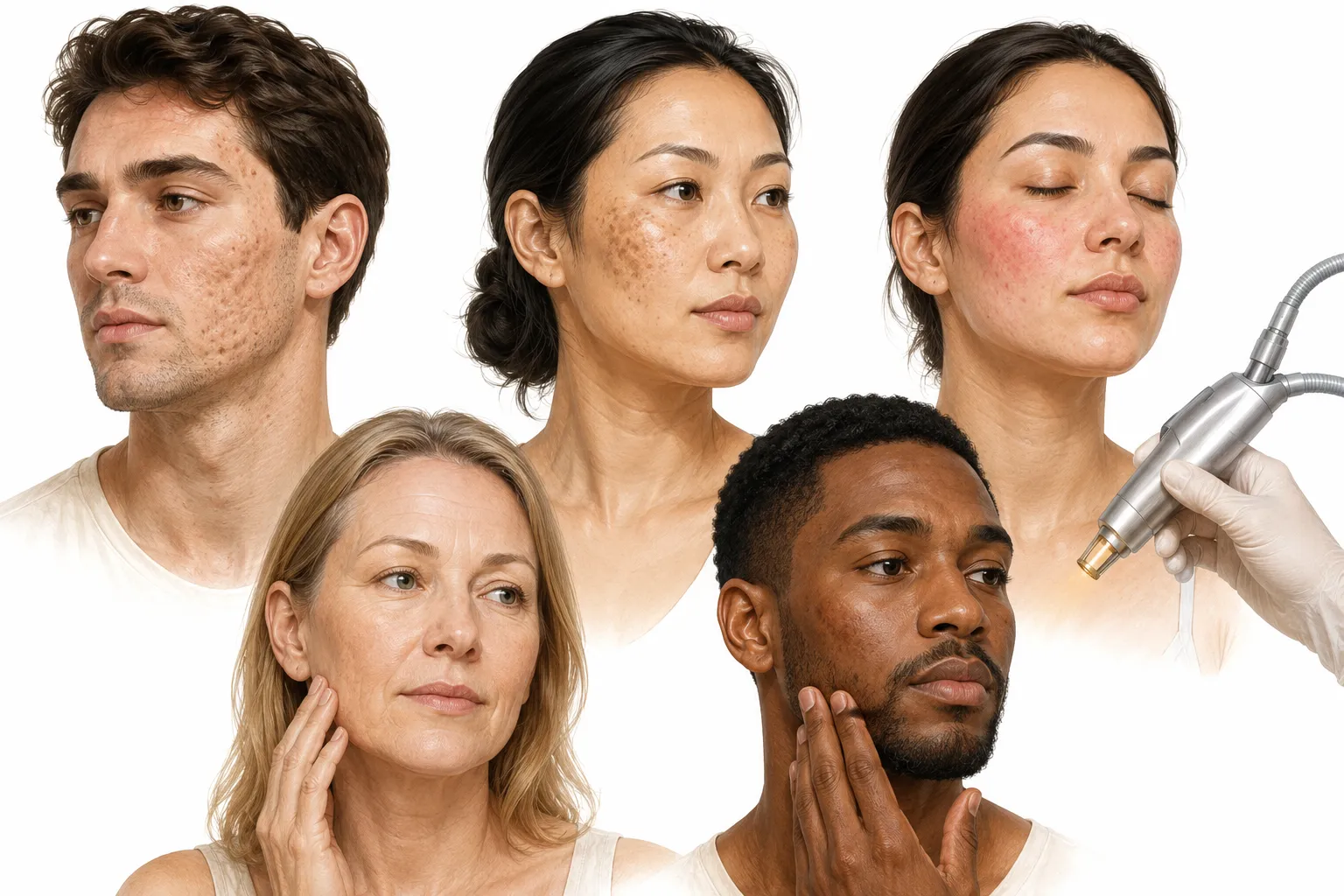
Lasers treat a wide range of skin conditions, including scars, pigmentation, rosacea, and unwanted hair.
Different laser types target different skin structures, so no single laser treats everything.
Skin tone is an important factor in choosing a safe, effective laser.
Definition
How laser treatment works
The basic mechanism behind laser dermatology.
Lasers emit concentrated light at specific wavelengths designed to target particular structures in the skin, such as pigment, blood vessels, or hair follicles, triggering a controlled response that can improve the appearance of various skin conditions.
Explanation
Conditions commonly treated with lasers
Lasers are used across a range of dermatological concerns, each typically matched to a specific laser type.
Laser type by condition
Acne scars
Works with: Fractional lasers
Often used to stimulate collagen remodeling.
Hyperpigmentation
Works with: Pigment-targeting lasers
Targets excess melanin in the skin.
Rosacea
Works with: Vascular lasers
Targets visible blood vessels and redness.
Unwanted hair
Works with: Hair-removal lasers
Targets pigment within hair follicles.
Questions
Frequently asked questions
Can lasers treat acne scars?
Yes, fractional lasers are commonly used to help improve the appearance of acne scars by stimulating collagen remodeling.
Do lasers help with rosacea?
Vascular lasers can help reduce the appearance of visible blood vessels and redness associated with rosacea.
Is laser treatment safe for all skin tones?
Not all lasers are equally safe for every skin tone; a qualified provider can recommend an appropriate option based on your specific skin.
How many laser sessions are usually needed?
This varies by condition and laser type, but many treatments require several sessions spaced weeks apart.
References
Sources
The notes below are drawn from the evidence already cited in this guide. They are not a complete bibliography.
- Laser treatments for acne scarring and pigmentation have reasonable clinical support.
- Vascular lasers are well established for treating visible blood vessels and some rosacea symptoms.
- Outcomes can vary based on skin tone, laser type, and practitioner experience.