Evidence
What the evidence shows
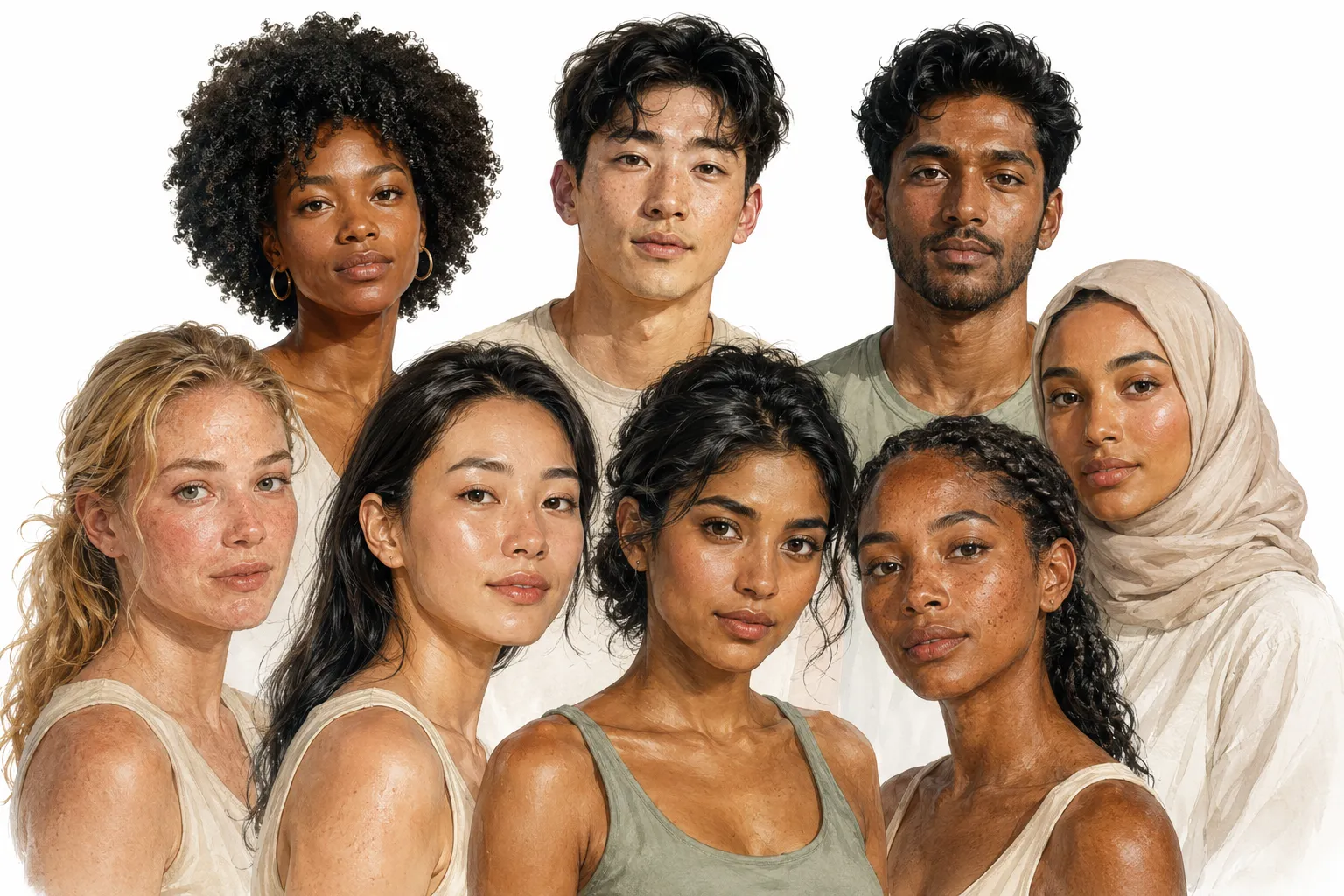
Ethnicity influences skin biology - but skin type (oily, dry, etc.) is independent of ethnicity. A person of any ethnicity can have any skin type.
Use this section to decide
Does this advice apply to me?
Find the concern or goal closest to yours, then use the fit signal to decide how much weight to give this guide.If your goal is
Key DifferencesUse caution- Fit signal
- Limited evidence
Melanin, barrier, aging
If your goal is
Not TypeUse caution- Fit signal
- Limited evidence
Ethnicity doesn't determine type
If your goal is
CareUsually relevant- Fit signal
- Often useful
Consider both ethnicity and type
If your goal is
DiversityUsually relevant- Fit signal
- Often useful
All types exist everywhere
Research notes already in this guide
- Research confirms melanin variation across ethnicities.
- Studies show differences in barrier function and aging.
- Skin type distribution is similar across ethnicities.
- Personalized skincare should consider both ethnicity and type.
Practical use
How to use it
Understand your individual skin type
Identify whether you have oily, dry, combination, or sensitive skin.
Consider your ethnic background
Be aware of how your ethnicity influences your skin biology.
Choose products accordingly
Select products that address both your skin type and your ethnic skin characteristics.
Safety
Side effects and cautions
- Assuming ethnicity determines skin type
Skin type exists across all ethnicities.
- Using the same products for all skin types within an ethnicity
Individual skin type matters more than ethnicity.
- Ignoring ethnic skin differences entirely
Ethnicity influences skin biology and should be considered.
Fit
Who should be careful
- Those seeking simple ethnic-type categories
Worth noting
Small details that can change the answer
- Melanin Variation. Melanin levels vary significantly across ethnicities.
- Barrier Function. Some studies show darker skin has a stronger barrier.
- Aging Patterns. Different ethnicities show different aging patterns.
- Type Independence. Skin type (oily, dry, etc.) is independent of ethnicity.
Different ethnicities have different skin biology - melanin, barrier, and aging patterns vary.
Ethnicity does not determine skin type (oily, dry, combination, sensitive).
All skin types exist across all ethnicities.
Skincare should consider both ethnicity and skin type.
Personalized care is the most effective approach.
Definition
Key skin differences across ethnicities
Several biological differences have been identified in skin across ethnicities.
- Melanin levels - vary significantly
- Barrier function - may differ in structure and resilience
- Aging patterns - different rates of wrinkling and sagging
- Pigmentation - varying risk of hyperpigmentation
- Reactivity - differing sensitivity to irritants
Science
The biology behind the differences
These differences arise from genetic variations that have developed over thousands of years in response to different environments. Melanin levels are the most obvious example, with darker skin evolving in high-UV environments. Barrier function also shows variation, with some studies suggesting darker skin has more resilient barrier properties.
- Melanin
- The pigment that determines skin color and provides UV protection.
- Barrier Function
- The skin's ability to retain moisture and protect against irritants.
Benefits
Why this matters for skincare
Understanding ethnic differences helps personalize skincare.
- Products should consider melanin levels and pigmentation risk
- Barrier function differences affect product choice
- Aging patterns suggest different anti-aging priorities
- Sensitivity varies and should be considered
- Skin type (oily, dry, etc.) still matters most for daily care
Questions
Frequently asked questions
Does ethnicity affect skin aging?
Yes - different ethnicities show different aging patterns and timelines.
Can people of any ethnicity have oily skin?
Yes - oily skin occurs across all ethnicities.
Is sensitive skin more common in certain ethnicities?
Some research suggests variation, but sensitivity occurs in all groups.
Should I choose products based on ethnicity or skin type?
Both - consider skin type first, then ethnic skin characteristics.
References
Sources
The notes below are drawn from the evidence already cited in this guide. They are not a complete bibliography.
- Research confirms melanin variation across ethnicities.
- Studies show differences in barrier function and aging.
- Skin type distribution is similar across ethnicities.
- Personalized skincare should consider both ethnicity and type.