Evidence
What the evidence shows
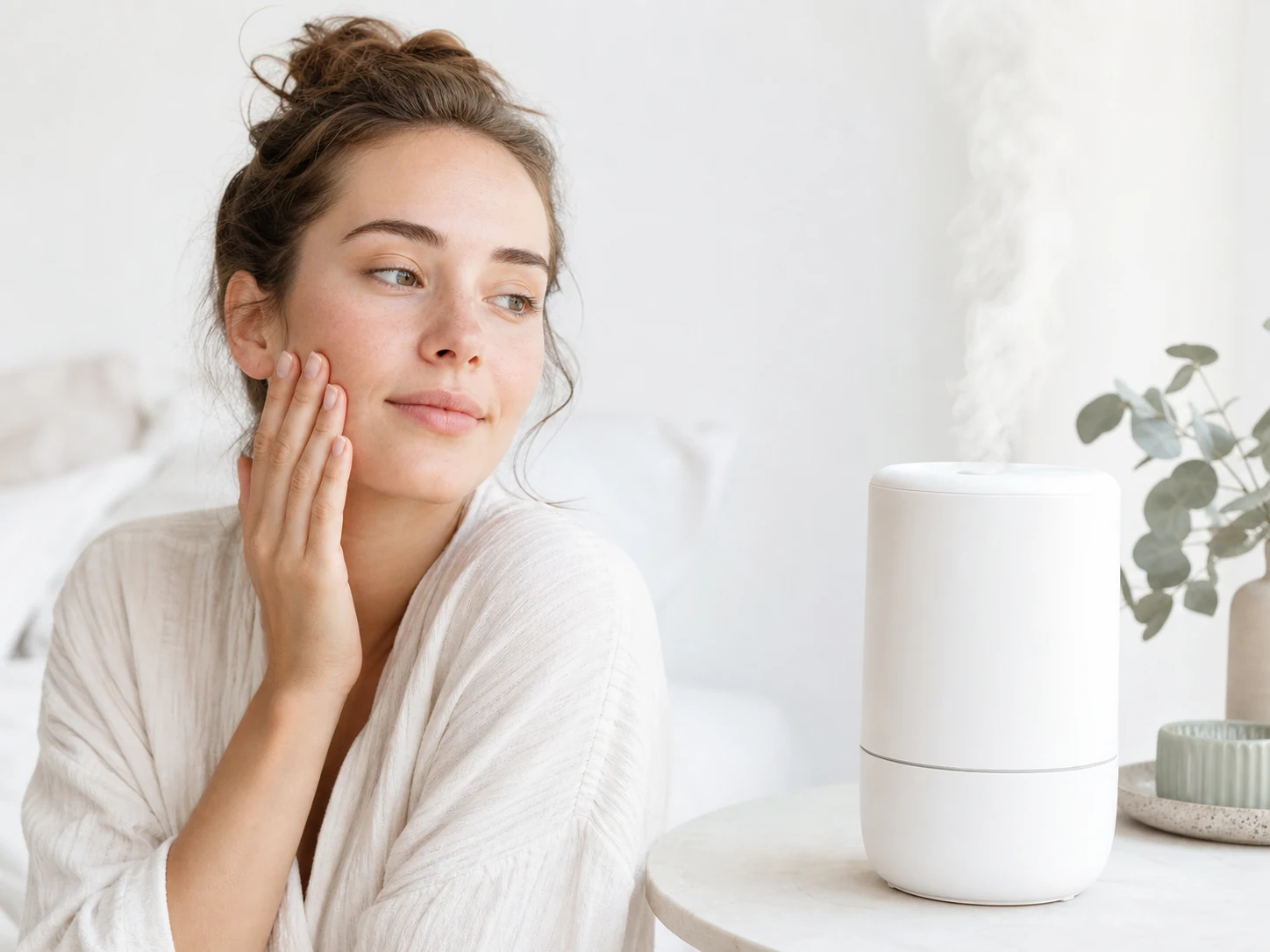
Your skin is constantly losing water to the air around it. A humidifier doesn't add moisture directly to your skin - it reduces the moisture gradient, making it harder for water to escape.
Use this section to decide
Does this advice apply to me?
Find the concern or goal closest to yours, then use the fit signal to decide how much weight to give this guide.If your goal is
Reduces TEWLUsually relevant- Fit signal
- Often useful
Significantly reduces water loss
If your goal is
Prevents flakingDepends- Fit signal
- Possible fit
Especially in winter
If your goal is
Supports barrierDepends- Fit signal
- Possible fit
Maintains optimal hydration
If your goal is
Reduces itchingDepends- Fit signal
- Possible fit
Soothing for dry, irritated skin
Explanation
How it works
Adds moisture to the air
A humidifier releases water vapor into the room.
Raises ambient humidity
Indoor humidity increases, ideally to 40-60%.
Reduces moisture gradient
The difference between your skin's moisture and the air's moisture decreases.
Slows water loss
Less water escapes from your skin into the air.
Expected results
Results and timeframe
Clean your humidifier weekly to prevent mold and bacteria.
Practical use
How to use it
Choose the right humidifier for your room
Consider the room size and choose a humidifier with appropriate output capacity.
Set humidity to 40-60%
Use a hygrometer to monitor levels and adjust settings accordingly.
Clean the humidifier weekly
Prevent mold and bacteria by cleaning regularly with white vinegar or approved solutions.
Safety
Side effects and cautions
- Not cleaning the humidifier regularly
Clean weekly with white vinegar or a manufacturer-approved solution.
- Using the humidifier only in a large, open room
Humidifiers work best in enclosed rooms where they can raise humidity effectively.
- Expecting a humidifier to replace a moisturizer
A humidifier supports your skincare routine but doesn't replace direct skin hydration.
Fit
Who should be careful
- Homes with existing mold issues
- Small rooms with poor ventilation
Worth noting
Small details that can change the answer
- Ideal Range. Skin health is optimal when indoor humidity is between 40-60%.
- Winter Drop. Indoor humidity in winter can drop to 10-20% without a humidifier.
- TEWL Reduction. Raising humidity from 20% to 50% can reduce transepidermal water loss by up to 30%.
- Barrier Support. Higher humidity supports the skin's natural barrier function and repair processes.
A humidifier can significantly help dry skin by raising ambient humidity and reducing water loss.
Optimal indoor humidity for skin health is 40-60%.
Winter humidity can drop to 10-20%, making a humidifier especially valuable.
A humidifier supports - but doesn't replace - a good moisturizing routine.
Science
The science of humidity and skin hydration
The rate of water loss from your skin is governed by the difference in water vapor pressure between your skin and the surrounding air. When the air is dry, the vapor pressure gradient is steep, so water moves quickly from your skin to the air. When humidity is high, the gradient is shallow, so water moves more slowly. This relationship is a fundamental principle of physics - and it's why humidifiers work so well for dry skin.
- Transepidermal Water Loss (TEWL)
- The amount of water that evaporates through the skin's surface. Higher TEWL indicates a compromised barrier.
- Vapor Pressure Gradient
- The difference in water vapor concentration between your skin and the surrounding air.
Risks
Potential downsides and precautions
A humidifier needs to be used correctly to be beneficial and not harmful.
- Over-humidification (above 60%) can promote mold and dust mite growth
- Dirty humidifiers can release bacteria and mold spores into the air
- Hard water mineral deposits can create white dust that may irritate skin and lungs
- Some people with allergies may react to dust mite growth from high humidity
Dos Donts
Humidifier do's and don'ts
Do
Keeps humidity in the ideal 40-60% range.
Prevents mold and bacterial growth.
Prevents mineral deposits and white dust.
Prevents damage to furniture and floors.
Avoid
Promotes mold and dust mite growth.
Dirty humidifiers can release harmful particles into the air.
Can cause skin irritation or respiratory issues.
Questions
Frequently asked questions
What humidity level is best for dry skin?
40-60% is optimal for skin health and comfort.
Can I use a humidifier all night?
Yes, overnight use is often the most beneficial for skin because repair processes are most active during sleep.
Will a humidifier help eczema?
Yes, maintaining optimal humidity can reduce eczema flare-ups and soothe dry, itchy skin.
What's the best type of humidifier for skin?
Cool mist or ultrasonic humidifiers are good options. Avoid steam vaporizers which can be a burn risk.