Evidence
What the evidence shows
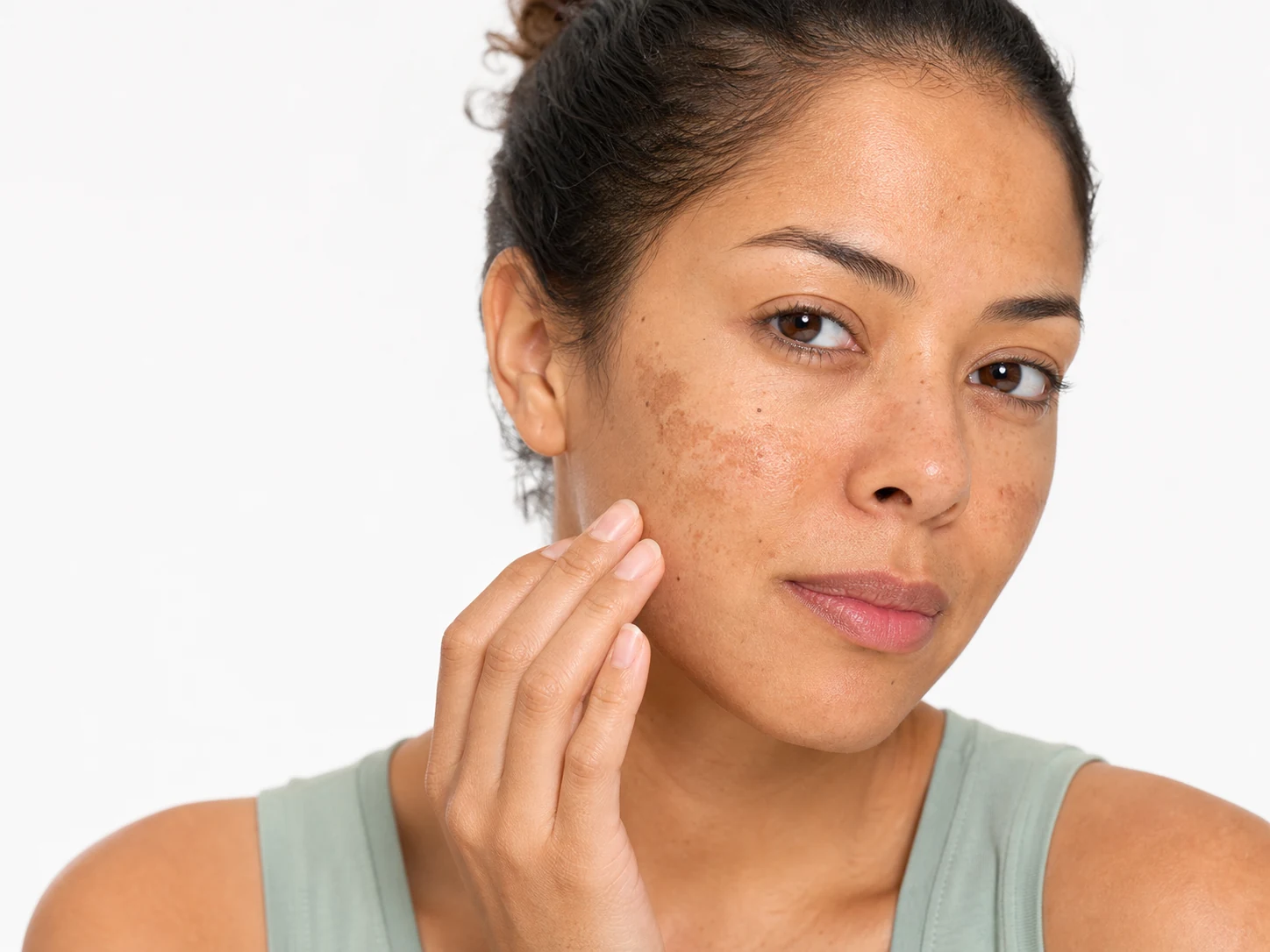
Azelaic acid is unique in that it treats both hyperpigmentation and the inflammation that often triggers it. This makes it particularly effective for melasma and post-inflammatory hyperpigmentation.
Melasma treatment
Proven efficacy in clinical studiesTyrosinase inhibition
Well-documented mechanismSafety profile
Excellent for sensitive skin
Use this section to decide
Does this advice apply to me?
Find the concern or goal closest to yours, then use the fit signal to decide how much weight to give this guide.If your goal is
MelasmaUsually relevant- Fit signal
- Often useful
As effective as hydroquinone
If your goal is
Sun spotsDepends- Fit signal
- Possible fit
Good improvement
If your goal is
PIHUsually relevant- Fit signal
- Often useful
Excellent for post-acne marks
Research notes already in this guide
- Studies show 15-20% azelaic acid is as effective as hydroquinone for melasma.
- Azelaic acid has been shown to reduce post-inflammatory hyperpigmentation.
- It's well-tolerated and suitable for long-term use.
- Azelaic acid is recommended for melasma in dermatological guidelines.
Explanation
How it works
Tyrosinase inhibition
Reduces melanin production in melanocytes.
Anti-inflammatory action
Calms the skin, preventing pigmentation triggers.
Pigment dispersion
Helps existing pigment distribute more evenly.
Acne treatment
Reduces acne that can cause post-inflammatory hyperpigmentation.
Expected results
Results and timeframe
Time to results: 8-12 weeks
Results take 8-12 weeks of consistent use.
Practical use
How to use it
Cleanse
Gentle cleanser first. Pat dry before leave-on actives.
Azelaic acid
Apply a pea-sized amount to clean, dry skin - after cleansing, before moisturizer. Start 10% OTC; build frequency over weeks.
Moisturize
Follow with a barrier-supporting moisturizer.
Sunscreen (morning only)
Finish the AM routine with broad-spectrum SPF. Visible brightening often takes 8-12 weeks alongside daily protection.
Safety
Side effects and cautions
- Using too low a concentration
10-20% is needed for hyperpigmentation.
- Expecting quick results
It takes 8-12 weeks for visible brightening.
- Skipping sunscreen
Sun exposure can worsen hyperpigmentation.
Fit
Who should be careful
- Those seeking very fast results
Worth noting
Small details that can change the answer
- Tyrosinase Inhibition. Azelaic acid inhibits tyrosinase, reducing melanin production.
- Anti-Inflammatory. It reduces inflammation that can trigger hyperpigmentation.
- Optimal Strength. 15-20% azelaic acid is most effective for hyperpigmentation.
- Gentle Action. It's well-tolerated by sensitive and rosacea-prone skin.
Azelaic acid is highly effective for melasma and post-inflammatory hyperpigmentation.
It works by inhibiting tyrosinase and reducing inflammation.
Apply after cleansing and before moisturizer; finish morning routines with sunscreen.
Morning or evening both work - choose based on what else is in your routine.
15-20% is the optimal concentration for hyperpigmentation; introduce frequency slowly.
Questions
Frequently asked questions
Should I use azelaic acid in the morning or at night?
Either works. Morning use pairs naturally with sunscreen for pigmentation care; evening use can be easier if your AM routine is already busy. Start a few nights per week and increase as tolerated.
Is azelaic acid better than hydroquinone for hyperpigmentation?
It's as effective for melasma with fewer side effects and is safer for long-term use.
Can azelaic acid fade dark spots?
Yes, it effectively fades hyperpigmentation and dark spots.
How long does azelaic acid take to work?
Visible improvement typically takes 8-12 weeks.
Is azelaic acid safe for sensitive skin?
Yes, it's one of the most gentle acids for sensitive skin.
References
Sources
The notes below are drawn from the evidence already cited in this guide. They are not a complete bibliography.
- Studies show 15-20% azelaic acid is as effective as hydroquinone for melasma.
- Azelaic acid has been shown to reduce post-inflammatory hyperpigmentation.
- It's well-tolerated and suitable for long-term use.
- Azelaic acid is recommended for melasma in dermatological guidelines.