Evidence
What the evidence shows
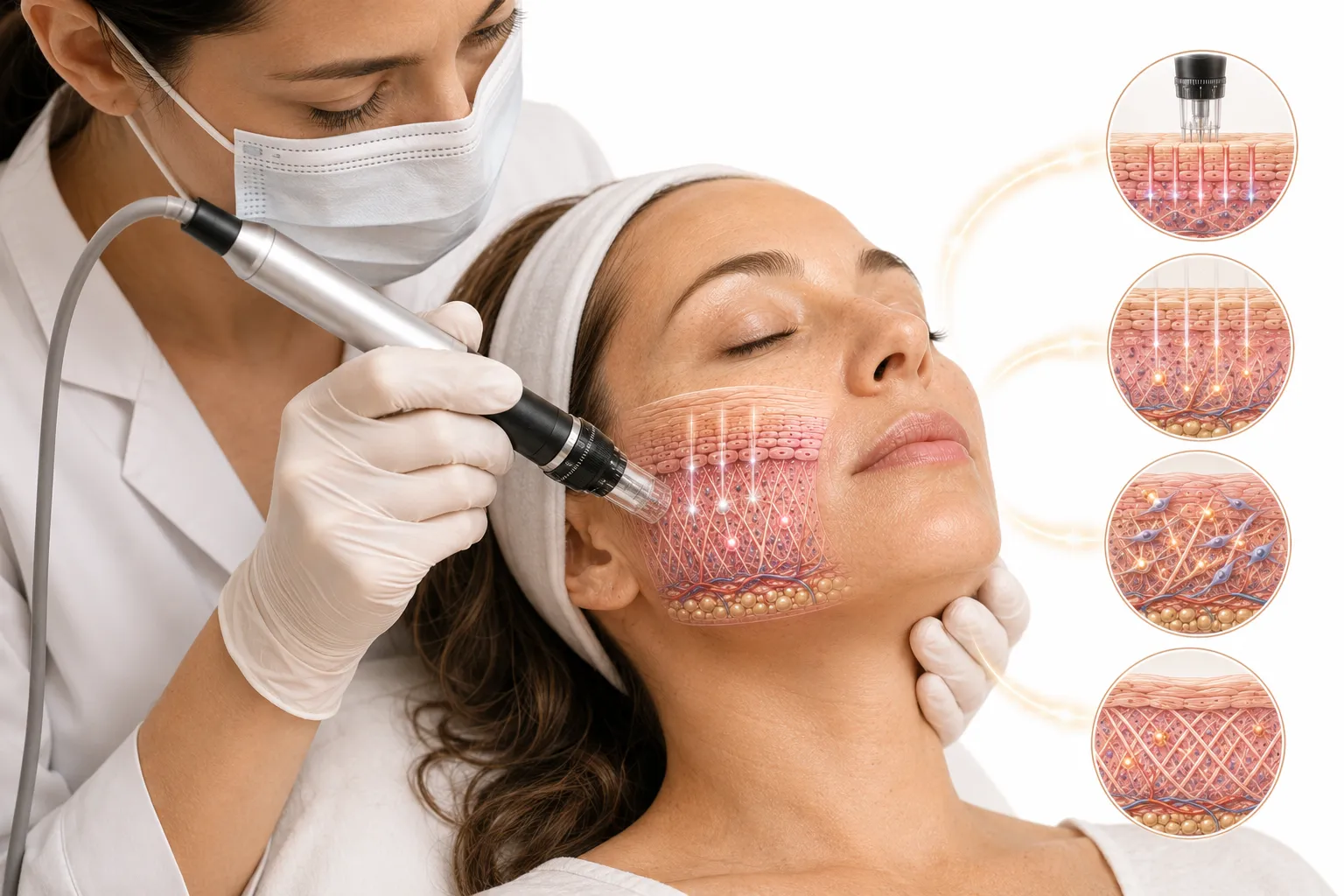
Microneedling's effectiveness comes from triggering skin's own repair machinery rather than delivering an active ingredient, which is part of why its effects tend to build progressively over a series of sessions.
Use this section to decide
Does this advice apply to me?
Find the concern or goal closest to yours, then use the fit signal to decide how much weight to give this guide.If your goal is
MechanismUse caution- Fit signal
- Limited evidence
Controlled micro-injury
If your goal is
Sessions neededUse caution- Fit signal
- Limited evidence
3-6
If your goal is
DowntimeDepends- Fit signal
- Possible fit
A few days of redness
If your goal is
EvidenceUsually relevant- Fit signal
- Often useful
Good
Research notes already in this guide
- Microneedling's collagen-stimulating effect is well supported by clinical research.
- Studies generally show improvement in texture and mild photoaging signs over a series of sessions.
- Results and safety profile are better established for professional treatments than at-home devices.
Explanation
How it works
Creates controlled micro-injuries
Fine needles puncture the skin's surface at a calibrated depth.
Activates the wound-healing cascade
The body responds with growth factors and inflammatory signaling aimed at repair.
Stimulates collagen production
Fibroblasts in the dermis ramp up collagen and elastin synthesis.
Gradual structural improvement
Over subsequent weeks, new collagen improves texture, firmness, and fine lines.
Expected results
Results and timeframe
It can improve texture, fine lines, and mild pigmentation in sun-damaged skin.
Results build gradually and typically require multiple sessions.
Practical use
How to use it
Consult a licensed provider
Discuss your skin's sun damage and treatment goals before starting.
Plan for a series of sessions
Most treatment plans involve 3 to 6 sessions spaced several weeks apart.
Protect skin during recovery
Use gentle products and diligent sunscreen in the days following each session.
Safety
Side effects and cautions
- Expecting results after a single session
Multiple sessions spaced weeks apart are typically needed for meaningful improvement.
- Choosing an unlicensed provider or unsterile device
Microneedling should be performed by a trained professional using sterile equipment.
- Skipping sun protection after treatment
Freshly treated skin is more sun-sensitive and needs diligent SPF use during recovery.
- Redness and mild swelling
Common · Typically resolves within a few days.
- Increased sun sensitivity
Common · Use diligent SPF during recovery.
- Infection risk
Rare · Choose a licensed provider using sterile equipment.
Fit
Who should be careful
- Those wanting a single quick fix or with active skin infections
Worth noting
Small details that can change the answer
- Controlled Micro-Injury. Microneedling creates hundreds of tiny, controlled punctures in the skin's surface.
- Triggers Natural Repair. This activates the skin's wound-healing response, including increased collagen production.
- Cumulative Effect. Results typically require multiple sessions spaced several weeks apart for meaningful improvement.
- Professional Treatment. Deeper microneedling is generally performed by a trained provider rather than at home.
Microneedling triggers the skin's natural wound-healing response to stimulate collagen production.
It's generally performed by a trained professional, especially at deeper needle depths.
Sun protection is especially important during the recovery period after treatment.
Results Timeline
What to expect over time
- 1Days 1-3
Mild redness and sensitivity similar to a light sunburn.
- 2Weeks 2-4
Skin texture may start to feel smoother.
- 3Months 1-3
Continued collagen production improves firmness and fine lines.
- 4After 3-6 sessions
Cumulative improvement in overall texture and tone.
Benefits
What microneedling can realistically improve
For sun-damaged skin, the plausible benefits from a series of treatments include:
- Smoother texture and reduced roughness
- Improved appearance of fine lines
- Mild improvement in surface pigmentation
- Enhanced absorption of topical treatments used alongside it
Questions
Frequently asked questions
How many microneedling sessions are needed for sun damage?
Most treatment plans involve 3 to 6 sessions spaced several weeks apart for meaningful results.
Is microneedling painful?
A topical numbing cream is typically used, so most people experience mild discomfort rather than significant pain.
How long is recovery after microneedling?
Redness and sensitivity typically resolve within a few days, similar to a mild sunburn.
Can microneedling be combined with other sun-damage treatments?
Yes, it's often paired with topical serums or other treatments as part of a broader plan.
References
Sources
The notes below are drawn from the evidence already cited in this guide. They are not a complete bibliography.
- Microneedling's collagen-stimulating effect is well supported by clinical research.
- Studies generally show improvement in texture and mild photoaging signs over a series of sessions.
- Results and safety profile are better established for professional treatments than at-home devices.