Evidence
What the evidence shows
Skin Type 2 is characterized by low melanin production, which means less natural sun protection. Any tan is actually a sign of skin damage, not health.
You burn easily after 10-15 minutes of sun exposure
This is a classic sign of Skin Type II.You have fair skin, light hair, and light eyes
These are common characteristics of Type II.You tan very little or not at all
This confirms a Type II classification.
Use this section to decide
Does this advice apply to me?
Find the concern or goal closest to yours, then use the fit signal to decide how much weight to give this guide.If your goal is
BurnsDepends- Fit signal
- Possible fit
Easily
If your goal is
TansUse caution- Fit signal
- Limited evidence
Minimally or with difficulty
If your goal is
Melanin levelUse caution- Fit signal
- Limited evidence
Low
If your goal is
Recommended SPFUsually relevant- Fit signal
- Often useful
30+
Practical use
How to use it
Know your skin type
If you burn easily and tan minimally, you're likely Type II.
Use high-SPF sunscreen daily
SPF 30+ every morning, even on cloudy days.
Avoid deliberate tanning
Any tan is a sign of skin damage for Type II skin.
Safety
Side effects and cautions
- Skipping sunscreen because you "can't tan anyway"
Sunscreen protects against burning, aging, and skin cancer.
- Burning in the hope of developing a tan
Burning is skin damage, not a step toward tanning.
- Using low-SPF sunscreen
SPF 30+ is recommended for Type II skin.
Fit
Who should be careful
- Those seeking to achieve a tan safely
Worth noting
Small details that can change the answer
- Melanin Production. Type II skin has low melanin production, offering limited natural UV protection.
- Burn Risk. Type II skin can burn within 10-15 minutes of unprotected sun exposure.
- Skin Cancer Risk. People with Type II skin are at higher risk for skin cancer.
- Tanning Sign. Any tan on Type II skin is a sign of skin damage.
Skin Type 2 burns easily and tans minimally.
Low melanin production means limited natural sun protection.
Any tan on Type II skin is a sign of skin damage.
SPF 30+ sunscreen daily is essential.
Avoid deliberate tanning and protect your skin.
Definition
What is Fitzpatrick Skin Type II?
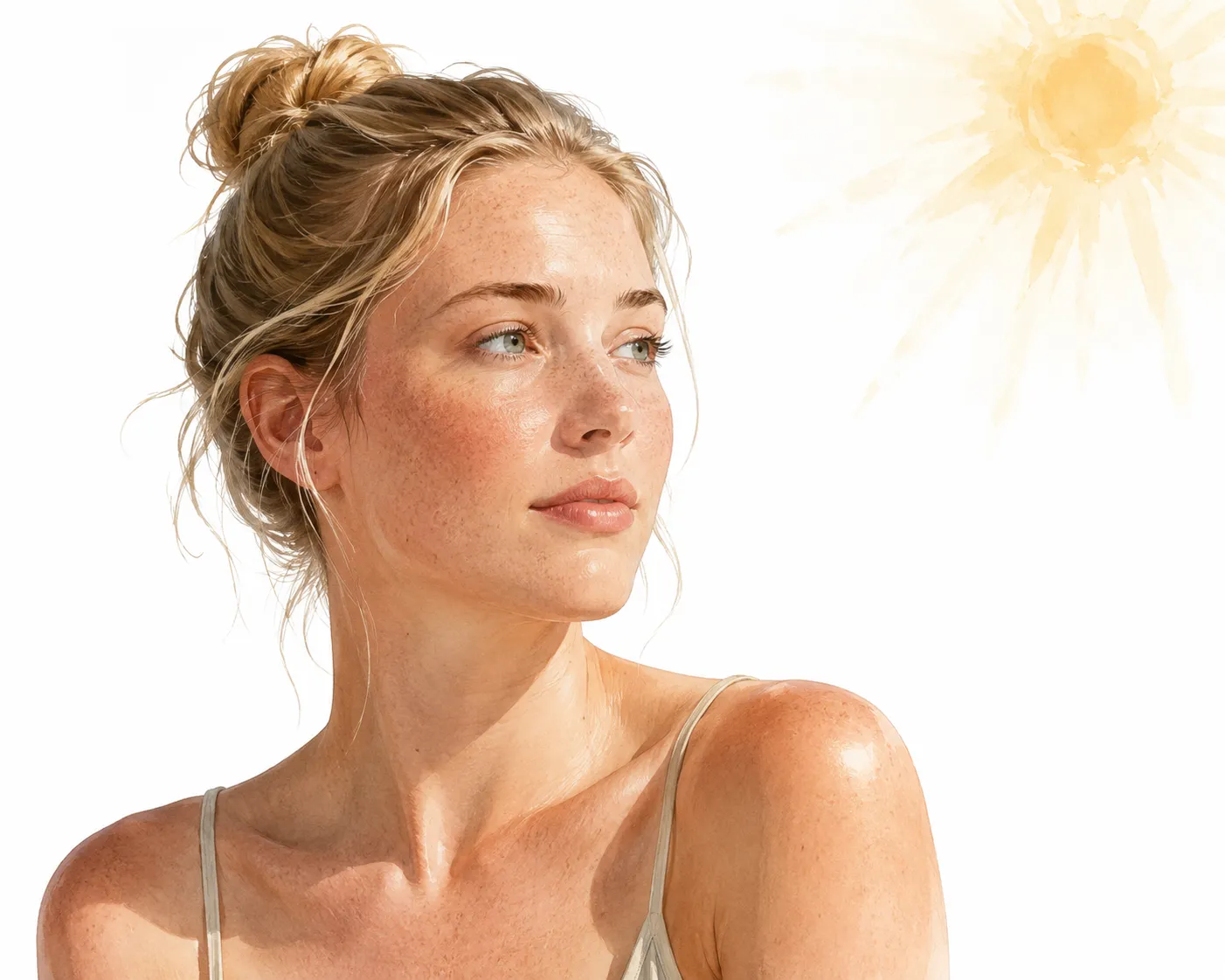
Fitzpatrick Skin Type II is a classification on the Fitzpatrick scale. People with Type II skin have fair skin that burns easily and tans minimally. They often have light-colored hair, light eyes, and freckles. This skin type is at high risk for sun damage.
- Fair skin, often with freckles
- Burns easily in the sun
- Tans minimally or with difficulty
- High risk of sunburn and skin cancer
Science
Why Skin Type 2 doesn't tan well
Skin Type 2 doesn't tan well because it has low melanin production. Melanin is the pigment that absorbs UV radiation and provides natural sun protection. People with Type II skin have fewer active melanocytes and produce less melanin, so when exposed to UV radiation, the skin experiences inflammation (burning) rather than protective pigmentation (tanning).
- Melanin
- The pigment that gives skin its color and provides natural protection against UV radiation.
- Fitzpatrick Scale
- A classification system for skin types based on their response to UV exposure.
Benefits
How Skin Type 2 should protect itself
For Skin Type 2, sun protection is essential. Here's what to do.
- Use SPF 30+ sunscreen daily, even on cloudy days
- Apply sunscreen generously and reapply every two hours
- Seek shade during peak sun hours (10 AM - 4 PM)
- Wear protective clothing, hats, and sunglasses
- Avoid deliberate tanning (sunbathing, tanning beds)
Myth Reality
Common myths about Skin Type 2 and tanning
Burning is a sign of DNA damage, not a precursor to tanning.
The minimal tan that Type II skin develops provides very little protection (SPF 2-3).
UV rays penetrate clouds, so sunscreen is essential every day.
Questions
Frequently asked questions
Can Skin Type 2 get a tan at all?
Some Type II individuals may develop a very minimal tan, but it's usually preceded by burning.
Is SPF 30 enough for Skin Type 2?
Yes, if applied correctly and generously. SPF 50 offers slightly more protection.
Does Skin Type 2 need sunscreen in winter?
Yes, UV exposure is present year-round.
Can Skin Type 2 use self-tanner?
Yes, self-tanner is a safe alternative to tanning.