Evidence
What the evidence shows
The most important rule for sensitive combination skin is to treat sensitivity first. If you use harsh products to control oil, you'll worsen the sensitivity. Address the sensitivity with gentle, barrier-supporting ingredients, and the oil production will often balance itself.
Use this section to decide
Does this advice apply to me?
Find the concern or goal closest to yours, then use the fit signal to decide how much weight to give this guide.If your goal is
Key stepUsually relevant- Fit signal
- Often useful
Gentle, fragrance-free cleansing
If your goal is
Best ingredientUsually relevant- Fit signal
- Often useful
Niacinamide (whole face)
If your goal is
CheeksUsually relevant- Fit signal
- Often useful
Hydration + barrier support
If your goal is
T-zoneUsually relevant- Fit signal
- Often useful
Gentle oil control
Research notes already in this guide
- Niacinamide is effective for balancing oil and supporting the barrier.
- Gentle, fragrance-free products are recommended for sensitive skin.
- Area-specific treatments are effective for combination skin.
Practical use
How to use it
Start with a gentle, fragrance-free routine
Use a gentle cleanser and a lightweight, fragrance-free moisturizer.
Incorporate niacinamide
It balances oil and supports the barrier - great for the whole face.
Treat the T-zone and cheeks differently
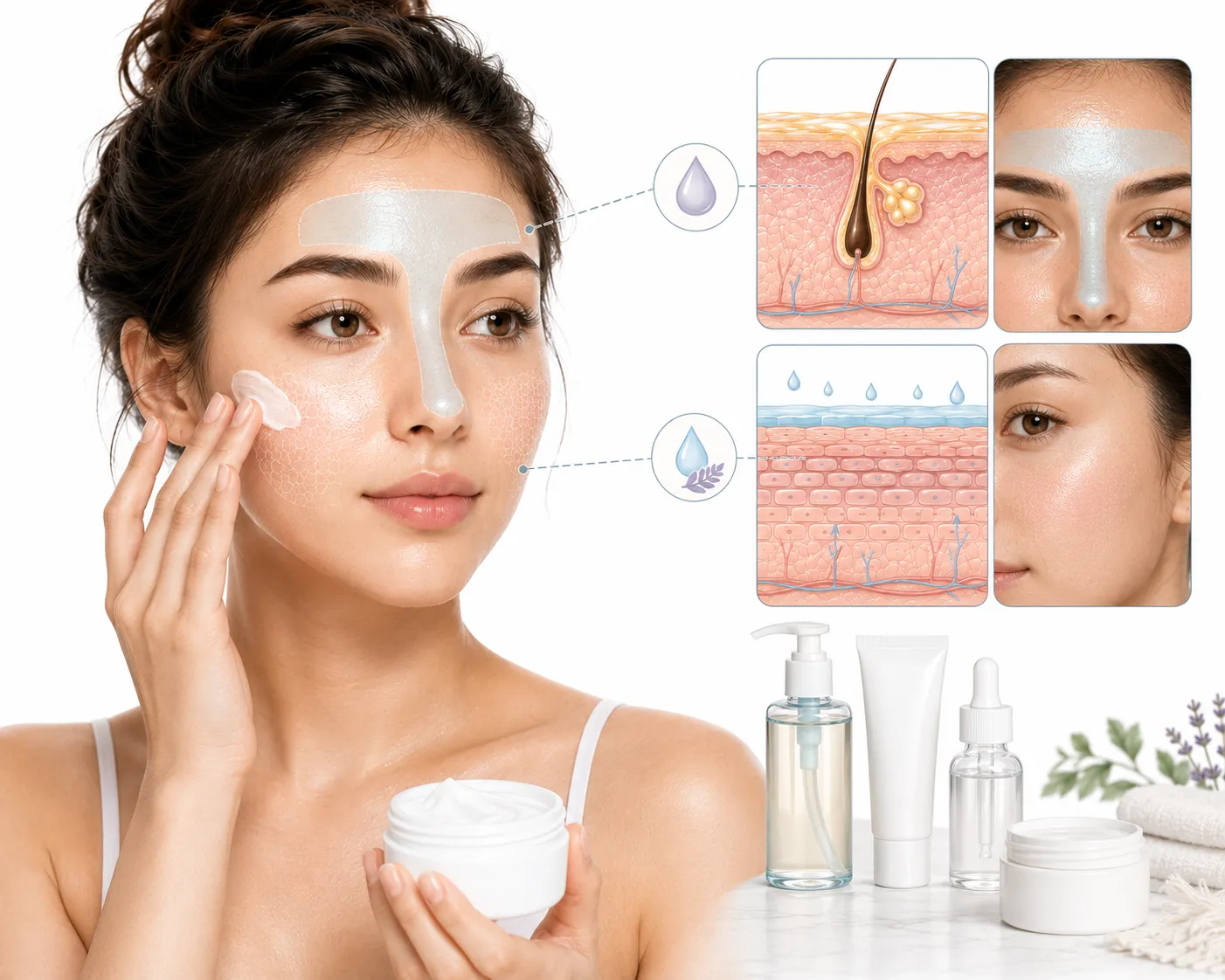
Use gentle salicylic acid on the T-zone and more hydration on the cheeks.
Safety
Side effects and cautions
- Using harsh products to control oil
Harsh products worsen sensitivity - use gentle oil-control instead.
- Ignoring the sensitivity to focus on oil control
Treat sensitivity first - the oil production will often balance itself.
- Using the same moisturizer on the whole face
The cheeks may need more hydration than the T-zone - apply more to the cheeks.
Fit
Who should be careful
- Those with only oily or only dry skin
Helpful context
What else is worth knowing
Best ingredients for sensitive combination skin
Use on whole face
Focus on cheeks
Use on sensitive areas
T-zone only
Your sensitive combination skin routine
Morning
- Gentle cleanser
- Niacinamide serum
- Lightweight moisturizer
- Sunscreen
Evening
- Gentle cleanser
- Niacinamide serum
- Hyaluronic acid on cheeks
- Gentle salicylic acid on T-zone (if needed)
- Lightweight moisturizer
Worth noting
Small details that can change the answer
- Niacinamide. Balances oil and supports the barrier - ideal for both areas.
- Hyaluronic acid. Hydrates the cheeks without adding oil.
- Salicylic acid. Gentle oil control for the T-zone - use sparingly.
- Barrier support. Ceramides and panthenol support the sensitive areas.
Care for sensitive combination skin with a gentle, balanced routine.
Use niacinamide on the whole face to balance oil and support the barrier.
Hydrate the cheeks with hyaluronic acid; treat the T-zone with gentle salicylic acid.
Avoid fragrances, sulfates, and harsh exfoliants.
Treat sensitivity first - oil production will often balance itself.
Best ingredients for sensitive combination skin
The key ingredients that work for both areas.
- Niacinamide - balances oil and supports the barrier (ideal for the whole face)
- Hyaluronic acid - hydrates the cheeks without adding oil
- Ceramides - support the barrier in the sensitive areas
- Panthenol - soothing and hydrating for the cheeks
- Gentle salicylic acid (0.5-1%) - for the T-zone only
- Squalane - lightweight hydration that won't clog pores
What to avoid with sensitive combination skin
The products and ingredients that can cause problems.
- Fragrances and essential oils - common irritants for sensitive areas
- Sodium lauryl sulfate (SLS) - too stripping for the cheeks
- High-concentration salicylic acid (2%+) - too harsh for sensitive skin
- Heavy oils - can clog the T-zone and feel heavy
- Physical exfoliants - can irritate sensitive areas
- High-concentration retinoids - too harsh for sensitive areas
Questions
Frequently asked questions
What is the best routine for sensitive combination skin?
Gentle cleanser, niacinamide, hyaluronic acid on the cheeks, gentle salicylic acid on the T-zone, and a lightweight moisturizer.
Can sensitive combination skin use niacinamide?
Yes, niacinamide is ideal - it balances oil and supports the barrier.
Should I use different products on the T-zone and cheeks?
Yes - the T-zone needs gentle oil control; the cheeks need hydration and barrier support.
What moisturizer is best for sensitive combination skin?
A lightweight, fragrance-free moisturizer that won't clog pores.
References
Sources
The notes below are drawn from the evidence already cited in this guide. They are not a complete bibliography.
- Niacinamide is effective for balancing oil and supporting the barrier.
- Gentle, fragrance-free products are recommended for sensitive skin.
- Area-specific treatments are effective for combination skin.